1 citations
,
January 2018 in “Jornal Brasileiro de Patologia e Medicina Laboratorial” Monilethrix causes brittle hair and hair loss, and it runs in families.
 1 citations
,
August 2023 in “bioRxiv (Cold Spring Harbor Laboratory)”
1 citations
,
August 2023 in “bioRxiv (Cold Spring Harbor Laboratory)” Certain cells in the adult mouse ear come from cranial neural crest cells, but muscle and hair cells do not.
 18 citations
,
July 2001 in “Australian veterinary journal”
18 citations
,
July 2001 in “Australian veterinary journal” A cat with skin bumps and itching had high blood fats and skin infections, which improved with diet and medication changes.
1 citations
,
August 2023 in “Animals” Chimp Haven uses a special system to check and improve the well-being of their chimpanzees, which could help other animal sanctuaries too.
5 citations
,
February 2008 in “Histopathology”  5 citations
,
August 2014 in “Archivos Argentinos de Pediatria”
5 citations
,
August 2014 in “Archivos Argentinos de Pediatria” A girl with Turner syndrome had psoriasis, alopecia areata, and trachyonychia.
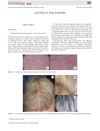 2 citations
,
May 2018 in “Australasian Journal of Dermatology”
2 citations
,
May 2018 in “Australasian Journal of Dermatology” Some patients' hair grew back black and white after chemotherapy.
 January 2025 in “International Journal of Advanced Biochemistry Research”
 Three Persian cats with mange were successfully treated with Ivermectin injections.
20 citations
,
February 2015 in “Anais brasileiros de dermatologia/Anais Brasileiros de Dermatologia” A 6-year-old girl was diagnosed with a rare hair disorder and started treatment with topical minoxidil.
 10 citations
,
August 2018 in “Experimental Dermatology”
10 citations
,
August 2018 in “Experimental Dermatology” Decorin helps hair cells grow and move, and keeps hair growth phase going in mice.
1 citations
,
May 2020 in “bioRxiv (Cold Spring Harbor Laboratory)” The fer-ts mutation in plants prevents root hair growth at high temperatures.
April 2017 in “Journal of Dermatological Science” Asymmetric hair follicle differentiation causes the unique shape of kinky hair.
January 1980 in “AFA Watchbird” Spectral-analysis can help diagnose mineral imbalances in birds.
 17 citations
,
April 2021 in “Clinical Phytoscience”
17 citations
,
April 2021 in “Clinical Phytoscience” Chitrak is a medicinal plant with health benefits like fighting microbes, reducing inflammation, and promoting hair growth, but it can be toxic and needs more research.
 January 2025 in “Journal of Case Reports and Scientific Images”
 Early recognition and treatment of scalp demodicosis can prevent misdiagnosis and effectively resolve symptoms.
 December 2022 in “Frontiers in plant science”
 CCDC22 and CCDC93 are essential for root and root hair growth in Arabidopsis.
 15 citations
,
October 2016 in “Journal of dermatological treatment”
15 citations
,
October 2016 in “Journal of dermatological treatment” Proper hair care can prevent and stop hair breakage in people with acquired trichorrhexis nodosa.
October 2025 in “Biomedicines” Terminalia chebula fruit extract helps hair growth by reducing DHT and boosting hair cell activity.
2 citations
,
May 2024 in “International Journal of Dermatology” 
A neck lesion misdiagnosed as benign was later treated successfully with Mohs Micrographic Surgery.
34 citations
,
January 1998 in “Archiv für Pathologische Anatomie und Physiologie und für Klinische Medicin” Trichoblastomas may mimic fetal skin development by having many Merkel cells, unlike adult skin.
2 citations
,
October 1992 in “PubMed” WHV infection does not affect woodchuck skin anatomy.
 18 citations
,
January 2020 in “Ecology and evolution”
18 citations
,
January 2020 in “Ecology and evolution” Genes related to pigmentation, body rhythms, and behavior change during hares' seasonal coat color transition, with a common genetic mechanism in two hare species.
 September 2023 in “Small animal advances”
 The kitten's skin infection was cured with medication in three weeks.
May 2025 in “World Journal of Biology Pharmacy and Health Sciences” Butterfly pea flower is beneficial for hair serum due to its antioxidant and pigmenting properties.
 1 citations
,
July 2016 in “International Journal of Dermatology”
1 citations
,
July 2016 in “International Journal of Dermatology” Androgenetic alopecia is less common in Chilean Mapuche than Caucasians, but more common than Asians, with racial differences in prevalence and types.
10 citations
,
July 2001 in “PubMed” A new type of pachyonychia congenita may exist, caused by a different keratin mutation.
November 2024 in “DELOS Desarrollo Local Sostenible” Thunbergia grandiflora and Russelia equisetiformis help each other grow by changing their shapes.
 January 2019 in “Journal of Pharmacognosy and Phytochemistry”
 The methanolic fruit extract of Citrullus colocynthis contains bioactive compounds that may support its use in traditional medicine and drug development.
November 2025 in “JOURNAL OF EXPERIMENTAL ZOOLOGY INDIA” Thymol is a promising natural treatment for hair regrowth and inflammation in alopecia areata, performing better than betamethasone.