January 2026 in “Indian Journal of Ophthalmology - Case Reports” Trichilemmal cysts can appear on children's eyelids and may be mistaken for other conditions.
3 citations
,
January 2022 in “Burns & Trauma” CTHRC1 helps sweat glands recover by rebuilding nearby blood vessels.
15 citations
,
August 2008 in “Plastic & Reconstructive Surgery” New cell sources for bone tissue engineering are promising due to easier harvesting and availability.
10 citations
,
March 2016 in “Development Growth & Differentiation” Scientists created feather buds in lab-grown chick skin using specific cell interactions.
 48 citations
,
June 2020 in “Current Rheumatology Reports”
48 citations
,
June 2020 in “Current Rheumatology Reports” Different types of fibroblasts play various roles in both healthy and diseased tissues, and understanding them better could improve treatments for fibrotic diseases.
November 2023 in “Bioengineering” AMT® is effective and safe for early-stage knee osteoarthritis.
 1 citations
,
November 2016 in “Congenital Anomalies”
1 citations
,
November 2016 in “Congenital Anomalies” Get head MRI for babies with achondroplasia early, use free immunoglobulin light chains to detect certain neurodevelopmental disorders, and video calls work for speech therapy in patients with facial anomalies.
8 citations
,
February 2020 in “Journal of Drug Delivery Science and Technology” Encapsulating chlorogenic acid in nanoparticles boosts type 17 collagen production, potentially aiding skin care.
36 citations
,
January 1994 in “Cell and Tissue Research”  17 citations
,
January 2014 in “Stem Cells Translational Medicine”
17 citations
,
January 2014 in “Stem Cells Translational Medicine” Canine epidermal neural crest stem cells could be a promising treatment for spinal cord injuries in dogs.
 48 citations
,
July 2019 in “International Journal of Biological Macromolecules”
48 citations
,
July 2019 in “International Journal of Biological Macromolecules” A new hydrogel with stem cells from human umbilical cords improves skin wound healing and reduces inflammation.
118 citations
,
April 2020 in “Stem Cell Research & Therapy” IFNγ-primed MSC secretomes can improve joint health by reducing inflammation and supporting tissue repair.
7 citations
,
May 2025 in “Cells” Adipose tissue-derived therapies show promise for improving osteoarthritis symptoms but need more research for safety and effectiveness.
13 citations
,
September 2012 in “Cell & tissue research/Cell and tissue research” pCLCA2 protein may help maintain skin structure and function.
 8 citations
,
May 2023 in “Gels”
8 citations
,
May 2023 in “Gels” Chitosan hydrogels are promising for repairing blood vessels but need improvements in strength and compatibility.
43 citations
,
April 2011 in “AJP Endocrinology and Metabolism” Androgens increase muscle mass by promoting myoblast growth through ornithine decarboxylase.
28 citations
,
December 2016 in “Journal of Biomedical Materials Research Part A” Bone-forming cells grow well in 3D polymer scaffolds with 35 µm pores.
1 citations
,
September 2025 in “International Journal of Molecular Sciences” Cells from concentrated growth factor can become different cell types.
 February 2026 in “Nature Communications”
 A specific group of immune and skin cells may cause chronic inflammation in atopic dermatitis.

Exosomes from fat-derived stem cells help repair large bone defects by attracting and enhancing bone marrow stem cells.
Equine hoof progenitor cells can help develop therapies for hoof diseases like laminitis.
 1 citations
,
September 2023
1 citations
,
September 2023 AMT® shows promise as a safe and effective treatment for early-stage knee osteoarthritis.
 343 citations
,
March 2016 in “Nature Communications”
343 citations
,
March 2016 in “Nature Communications” IL-17-producing γδ T cells help improve bone healing.
 130 citations
,
September 2018 in “Cell Reports”
130 citations
,
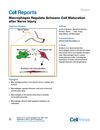
September 2018 in “Cell Reports” Macrophages help heal nerves by aiding the maturation of Schwann cells and are important for nerve repair.
The trichohyalin gene is located at chromosomal region 1q21 with other skin-related protein genes.
 15 citations
,
December 2015 in “PLoS ONE”
15 citations
,
December 2015 in “PLoS ONE” Fibroblasts can be mistaken for neural cells, so functional validation is needed.
 48 citations
,
May 2023 in “Nature Communications”
48 citations
,
May 2023 in “Nature Communications” Platelet-derived chemokines help muscle healing by attracting neutrophils to injured areas.
January 2012 in “Infoscience (Ecole Polytechnique Fédérale de Lausanne)” Human thymus has stem cells that can self-renew and maintain their identity.

Limbal Mesenchymal Stem Cell Secretome might help heal eye injuries by reducing inflammation and promoting tissue repair.
 12 citations
,
February 2013 in “The Open Stem Cell Journal”
12 citations
,
February 2013 in “The Open Stem Cell Journal” DPSCs and SHED have great potential for medical treatments and tissue repair.