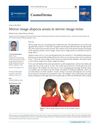
Mirror-image twins can have alopecia areata on opposite sides of their heads.
 December 2025 in “The Journal of Basic and Applied Zoology”
 Red Sokoto goat fetuses develop firmer, pigmented skin with hair follicles as they grow.
 30 citations
,
May 2005 in “Pediatric dermatology”
30 citations
,
May 2005 in “Pediatric dermatology” Some families have a genetic condition where they are born with irregular scalp defects.
 December 2024 in “Stem Cell Research & Therapy”
 ZO-1 helps hair follicle stem cells renew better by changing their structure.
August 2024 in “Archives of Dermatological Research” CHI3L1 and CXCL5 proteins help promote hair growth.
3 citations
,
August 2024 in “The Journal of Cell Biology” Actin filaments help stabilize and reshape cell membranes.
8 citations
,
February 1968 in “Australian Journal of Zoology” The southern elephant seal's skin layer helps waterproof the skin by being tightly connected to hair shafts.
Placental components enhance blood vessel growth.
9 citations
,
October 2024 in “Burns & Trauma” Air-liquid interface culture improves hair follicle development in skin organoids.
8 citations
,
May 2005 in “The American journal of dermatopathology/American journal of dermatopathology” The hair defect is due to abnormal inner root sheath keratinization.
 April 2024 in “Journal of Cytology”
 A rare skin tumor with bone formation was successfully removed without recurrence.
 2 citations
,
May 2005 in “Seminars in Plastic Surgery”
2 citations
,
May 2005 in “Seminars in Plastic Surgery” The Juri Temporo-Parieto-Occipital Flap is a good option for scalp reconstruction and hairline restoration with a natural look, despite some risk of necrosis and scarring.
29 citations
,
May 2023 in “Cell” 293 citations
,
September 2004 in “Development” WNT signaling is crucial for starting mammary gland development.
8 citations
,
July 2004 in “Journal of morphology” Marsupial hair structure and keratin distribution are similar to placental mammals.
 December 2024 in “Buletin Veteriner Udayana”
 Improving cage hygiene and sanitation is crucial to prevent colisepticemia in chickens.
 6 citations
,
January 2015 in “Biochemical Society Transactions”
6 citations
,
January 2015 in “Biochemical Society Transactions” The Ysc84/SH3yl1 protein family is important for cell movement and the process of taking in materials by interacting with actin and cell membranes.
October 1984 in “Kidney international” The patient had complex urinary tract issues and ambiguous genitalia, with physical features suggesting a hormonal imbalance.
 January 2024 in “Wiadomości Lekarskie”
 Ancient immune and signaling pathways still regulate blood cell development.
21 citations
,
January 2000 in “Fetal Diagnosis and Therapy” Prenatal diagnosis of trichothiodystrophy is possible in the second trimester using fetal eyebrow biopsy, with sulfur content analysis being more reliable.
1 citations
,
August 2020 in “bioRxiv (Cold Spring Harbor Laboratory)” Extracellular vesicles from amniotic fluid stem cells can improve underdeveloped fetal lungs.
 72 citations
,
November 2012 in “PloS one”
72 citations
,
November 2012 in “PloS one” The protein folliculin, involved in a rare disease, works with another protein to control how cells stick together and their organization, and changes in this interaction can lead to disease symptoms.
 June 2023 in “Medeniyet medical journal”
 People with alopecia areata have similar retinal structures but thicker choroidal regions compared to those without the condition.
June 2025 in “British Journal of Dermatology” Nail abnormalities in children can indicate deeper health issues.
16 citations
,
July 2008 in “BMC Genomics” Alpha 6 + /MHCI - cells have stem cell traits and are similar to mouse hair follicle stem cells.
4 citations
,
March 2024 in “Developmental Dynamics” ALX4 is crucial for normal craniofacial and hair development, with specific roles in different cell types.
 7 citations
,
November 2014 in “Histochemistry and Cell Biology”
7 citations
,
November 2014 in “Histochemistry and Cell Biology” The we/we wal/wal mice have defects in hair growth and skin layer formation, causing hair loss, useful for understanding alopecia.
January 2004 in “Linchuang pifuke zazhi” All-trans retinoic acid helps amelanotic melanocytes in hair follicles develop and produce pigment while reducing their growth.
 36 citations
,
January 2007 in “Archives of Histology and Cytology”
36 citations
,
January 2007 in “Archives of Histology and Cytology” Type IV collagen chains vary in different parts of human skin, with specific patterns linked to melanocytes.
 November 2023 in “bioRxiv (Cold Spring Harbor Laboratory)”
 Disrupted cholesterol production impairs hair follicle stem cells, leading to hair loss.