November 2024 in “Journal of Investigative Dermatology” The research aims to better understand hair follicle regulation and find new treatments for hair loss.
 January 2026 in “Frontiers in Molecular Biosciences”
 A new method helps diagnose alopecia areata using specific gene markers and could guide targeted treatments.
 2 citations
,
May 2018 in “International Society of Hair Restoration Surgery”
2 citations
,
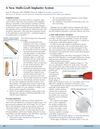
May 2018 in “International Society of Hair Restoration Surgery” The new system makes hair transplants faster and more precise.
 October 2010 in “Reproductive Biomedicine Online”
 A new method can almost perfectly distinguish adenomyosis from similar conditions using blood tests.
1 citations
,
January 2022 in “Indian dermatology online journal” Fine needle aspiration with rapid on-site evaluation is useful for diagnosing pilomatrixoma.
 17 citations
,
April 2004 in “Acta Clinica Belgica”
17 citations
,
April 2004 in “Acta Clinica Belgica” UV light makes skin signs of lack of carotene and vitamin A more visible.
September 2006 in “Experimental Dermatology” Targeting multiple pathways and understanding genetic mutations are crucial for effective melanoma therapy.
11 citations
,
November 2019 in “The FASEB Journal” A mutation in the MAP2 gene causes reduced hair follicle density, leading to hairlessness.
 153 citations
,
November 2004 in “Current Medicinal Chemistry”
153 citations
,
November 2004 in “Current Medicinal Chemistry” The document concludes that Catalyst software is effective for drug design, identifying potent compounds for various medical conditions.
 January 2018 in “Stem cell biology and regenerative medicine”
 ATP-dependent chromatin remodeling is crucial for skin development and stem cell function.
5 citations
,
April 2024 in “Science China Materials” 10 citations
,
August 2023 in “The EMBO Journal” Kdm6b is crucial for skin cell differentiation.
 February 2023 in “Biophysical Journal”
 Light can be used to stimulate ear hair cells, improving speed and consistency over previous methods.

Sensory neurons and Merkel cells remodel at different rates during normal skin maintenance.

PROMETHEUS helps organize and evaluate causal claims from large language models.
 April 2024 in “The journal of investigative dermatology/Journal of investigative dermatology”
 ASH2L is essential for skin and hair development.
44 citations
,
September 2016 in “American Journal Of Pathology” Neural crest-derived progenitor cells in the cornea could help treat corneal issues without transplants.
15 citations
,
January 2012 in “International journal of trichology” The HairCheck® device is effective for measuring hair loss and growth in people with alopecia.
June 2025 in “British Journal of Dermatology” Melanocytic matricoma can look like skin cancer but is usually harmless; surgery and follow-up are advised.
January 2026 in “Aging and Disease” The α-MSH-MC1R-cAMP pathway does not protect skin cells from UVA damage.
1 citations
,
August 2016 in “Dermatology - Open Journal” Mitochondria change shape to meet energy needs during cell movement.
25 citations
,
January 2013 in “Colloids and surfaces. B, Biointerfaces” Hair dye colors mainly target melanin granules in black hair.
 118 citations
,
August 2010 in “Developmental Cell”
118 citations
,
August 2010 in “Developmental Cell” MIM is crucial for hair follicle formation and regeneration by controlling cilia formation and hedgehog signaling through its interaction with Cortactin and Src.
1 citations
,
January 2026 in “GigaScience” Cell Journey is a tool for better 3D visualization of cell changes over time.
 March 2026 in “Preprints.org”
 Plerixafor may help treat pigmentation disorders by promoting skin repigmentation.
 7 citations
,
August 2018 in “Journal of Cosmetic and Laser Therapy”
7 citations
,
August 2018 in “Journal of Cosmetic and Laser Therapy” Microneedling combined with skinbooster effectively treats striae rubrae, with confocal microscopy confirming collagen changes.
28 citations
,
December 2016 in “Journal of Biomedical Materials Research Part A” Bone-forming cells grow well in 3D polymer scaffolds with 35 µm pores.
 10 citations
,
July 2022 in “Journal of Medicinal Chemistry”
10 citations
,
July 2022 in “Journal of Medicinal Chemistry” Adding a second method to PROTACs could improve cancer treatment.
 1 citations
,
April 1995 in “Annals of Plastic Surgery”
1 citations
,
April 1995 in “Annals of Plastic Surgery” The Mercedes incision is a new hair restoration technique that creates a more natural look and has a high success rate.
10 citations
,
August 1998 in “Journal of Investigative Dermatology”