 October 2025 in “Progress In Microbes & Molecular Biology”
 PCOS is linked to gut bacteria changes, suggesting gut-focused treatments might help.
 October 2025 in “Dermatology and Therapy”
 Recognizing and treating related skin conditions can improve atopic dermatitis management.
 September 2025 in “International Journal of Innovative Technologies in Social Science”
 Dutasteride is more effective than finasteride for hair loss, but more research is needed on safety and dosing.
September 2025 in “Journal of Intellectual Disability Research” Measuring hair glucocorticoids for stress is moderately feasible, especially in females and those with moderate intellectual disabilities.
 September 2025 in “Drug Design Development and Therapy”
 Combining platelet-rich products, biomaterials, and bioactive substances may improve skin treatment, but more research is needed.
 May 2025 in “International Medical Case Reports Journal”
 Lichen planus pigmentosus may indicate undetected hepatitis C infection.
 January 2025 in “Clinical and Medical Engineering Live”
 Implementing safety strategies is crucial to prevent radiation-related health issues.
Light exposure is crucial for health, helping prevent and treat illnesses.

Elastin-like recombinamers show promise for better wound healing and skin regeneration.
 January 2024 in “Wiadomości Lekarskie”
 New technologies improve diagnosis and treatment of digestive disorders.
 October 2023 in “Animal production science”
 Vitamin A deficiency changes cattle hair structure, while pregnancy may improve it, suggesting hair can indicate cattle health.
October 2023 in “Journal of Gandhara medical and dental sciences” Quarantine increased hair fall, especially in young women, with no direct link to short sun exposure.
 September 2023 in “Çukurova medical journal (Online)/Çukurova medical journal”
 EZH2 levels decrease as fetuses develop and are higher in adult skin, which may affect skin growth and repair.
 March 2023 in “International Journal of Biomedicine”
 Hair loss from Telogen Effluvium can be managed by treating the underlying cause and may improve with treatments like minoxidil.
 January 2023 in “International Journal of Pharmaceutical Research and Development”
 Nanotechnology therapies can help improve quality of life for those with hair loss.
 December 2022 in “Exploratory animal and medical research”
 The study concluded that Acral lick dermatitis is most common in young male Labrador retrievers, often caused by psychological factors, and leads to skin inflammation and stress-related blood changes.
 November 2021 in “Chattagram Maa-O-Shishu Hospital Medical College Journal”
 Most patients with Cutaneous Lupus Erythematosus are young females, and dermatologists play a key role in diagnosis.
 November 2020 in “Journal of The American Academy of Dermatology”
 Taking vitamin C and vitamin E twice a day can help prevent sunburn and DNA damage from UVB exposure.
 January 2019 in “Revista Medicina Cutánea Ibero-Latino-Americana”
 Vitamin D is important for skin health and can help improve various skin conditions.
 July 2018 in “Elsevier eBooks”
 Telogen Effluvium is a common, usually reversible hair loss condition, often improved by removing the trigger and possibly treated with various products, though their effectiveness is uncertain.
 May 2018 in “European Journal of Dermatology”
 Adjusting the medication tacrolimus resolved a boy's red nail beds after a stem cell transplant.
 April 2018 in “The journal of investigative dermatology/Journal of investigative dermatology”
 Mitochondrial dysfunction may contribute to chronic inflammation and immune system issues in Lichen planopilaris.
 January 2017 in “Springer eBooks”
 The document concludes that Cutaneous Lupus Erythematosus has different forms, is influenced by genetic and environmental factors, and can be treated with various medications, but more targeted therapies are needed.
 January 2017 in “Qucosa (Saxon State and University Library Dresden)”
 Plasma protein binding significantly affects glucocorticosteroid concentration in blood, saliva, and hair.

Skin stem cells are crucial for maintaining and repairing skin, with potential for treating skin disorders and improving wound healing.
 September 2016 in “Springer eBooks”
 Looking older on the outside might be linked to aging faster on the inside and can be affected by lifestyle choices and health risks.
 June 2016 in “CRC Press eBooks”
 Sleep problems and skin issues affect each other; poor sleep can worsen skin conditions, and some skin treatments can improve or harm sleep quality.
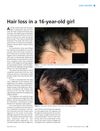 November 2014 in “Prescriber”
 The 16-year-old girl with hair loss was successfully treated for alopecia areata, leading to significant hair regrowth.
 September 2014 in “Aktuelle Dermatologie”
 The symposium concluded that environmental factors significantly contribute to skin aging.
 February 2012 in “Expert Review of Endocrinology & Metabolism”
 The document suggests more research is needed to understand the link between baldness and prostate cancer.