1 citations
,
January 2018 in “Dermatology Online Journal” Knowing how long skin diseases last is important for better patient care.
Collider bias can mislead our understanding of COVID-19 risk and severity.
18 citations
,
February 2020 in “Journal of pharmaceutical and biomedical analysis” The method accurately measures hormones and endocannabinoids in mice, showing gut microbiota diversity affects these levels and may influence stress and reproductive systems.
23 citations
,
March 2023 in “eLife” Stem cell differentiation involves gradual chromatin changes and dynamic gene activity.
August 2013 in “eCommons (Cornell University)” Runx1 and CDK inhibitors help keep hair follicle stem cells inactive, affecting their future roles.
 2 citations
,
March 2001 in “Environmental Health Perspectives”
2 citations
,
March 2001 in “Environmental Health Perspectives” Small hormonal imbalances can cause significant health problems, so more sensitive testing for hormone-disrupting chemicals is needed.
3 citations
,
July 2017 in “Endogenous locus-driven H-Ras G12V expression induces senescence-like phenotype in primary fibroblasts of the Costello syndrome mouse model” Mouse hair follicle stem cells have a flexible chromatin state that supports skin health and hair growth.
1 citations
,
March 1989 in “Proceedings of the British Society of Animal Production” Hormones and daylight changes control when cashmere goats shed their hair.
 September 2019 in “Acta scientific microbiology”
 No link between how fast you breathe and early grey hair was found.
1 citations
,
June 2022 in “Photobiomodulation, photomedicine, and laser surgery” 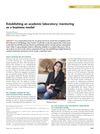 1 citations
,
October 2014 in “Molecular Biology of the Cell”
1 citations
,
October 2014 in “Molecular Biology of the Cell” Valentina Greco emphasizes the importance of combining business management with mentoring to run a successful academic lab.
December 2025 in “Asian Journal of Advanced Research and Reports” Hair growth pathways are a promising and simpler method for detecting chronic stress.
June 2026 in “Comprehensive Psychoneuroendocrinology” Loneliness affects cortisol levels in a non-linear way, with moderate loneliness linked to higher cortisol.
 June 2008 in “Experimental dermatology”
 Melatonin protects skin and hair from damage and stress by acting as an antioxidant and influencing cell growth.
30 citations
,
July 2016 in “Psychoneuroendocrinology” 35 citations
,
September 2009 in “Psychoneuroendocrinology” Early-life neurosteroid changes affect adolescent exploration and adult behavior.
7 citations
,
March 2024 in “Biomedical Engineering Letters” 7 citations
,
March 2025 in “Free Radical Biology and Medicine” Imbalanced redox dynamics cause skin aging by damaging fibroblasts and stem cells.
 68 citations
,
April 2012 in “Journal of Investigative Dermatology”
68 citations
,
April 2012 in “Journal of Investigative Dermatology” The conclusion is that Fgf18 and Tgf-ß signaling could be targeted for hair loss treatments.
 4 citations
,
January 2018 in “Elsevier eBooks”
4 citations
,
January 2018 in “Elsevier eBooks” Hormones are crucial for regulating body functions and imbalances can lead to health issues.
 August 2015 in “Free Radical Biology and Medicine”
 The study suggests that higher levels of SIRT1 and SIRT2 may improve overall cell health and aging processes.
69 citations
,
January 2005 in “The Journals of Gerontology Series A” Short telomeres may cause symptoms like hair loss and osteoporosis, offering insights into aging.
23 citations
,
October 2008 in “Experimental and Clinical Endocrinology & Diabetes” Hair can show increased cortisol levels during late pregnancy.
January 2026 in “Zenodo (CERN European Organization for Nuclear Research)”  April 2026 in “Beni-Suef University Journal of Basic and Applied Sciences”
 Precision medicine is crucial for early diagnosis and personalized treatment in prediabetes.
11 citations
,
October 2010 in “Behavioural Brain Research” Early neurosteroid changes can alter adult brain function and behavior.
March 2026 in “Animal Models and Experimental Medicine” Gorab deficiency speeds up skin aging by disrupting protein regulation and reducing collagen.
 November 2022 in “Journal of Investigative Dermatology”
 Aging skin cells change their lipid profiles due to stress, affecting skin health.
10 citations
,
March 2019 in “Journal of neuroendocrinology” Testosterone affects stress hormone levels differently in adolescent and adult male rats.