 February 2026 in “Zenodo (CERN European Organization for Nuclear Research)”
 New treatments for androgenetic alopecia are emerging, improving hair loss management.
January 2025 in “Surgical & Cosmetic Dermatology” Temporal triangular alopecia causes permanent hair loss and can be managed with treatments like minoxidil or hair transplantation.
AGA is caused by genetics and androgens, treatable with finasteride and minoxidil.
 April 2018 in “Journal of Investigative Dermatology”
 Hair pattern in androgenetic alopecia overlaps with scalp and bone demarcations, with distinct gene profiles affecting susceptibility.
 February 2024 in “Benha Journal of Applied Sciences”
 Androgenetic alopecia is common hair loss caused by genetics and hormones.
 November 2014 in “Prescriber”
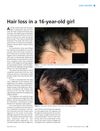
 The 16-year-old girl with hair loss was successfully treated for alopecia areata, leading to significant hair regrowth.
 July 2019 in “Journal of Investigative Dermatology”
 The research found that male pattern hair loss is mostly genetic and involves hair thinning due to hormonal effects and changes in gene expression.
 14 citations
,
December 2003 in “International Journal of Cosmetic Science”
14 citations
,
December 2003 in “International Journal of Cosmetic Science” Hair growth and shedding are linked and can be disrupted, causing a delay known as the hair eclipse phenomenon, which is common in certain hair conditions and could lead to new treatments.
 December 2024 in “Australian Journal of General Practice”
 The woman's hair loss pattern doesn't match typical conditions like alopecia areata or female pattern hair loss.
 August 2021 in “EMC - AKOS - Trattato di Medicina”
 Acquired alopecia is hair loss that can be reversible or irreversible, depending on whether the hair follicle is destroyed.
 January 2023 in “Springer eBooks”
 Most older adults experience pattern hair loss due to shrinking hair follicles, with men and women showing different balding patterns.
 April 2022 in “Indexia revista médico - científica”
 Alopecia causes sudden hair loss, possibly due to genetic, environmental, or immune factors.
 December 2023 in “Scientific Reports”
 Scientists created cell lines from balding patients and found that cells from the front of the scalp are more affected by hormones that cause hair loss than those from the back.
 1 citations
,
March 2020 in “Australasian Journal of Dermatology”
1 citations
,
March 2020 in “Australasian Journal of Dermatology” The paper concludes that recognizing bitemporal alopecia areata is important for early treatment and preventing its progression.
 7 citations
,
December 2016 in “British Journal of Dermatology”
7 citations
,
December 2016 in “British Journal of Dermatology” The report suggests that hair loss in Cronkhite-Canada syndrome may be caused by alopecia areata incognita, as shown by a patient's improvement with treatment.
 3 citations
,
May 2019 in “Australasian Journal of Dermatology”
3 citations
,
May 2019 in “Australasian Journal of Dermatology” Hair loss in Cronkhite-Canada syndrome may be caused by autoimmune factors, not just stress or malabsorption.
 61 citations
,
September 2010 in “Genomics”
61 citations
,
September 2010 in “Genomics” The study found that immune responses disrupt hair growth cycles, causing hair loss in alopecia areata.
5 citations
,
November 2003 in “Biomedical Papers of the Faculty of Medicine of Palacký University, Olomouc Czech Republic” The exact causes of baldness are not fully understood, limiting treatment options.
January 2026 in “Updates in clinical dermatology” 90 citations
,
January 2002 in “Dermatology” Kenogen is a resting phase in hair follicles that may contribute to baldness, especially in androgenetic alopecia.
October 2023 in “University of Zadar Institutional Repository” Androgenic alopecia is hereditary hair loss treated with medications, therapies, and support.
 60 citations
,
October 2009 in “Dermatology”
60 citations
,
October 2009 in “Dermatology” Alopecia areata may appear differently depending on the individual's type of hair loss and scalp condition.
 January 2003 in “Springer eBooks”
 Androgenic alopecia is a type of hair loss that's partly inherited and can be due to hormonal imbalance.
 3 citations
,
June 2006 in “Expert Review of Dermatology”
3 citations
,
June 2006 in “Expert Review of Dermatology” The document concludes that hair loss is complex, affects many people, has limited treatments, and requires more research on its causes and psychological impact.
April 2026 in “Canadian Medical Association Journal” Female pattern hair loss is common and increases with age.
Hair disorders can be genetic or acquired, affecting hair growth and loss differently.
January 2006 in “Casopís lékar̆ů c̆eských” Female hair loss is influenced by genetics and hormones, often starting in middle age or after hormonal changes.
16 citations
,
January 1998 in “Dermatology” Androgens may worsen a natural hair resting phase, possibly leading to hair loss.