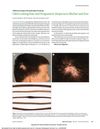
 May 2014 in “JAMA Dermatology”
 Mother and son diagnosed with a rare genetic hair loss condition with no effective treatment.
 December 2019 in “Journal of pediatrics & neonatology”
 A 13-year-old boy had a rare, stable type of hair loss with little chance of regrowth, but treatment is available for looks.
Androgenetic alopecia causes gradual hair thinning due to genetics and hormones, with treatment options including scalp prostheses.
 13 citations
,
March 2017 in “Genomics”
13 citations
,
March 2017 in “Genomics” Genomic approach finds new possible treatments for hair loss.
 June 2025 in “International Journal of Molecular Sciences”
 Targeting EMT and fibrotic remodeling may help treat androgenetic alopecia.
 April 2018 in “bioRxiv (Cold Spring Harbor Laboratory)”
 A gene variant causes patched hair loss in mice, similar to alopecia areata in humans.
 November 2023 in “International Journal of Dermatology”
 Trichoscopy helps tell apart other hair loss conditions from common hair loss.
 March 2009 in “International Journal of Dermatology and Venereology”
 Androgenic alopecia, or male pattern baldness, is caused by genes.
January 2004 in “Journal of Clinical Dermatology”  6 citations
,
January 2015 in “Journal of The European Academy of Dermatology and Venereology”
6 citations
,
January 2015 in “Journal of The European Academy of Dermatology and Venereology” Different hair loss types need accurate diagnosis for proper treatment.
 1 citations
,
January 1996 in “Springer eBooks”
1 citations
,
January 1996 in “Springer eBooks” Androgenetic alopecia is a condition causing noticeable hair loss, especially in middle age, which is more severe than normal balding.
Androgenetic alopecia can cause distress and lower quality of life.
11 citations
,
January 2010 in “Springer eBooks” 1 citations
,
January 2022 in “Springer eBooks” September 2004 in “Dépôt institutionnel de l'Université libre de Bruxelles (Université Libre de Bruxelles)” Early diagnosis and treatment can help manage hair loss effectively.
 13 citations
,
July 2004 in “Skinmed”
13 citations
,
July 2004 in “Skinmed” Common types of non-scarring hair loss have various causes and treatments, but more effective solutions are needed.
 May 2023 in “Clinical and Experimental Dermatology”
 Alopecia areata has a high chance of persisting and relapsing, with a significant risk of total hair loss, especially if it starts in childhood.
 November 2017 in “British Journal of Dermatology”
 Genes controlling hair growth and immune response are disrupted in male pattern baldness.
 9 citations
,
August 2013 in “Archives of Dermatological Research”
9 citations
,
August 2013 in “Archives of Dermatological Research” A gene called BMAL1 plays a role in controlling hair growth.
 March 2019 in “Chinese Journal of Dermatology”
 Hair loss, known as androgenetic alopecia, is mainly caused by genetics, but also by hormone imbalances, shrinking hair follicles, inflammation, and environmental factors.
 December 2025 in “ADMET & DMPK”
 Personalized treatments for hair loss focus on specific genetic and biological pathways.
 89 citations
,
October 1996 in “Dermatologic Clinics”
89 citations
,
October 1996 in “Dermatologic Clinics” Alopecia areata is likely caused by a combination of genetic factors and immune system dysfunction, and may represent different diseases with various causes.
 1 citations
,
July 2018 in “Elsevier eBooks”
1 citations
,
July 2018 in “Elsevier eBooks” Heredity and hormones cause common hair loss, and topical minoxidil is the first recommended treatment.
June 2011 in “European Journal of Pediatric Dermatology” An 11-year-old girl with hair thinning was diagnosed with monilethrix and early androgenetic alopecia.
January 2007 in “Revista del Centro Dermatológico Pascua” Androgenetic alopecia causes hair thinning in women, affecting their quality of life.
 January 2007 in “Elsevier eBooks”
 Alopecia areata is a reversible, autoimmune-related hair loss that can have significant emotional impact and uncertain treatment effectiveness.
3 citations
,
January 2020 in “International journal of trichology” Congenital triangular alopecia is a hair loss condition present from birth or early childhood with no effective treatment needed.
7 citations
,
October 2008 in “Nature Genetics” Two key genetic areas linked to male-pattern baldness were identified.
 November 2016 in “Der Hautarzt”
 Hair thinning on top of the head is common in female androgenetic alopecia.