 January 2020 in “Clinical dermatology open access journal”
 Changing certain hairstyles can prevent worsening hair loss in Mexican women.
 March 2018 in “Dermatología Argentina”
 The study found that the average age of women diagnosed with Frontal Fibrosing Alopecia in Argentina is higher than in other countries, but their symptoms are similar.
 January 2018 in “Skin appendage disorders”
 A woman's hair loss was correctly diagnosed as Lichen planopilaris after initial misdiagnosis, highlighting the usefulness of trichoscopy in diagnosing hair disorders.
 January 2017 in “Springer eBooks”
 Over 40% of postmenopausal women experience hair loss, with treatments aiming to stop further loss and possibly thicken hair.
 January 2015 in “Hair therapy & transplantation”
 Some botanical products may help increase hair growth in people with alopecia, but more research is needed.
 May 2014 in “Clinical and Experimental Dermatology”
 A 70-year-old woman with a rare skin condition improved after treatment with topical steroids and acitretin.
 March 2014 in “Journal of The American Academy of Dermatology”
 Mycophenolic acid may help hair growth, a combination treatment improves hair thickness in male hair loss, and early treatment of frontal fibrosing alopecia is important.
 March 2021 in “PARIPEX INDIAN JOURNAL OF RESEARCH”
 Microneedling combined with platelet-rich plasma therapy is more effective for hair regrowth in androgenic alopecia than microneedling alone, but it's more painful.
 November 2015 in “Springer eBooks”
 Hair loss treated with minoxidil, finasteride, laser/light, hair transplant, and scalp prostheses; more research needed for skin of color.
 26 citations
,
August 2016 in “Actas Dermo-Sifiliográficas”
26 citations
,
August 2016 in “Actas Dermo-Sifiliográficas” Frontal Fibrosing Alopecia in men is often missed and can come with symptoms like facial bumps and hair loss on eyebrows and limbs.
 February 2026 in “Brazilian Journal of Implantology and Health Sciences”
 Chronic stress and high cortisol levels can cause hair loss by disrupting hair growth.
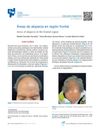 January 2025 in “Revista del Centro Dermatológico Pascua”
 Early diagnosis and treatment can help manage fibrosing alopecia in older women.
 August 2023 in “Anales de la Facultad de Ciencias Médicas”
 The patient with lupus and hair loss improved with oral and topical minoxidil.
 April 2022 in “Indexia revista médico - científica”
 Alopecia causes sudden hair loss, possibly due to genetic, environmental, or immune factors.
 January 2020 in “Revista da Sociedade Portuguesa de Dermatologia e Venereologia”
 Frontal fibrosing alopecia in Brazil mostly affects postmenopausal women, often linked with hypothyroidism and eyebrow hair loss.
 August 2016 in “Journal of the Portuguese Society of Dermatology and Venereology”
 Two women with darker skin had both frontal hair thinning and skin discoloration.
 56 citations
,
March 2010 in “Journal of Dermatology”
56 citations
,
March 2010 in “Journal of Dermatology” Most cases of Temporal Triangular Alopecia are found in early childhood and may be related to genetic conditions.
 13 citations
,
February 2015 in “Actas Dermo-Sifiliográficas”
13 citations
,
February 2015 in “Actas Dermo-Sifiliográficas” The document concludes that recognizing specific histological features of different nonscarring alopecias is crucial for accurate diagnosis and understanding hair loss progression.
 1 citations
,
December 2017 in “Hygeia - Revista Brasileira de Geografia Médica e da Saúde”
1 citations
,
December 2017 in “Hygeia - Revista Brasileira de Geografia Médica e da Saúde” The local environment significantly impacts Alopecia Areata.
 January 2024 in “Revista de la Asociación Colombiana de Dermatología y Cirugía Dermatológica/Revista de la Asociacion Colombiana de Dermatologia y Cirugia Dermatologica”
 Baricitinib successfully treated severe hair loss.
 November 2021 in “Research, Society and Development”
 Individualized treatment and psychological support are crucial for alopecia.
 May 2019 in “Journal of the Dermatology Nurses’ Association”
 Folliculitis decalvans mainly affects middle-aged African American men and is treated with antibiotics.
 63 citations
,
May 2000 in “Australasian Journal of Dermatology”
63 citations
,
May 2000 in “Australasian Journal of Dermatology” Chemotherapy and bone marrow transplant can cause permanent hair loss.
 19 citations
,
January 2016 in “Dermatology Research and Practice”
19 citations
,
January 2016 in “Dermatology Research and Practice” The study concluded that hair loss in Indian women is not significantly linked to anemia or thyroid problems, but checking thyroid function could help those with ongoing hair loss.
 16 citations
,
September 2008 in “American Journal of Orthodontics and Dentofacial Orthopedics”
16 citations
,
September 2008 in “American Journal of Orthodontics and Dentofacial Orthopedics” Wearing orthodontic headgear can cause reversible hair loss if detected early.
 13 citations
,
July 2011 in “Journal of Dermatological Treatment”
13 citations
,
July 2011 in “Journal of Dermatological Treatment” Clobetasol and pimecrolimus are similarly effective for alopecia areata, but pimecrolimus has fewer side effects and is preferred for long-term use.
 6 citations
,
November 2017 in “Dermatologic Therapy”
6 citations
,
November 2017 in “Dermatologic Therapy” Combining mometasone furoate cream with adapalene gel is safer and more effective for hair regrowth in alopecia areata than using the cream alone.
 3 citations
,
September 2019 in “Journal of Orthodontics”
3 citations
,
September 2019 in “Journal of Orthodontics” A boy's hair grew back after he stopped using orthodontic headgear that caused temporary hair loss.
 2 citations
,
January 1997 in “Archives of Dermatology”
2 citations
,
January 1997 in “Archives of Dermatology” Alopecia areata can regrow hair in a pattern similar to androgenetic alopecia.
 1 citations
,
July 2016 in “International Journal of Dermatology”
1 citations
,
July 2016 in “International Journal of Dermatology” Androgenetic alopecia is less common in Chilean Mapuche than Caucasians, but more common than Asians, with racial differences in prevalence and types.