 January 1957 in “Nihon Chikusan Gakkaiho”
 Rabbit hair color is influenced by the shape and distribution of pigment granules.
 January 2006 in “Seibutsu Butsuri”
 Curly and straight hair differ in how their internal fibers are arranged.
 18 citations
,
January 2011 in “International journal of trichology”
18 citations
,
January 2011 in “International journal of trichology” Hair casts, also called pseudonits, are often mistaken for other conditions.
 40 citations
,
May 2012 in “British Journal of Dermatology”
40 citations
,
May 2012 in “British Journal of Dermatology” Recognizing specific features of African-American hair can help diagnose hair loss conditions.
 November 2023 in “Journal of animal science/Journal of animal science ... and ASAS reference compendium”
 Pig hair cortisol levels are inheritable and linked to stress responses, which could help select for more resilient pigs.
 108 citations
,
March 2011 in “Archives of Dermatology”
108 citations
,
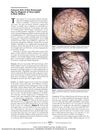
March 2011 in “Archives of Dermatology” Corkscrew hair may be a new sign for quickly diagnosing scalp fungus in black children.
August 1989 in “Proceedings ... annual meeting, Electron Microscopy Society of America/Proceedings, annual meeting, Electron Microscopy Society of America” The research provided a detailed view of the non-keratinous parts of human hair fibers.
8 citations
,
May 2008 in “Applied surface science” Mummy hair from the Taklamakan desert has calcium and phosphorus inside.
7 citations
,
April 2000 in “Mammalian Genome” A new mutation in mice causes crooked whiskers and messy hair.
23 citations
,
December 1977 in “Virchows Archiv B Cell Pathology”  July 2024 in “Journal of Investigative Dermatology”
 Ashwagandha nanoparticles help hair grow by increasing a growth factor.
2 citations
,
May 2020 in “Journal of the American Academy of Dermatology” Hair shaft changes may be linked to CCCA, but their role is unclear.
July 2026 in “arXiv (Cornell University)” Hair has varying structures and properties along its length.
5 citations
,
September 2006 in “Natural medicines/Journal of natural medicines” Microscopic hair features can identify different Cauda Cervi species.
20 citations
,
January 2002 in “Laboratory Animals” Mutations in the hairless gene cause hair loss and skin cysts in rhesus macaques.

Ashwagandha-derived nanoparticles can promote human hair growth.
30 citations
,
July 2000 in “PubMed” Hair has unevenly distributed proteins and lipids, with lipids mainly in the cuticle and proteins in the cortex and medulla.
April 2015 in “Dentistry 3000” Premature hair graying in the face may be influenced by genetics and environment.
1 citations
,
May 1983 in “Acta dermato-venereologica” The hairpiece matted due to weathered hair after shampooing.
4 citations
,
May 2014 in “Pharmaceutical Biology” Glycyrrhizic acid from sweet licorice can effectively remove hair without skin irritation.
 15 citations
,
February 1999 in “The anatomical record”
15 citations
,
February 1999 in “The anatomical record” Some mutant mice have hair with abnormal cross-linking, mainly in the cuticle, not affecting other hair parts.
July 1993 in “Journal of Radioanalytical and Nuclear Chemistry” Mouse hair element patterns vary, making it unreliable for tracking time.
 21 citations
,
April 1982 in “Genetics Research”
21 citations
,
April 1982 in “Genetics Research” Mice with the naked gene have missing or abnormal hair cells.
 37 citations
,
January 2017 in “International Journal of Dermatology”
37 citations
,
January 2017 in “International Journal of Dermatology” Trichoscopy helps tell apart alopecia areata and trichotillomania in Asians by looking at specific hair and scalp features.
 January 2002 in “Proceedings of The Japanese Society of Animal Models for Human Diseases”
 Keratin2-6g is crucial for hair follicle development, with mutations causing cell degeneration and vacuolation.
April 2023 in “Cancer Research” Plucked hair can effectively monitor drug effects in cancer treatment.
June 2026 in “BMC Microbiology” Cyanoacrylate glue effectively reduces contamination in hair follicle samples.
 245 citations
,
January 1998 in “Genes & Development”
245 citations
,
January 1998 in “Genes & Development” Hoxc13 gene is essential for hair, nail, and papilla development.
3 citations
,
November 1977 in “JAMA” Hair casts can be mistaken for lice, causing unnecessary stress.
1 citations
,
April 2009 in “Wiley Encyclopedia of Forensic Science” Microscopic hair analysis helps identify species and sometimes individuals in forensic science.