8 citations
,
September 2016 in “Journal of the American Academy of Dermatology” It's important to tell the difference between hair casts, pseudocasts, and nits.
8 citations
,
October 2011 in “Anthropologischer Anzeiger” Pubic hair is thicker than axillary and scalp hair, useful for forensic identification.
February 2018 in “bioRxiv (Cold Spring Harbor Laboratory)” Rodent spiny hair traits are due to genetic factors other than the Edar gene.
18 citations
,
January 1992 in “Dermatology” A 4-year-old girl has a rare condition causing hairlessness and skin bumps, but normal teeth and sweating.
2 citations
,
January 2002 in “Zhiwu Yanjiu” Capitate trichomes have more endoplasmic reticulum and vacuoles, while peltate trichomes have more plastids and larger subcuticular spaces.
 5 citations
,
March 2001 in “Journal of biomechanics”
5 citations
,
March 2001 in “Journal of biomechanics” Growing hairs are easier to pull out than resting hairs due to different anchorage strengths.
62 citations
,
December 2008 in “Journal of structural biology” Hair curvature in Japanese people is linked to specific cell types and filament arrangements in the hair cortex.
12 citations
,
December 2011 3 citations
,
March 2009 in “Hirosaki University Repository for Academic Resources (Hirosaki University)” Hirosaki hairless rats have sparse, twisted hair due to missing hair keratin genes.
March 2022 in “International Journal of Trichology” Smoking may worsen hair loss, but more research is needed.
Nanoparticles with caffeine can be used for slow, continuous hair growth stimulation.
 63 citations
,
October 2005 in “Archives of Dermatology”
63 citations
,
October 2005 in “Archives of Dermatology” Shorter, thinner hairs indicate AGA, while longer, thicker hairs suggest CTE; counting and measuring shed hairs helps diagnose hair loss type.
33 citations
,
September 1987 in “American Journal of Medical Genetics” Uncombable hair is inherited dominantly with complete penetrance.
July 2026 in “Physiologia Plantarum” Collet hairs are essential for anchoring and survival of Arabidopsis thaliana seedlings.
 21 citations
,
November 1981 in “Archives of Dermatology”
21 citations
,
November 1981 in “Archives of Dermatology” Ashy dermatosis may be linked to atopy and thyroid disease and can be treated with topical steroids.
 January 2018 in “Indian Dermatology Online Journal”
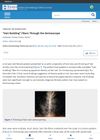
 Trichoscopy can help tell the difference between artificial hair fibers and other scalp artifacts.
February 2024 in “Medicina” AFM can diagnose hair disorders by revealing detailed hair surface changes.
 4 citations
,
November 1968 in “Textile research journal”
4 citations
,
November 1968 in “Textile research journal” Hair fibers may have a unique, non-protein sheath not previously identified.
 41 citations
,
January 2014 in “Annals of Dermatology”
41 citations
,
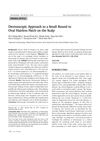
January 2014 in “Annals of Dermatology” Dermoscopic examination helps diagnose different types of hair loss conditions by showing specific patterns.
15 citations
,
December 1972 in “Journal of Investigative Dermatology”  1 citations
,
January 2015 in “International journal of trichology (Print)”
1 citations
,
January 2015 in “International journal of trichology (Print)” A single long white eyelash is a rare but benign condition.
 September 2023 in “Journal of Nutrition and Metabolism”
 One Ashwagandha extract may help protect cells with its antioxidant properties, while another could promote hair growth.
 November 2021 in “International journal of research - granthaalayah”
 The document suggests that human hair has electrical charges because of a gap in nerve cell coverage that affects electromagnetic radiation.
 19 citations
,
October 1985 in “British Journal of Dermatology”
19 citations
,
October 1985 in “British Journal of Dermatology” The document concludes that unruly hair can be congenital or acquired, often lacks specific treatments, and can be managed with oils and short hairstyles.

Hair feels different when touched and rubs together in various ways.
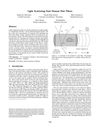
Researchers developed a new model for more realistic computer graphics of hair by considering how light scatters on hair fibers.
 2 citations
,
January 2020
2 citations
,
January 2020 The document describes a method for preparing hair for microscopy by embedding it in plastic, cutting it, and storing it cold before imaging.
January 2005 in “Journal of Zhejiang University(Sciences Edition)” Yuyi hairless mice lose hair after birth, develop thick, loose skin with folds, and show disorganized skin structure as they age.
 1 citations
,
January 2016 in “Journal of cosmetology & trichology”
1 citations
,
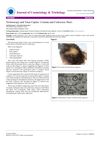
January 2016 in “Journal of cosmetology & trichology” Trichoscopy helped diagnose and treat a child's fungal scalp infection by spotting specific hair shapes.
 March 2021 in “CRC Press eBooks”
 The document concludes that different patterns of hair thickness and scalp changes can help diagnose types of non-scarring hair loss.