4 citations
,
April 1978 in “PubMed” Netherton syndrome in a boy caused skin and hair issues, and treatment didn't work.
 4 citations
,
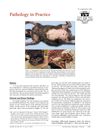
May 2014 in “Javma-journal of The American Veterinary Medical Association”
4 citations
,
May 2014 in “Javma-journal of The American Veterinary Medical Association” The cat had liver cancer and a related hair loss condition, with a likely cause being bile duct cancer.
6 citations
,
January 2022 in “BMC Medical Genomics” Different gene mutations cause different types of ichthyosis, with some new mutations found.
 81 citations
,
November 2012 in “Journal of the National Cancer Institute”
81 citations
,
November 2012 in “Journal of the National Cancer Institute” The tumor suppressor gene FLCN affects mitochondrial function and energy use in cells.
 September 1961 in “Archives of Dermatology”
 Colchicine causes hair loss by damaging hair follicles.
 27 citations
,
September 1992 in “The Lancet”
27 citations
,
September 1992 in “The Lancet” ICL is a condition with low CD4+ T cells like AIDS but not caused by HIV, and normal CD4+ T cell counts may vary between men and women.
June 2018 in “Journal of the American Veterinary Medical Association” Three related Persian cats have a rare, likely hereditary skin condition causing hair loss and poor coat quality, with limited treatment options.
 28 citations
,
November 2013 in “The FASEB journal”
28 citations
,
November 2013 in “The FASEB journal” Mice with CBS deficiency are healthier on a low-methionine diet.
11 citations
,
January 2014 in “Dermatology” Certain SPINK5 gene mutations are common in Israeli families with Comèl-Netherton syndrome.
A rare genetic mutation causes severe immune issues, hair loss, and nail problems.
November 2025 in “FEBS Open Bio” JAK/STAT1 pathway causes hair loss during chemotherapy by reducing Shh in hair follicles.
 December 2020 in “Innovation in aging”
 Rapamycin treatment helps reduce brain inflammation and symptoms of mitochondrial disease by blocking specific pathways in mice.
Hair dysplasias involve various hair disorders causing fragility, breakage, and poor hair adhesion.
29 citations
,
January 2003 in “Genomics” A new mouse mutation causes skin and hair issues, influenced by another gene.
15 citations
,
June 2012 in “British Journal of Dermatology” A new mutation in the KRT86 gene causes a hair disorder with variable expression.
6 citations
,
October 2006 in “International Journal of Dermatology” Hair splitting and nail detachment are linked conditions.
Mutant Cx43 causes slower wound healing and hair growth issues in ODDD.
Men with CCCA often face delayed diagnosis and severe hair loss, highlighting the need for earlier recognition and treatment.
 April 2017 in “Journal of Investigative Dermatology”
 Targeted siRNA therapy may be a promising treatment for KID syndrome by reducing mutant gene expression and improving cell communication.
25 citations
,
October 2007 in “Developmental biology” Clim proteins are essential for maintaining healthy corneas and hair follicles.
 October 2024 in “Journal of the Endocrine Society”
 Certain genetic variants reduce enzyme activity, contributing to non-classic congenital adrenal hyperplasia.
10 citations
,
November 1946 in “Journal of the American Medical Association” Severe vitamin deficiencies in children can cause significant hair problems.
January 2026 in “Updates in clinical dermatology” 20 citations
,
May 2011 in “Journal of Clinical Investigation” The study created a mouse model to mimic degenerative diseases for testing tissue repair and new therapies.
 80 citations
,
March 2004 in “Neuropediatrics”
80 citations
,
March 2004 in “Neuropediatrics” Coats' Plus is a genetic disorder with eye abnormalities, brain calcification, poor growth, bone and skin issues, and movement disorders.
1 citations
,
May 2024 in “Skin Appendage Disorders” Early diagnosis with trichoscopy can improve management and quality of life for CCCA patients.
April 2019 in “Journal of parasitic diseases” A Persian cat and its owner fully recovered from Cheyletiellosis after treatment.
 29 citations
,
December 2017 in “Molecular therapy”
29 citations
,
December 2017 in “Molecular therapy” Enzyme replacement therapy improved multiple symptoms of homocystinuria in mice.
22 citations
,
November 2008 in “The journal of investigative dermatology/Journal of investigative dermatology” Cystatin M/E helps in the final stages of hair and nail formation by controlling certain enzymes.
67 citations
,
April 2014 in “Biochemical Journal” Ceramide synthase 4 deficiency in mice leads to hair loss due to altered sebum lipids.