 May 2021 in “Zenodo (CERN European Organization for Nuclear Research)”
 Biotin may help hair and nails grow.

A person with a new mutation in the SCN1A gene developed brain inflammation after COVID-19.

Crinum asiaticum extract and norgalanthamine may promote hair growth by blocking an enzyme linked to hair loss and a pathway that stops hair growth.
Cepharanthine and tetrandrine show promise as COVID-19 drugs.
 February 2025 in “Indian Dermatology Online Journal”
 Pincer nails are rare in lupus patients and may be managed conservatively.
13 citations
,
February 2024 in “Clinical Cosmetic and Investigational Dermatology” Polynucleotides HPT improves Asian skin tone, firmness, and glow safely.
 April 2024 in “BMB Reports”
 Lack of Cisd2 disrupts calcium balance in cells, leading to poorly functioning neutrophils.
 7 citations
,
December 2011 in “Annals of anatomy”
7 citations
,
December 2011 in “Annals of anatomy” Involucrin helps strengthen the inner parts of human hair.
March 2025 in “International Journal of Trichology” Janus kinase inhibitors may effectively treat resistant scalp conditions like folliculitis decalvans and dissecting cellulitis.
5 citations
,
January 2021 in “Pakistan Journal of Nematology” Citrullus colocynthis is a valuable natural option for medicine and pest control.
 14 citations
,
November 1987 in “Journal of The American Academy of Dermatology”
14 citations
,
November 1987 in “Journal of The American Academy of Dermatology” A woman developed a severe skin reaction called toxic epidermal necrolysis after taking the antibiotic cephalexin.
 9 citations
,
January 2018 in “Plastic and Reconstructive Surgery – Global Open”
9 citations
,
January 2018 in “Plastic and Reconstructive Surgery – Global Open” Using PDRN injections and RF treatments improved revision nose surgery results without major side effects.
61 citations
,
September 1994 in “Journal of Medical Genetics” Pachyonychia congenita is linked to a keratin gene on chromosome 17.

Cepharanthine could be a strong antiviral against COVID-19.
 40 citations
,
December 2012 in “PLoS ONE”
40 citations
,
December 2012 in “PLoS ONE” Removing Ctip2 in skin cells causes skin inflammation similar to atopic dermatitis.
64 citations
,
October 2018 in “Thérapie” Enriching the French health care database with external data greatly improved its usefulness.
46 citations
,
November 2019 in “Journal of Integrative Plant Biology” CaM7 and CNGC14 interaction controls root hair growth in Arabidopsis.
February 2010 in “Faculty Opinions – Post-Publication Peer Review of the Biomedical Literature” Fluphenazine and iloprost can induce hair growth.
11 citations
,
January 2014 in “Dermatology” Certain SPINK5 gene mutations are common in Israeli families with Comèl-Netherton syndrome.
2 citations
,
October 2024 in “Artificial Cells Nanomedicine and Biotechnology” Greenly synthesized silver nanoparticles from lentils show strong anticancer and antimicrobial effects.
10 citations
,
January 2012 in “Case reports in medicine” Diphencyprone can cause unexpected and possibly permanent vitiligo.
Nod factor can trigger changes in legume root hairs with just one molecule.
31 citations
,
February 1983 in “American Journal of Clinical Nutrition” Biotin deficiency can cause hair loss in adults on long-term TPN, but supplementation helps regrow hair.
 14 citations
,
May 2021 in “Marine Drugs”
14 citations
,
May 2021 in “Marine Drugs” PDRN, derived from salmon sperm, shows promise in healing wounds, reducing inflammation, and regenerating tissues, but more research is needed to understand its mechanisms and improve its use.
November 2022 in “Zenodo (CERN European Organization for Nuclear Research)” 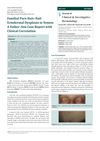 January 2026 in “Journal of Clinical and Investigative Dermatology”
 A father and son in Yemen have a genetic condition causing hair loss and nail problems.
 February 2024 in “Frontiers in plant science”
 Peps help Arabidopsis plants grow more root hairs by affecting specific genes and calcium signaling.
3 citations
,
June 2004 in “Critical Care Nurse” Genomics can improve patient care by using DNA to create personalized treatment plans.
A standardized consent form for PRP injections improves patient trust and legal protection.
November 2025 in “PLoS ONE” Nucleic acids trigger chemokine production in skin cells, affecting skin inflammation.