14 citations
,
May 2022 in “Animals” Female goslings have darker feathers than males due to more melanin.
4 citations
,
October 2023 in “Children” Early diagnosis and comprehensive care are crucial for managing Focal Dermal Hypoplasia's complex symptoms.
4 citations
,
June 2023 in “Journal of developmental biology” The skin systems of jawed vertebrates evolved diverse appendages like hair and scales from a common structure over 420 million years ago.
4 citations
,
February 2023 in “iScience” Korean long-tailed chickens have unique genes valuable for ornamental breeding.
4 citations
,
May 2020 in “Animals” Prompt veterinary care and accurate diagnosis are crucial for effectively treating rare fungal dermatitis in horses.
 April 2026 in “Biomedicines”
 A holistic approach combining lifestyle changes, stress management, exercise, and herbal medicine can effectively treat and prevent keloids.
August 2025 in “BMC Genomics” Certain genes contribute to stronger hooves in barefoot racing horses.
 February 2025 in “Animals”
 Understanding proteins in skin structures like claws and hair is crucial for future research.
Cows moving from tie-stall to free-stall housing had more heel problems, less joint lesions, and higher stress levels.
 8 citations
,
September 2016 in “Journal of Investigative Dermatology”
8 citations
,
September 2016 in “Journal of Investigative Dermatology” Mice with more Flightless I protein grew back their claws better after amputation.
 December 2024 in “Genome Biology and Evolution”
 Snakes and worm lizards lost claw proteins due to similar evolutionary changes.
20 citations
,
December 2010 in “Journal of Morphology” Lizard claws have hair-like keratins similar to those in mammals.
 14 citations
,
February 2014 in “Experimental Cell Research”
14 citations
,
February 2014 in “Experimental Cell Research” The conclusion is that teeth, hair, and claws have similar stem cell niches, which are important for growth and repair, and more research is needed on their regulation and potential markers.
6 citations
,
October 2009 in “Veterinary Dermatology” Canine claws have complex structures with different keratin types, similar to hair and nails.
50 citations
,
January 1986  1 citations
,
March 2024 in “International Journal of Pharmaceutical Sciences and Drug Research”
1 citations
,
March 2024 in “International Journal of Pharmaceutical Sciences and Drug Research” Helianthus annuus and Martynia annua seed oils significantly promote hair growth.
 9 citations
,
October 2012 in “Natural Product Communications”
9 citations
,
October 2012 in “Natural Product Communications” The essential oil from Chamaecyparis lawsoniana has strong antibacterial and antifungal effects, especially against yeast and Gram-positive bacteria.
October 2020 in “Tierärztliche Praxis. Ausgabe Grosstiere, Nutztiere” Cows moving from tie-stalls to free-stalls had fewer leg injuries but more stress and heel horn erosions.
 131 citations
,
March 2004 in “The American journal of pathology”
131 citations
,
March 2004 in “The American journal of pathology” Modulating BMP activity changes the number, size, shape, and type of ectodermal organs.
 32 citations
,
June 2013 in “Journal of Investigative Dermatology”
32 citations
,
June 2013 in “Journal of Investigative Dermatology” Mice without certain skin proteins had abnormal skin and hair development.
November 2025 in “Indian Dermatology Online Journal” Clouston syndrome can lead to skin cancer, so monitoring is crucial.
2 citations
,
December 2013 in “The Journal of Dermatology” March 2021 in “Annals of King Edward Medical University” Clouston syndrome causes issues with teeth, hair, nails, and skin, and has no cure, but recognition has improved.
June 2025 in “British Journal of Dermatology” Nail abnormalities in children can indicate deeper health issues.
 1 citations
,
July 2020 in “Journal of Biomedical Translational Research”
1 citations
,
July 2020 in “Journal of Biomedical Translational Research” Raccoon dogs can adapt well to life with three legs after forelimb amputation.
 January 2018 in “Elsevier eBooks”
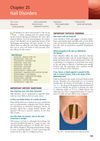
 Different nail disorders are treated by targeting their specific causes and using appropriate medications or protective measures.
 February 2025 in “Indian Dermatology Online Journal”
 Pincer nails are rare in lupus patients and may be managed conservatively.
 September 1998 in “Journal of The European Academy of Dermatology and Venereology”
 Old people's nails often have problems due to body changes, more diseases, and self-care difficulties, affecting their movement and hand use.
 7 citations
,
August 2008 in “Cases Journal”
7 citations
,
August 2008 in “Cases Journal” A hair tightly wrapped around a toddler's toe caused severe crying and was treated by surgery.
4 citations
,
December 2017 in “Journal of zoo and wildlife medicine” Hormonal changes during the reproductive cycle may cause seasonal skin problems in captive female fossas.