 May 2025 in “International Journal For Multidisciplinary Research”
 Cats and dogs with dermatophytosis show skin issues, with dogs having more severe symptoms.
January 2006 in “Dianzi xianwei xuebao” Netherton syndrome causes specific skin and hair changes that help in early diagnosis.
May 2018 in “Dermatologic Surgery” 28 citations
,
May 2000 in “Proceedings of the National Academy of Sciences” The Walleye dermal sarcoma virus cyclin causes excessive skin cell growth in mice.
October 1990 in “Spectrum Research Repository (Concordia University)”  7 citations
,
August 2022 in “Nature communications”
7 citations
,
August 2022 in “Nature communications” A specific group of slow-growing stem cells marked by Thy1 is crucial for skin maintenance and healing in mice.
6 citations
,
October 2006 in “International Journal of Dermatology” Hair splitting and nail detachment are linked conditions.
 28 citations
,
October 2004 in “Differentiation”
28 citations
,
October 2004 in “Differentiation” A gene deletion causes the "hairless" trait in Iffa Credo rats.
 1 citations
,
October 2019 in “International journal of contemporary pediatrics”
1 citations
,
October 2019 in “International journal of contemporary pediatrics” A 12-year-old boy with twenty nail dystrophy, a condition affecting all nails, was treated conservatively due to its self-limiting nature and good prognosis.
July 1979 in “Archives of Dermatology” A 68-year-old woman with benign mucous membrane pemphigoid has eye, mouth, and skin issues, including thick plaques and nail changes.
99 citations
,
July 1996 in “Journal of Investigative Dermatology” 1 citations
,
October 2015 in “OakTrust (Texas A&M University Libraries)” Harp seals have different innervation patterns in their whiskers, with lateral whiskers having more axons than medial ones.
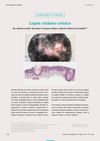 January 2024 in “Revista Dermatológica Centro Uraga”
 The patient has Chronic Cutaneous Lupus, a skin condition causing plaques and hair loss.
January 2012 in “Case reports in pediatrics” A 16-year-old boy's arm hair grew more after wearing a splint, but it returned to normal in 8 months.
 27 citations
,
July 2017 in “Scientific Reports”
27 citations
,
July 2017 in “Scientific Reports” N-WASP is essential for healthy skin and preventing inflammation.
14 citations
,
April 2025 in “Nano Today” The hydrogel dressing speeds up and improves diabetic wound healing.
 4 citations
,
October 2017 in “Advances in tissue engineering & regenerative medicine”
4 citations
,
October 2017 in “Advances in tissue engineering & regenerative medicine” Researchers created a potential skin substitute using a biodegradable mat that supports skin cell growth and layer formation.
2 citations
,
October 1992 in “PubMed” WHV infection does not affect woodchuck skin anatomy.
7 citations
,
January 1990 88 citations
,
March 2004 in “Journal of Investigative Dermatology” June 2020 in “Journal of Investigative Dermatology” Hair shaft malformation contributes to Central Centrifugal Cicatricial Alopecia.
 May 2022 in “Голова и шея.”
 The distal radius evolved to adapt and function despite potential fractures.
7 citations
,
May 1995 in “The journal of investigative dermatology/Journal of investigative dermatology” 12 citations
,
December 2011 in “Journal of Dermatological Science” The C-terminal tail of AHF/trichohyalin is essential for organizing keratin filaments in keratinocytes.
48 citations
,
July 1993 in “Archives of Dermatological Research” Merkel cells are abundant in facial vellus hair follicles, especially during the anagen phase.
18 citations
,
January 2018 in “BMC dermatology” A new mutation in the PLEC gene causes a rare condition with skin blistering, muscle weakness, and hair loss.
December 2004 in “Differentiation” January 2005 in “Journal of Zhejiang University(Sciences Edition)” Yuyi hairless mice lose hair after birth, develop thick, loose skin with folds, and show disorganized skin structure as they age.
 September 2023 in “Nature communications”
 Alk1 in specific cells is crucial for proper nerve branching and hair function.
 32 citations
,
April 2014 in “The journal of investigative dermatology/Journal of investigative dermatology”
32 citations
,
April 2014 in “The journal of investigative dermatology/Journal of investigative dermatology” Loss of keratin K2 causes skin problems and inflammation.