 December 2023 in “ANNALS OF ABBASI SHAHEED HOSPITAL AND KARACHI MEDICAL & DENTAL COLLEGE”
 Spexin levels are lower in PCOS patients and linked to metabolic and hormonal issues.
 November 2023 in “Laser therapy”
 Trichoscopy is essential for diagnosing and managing alopecia areata in children.
 September 2023 in “Clinical, cosmetic and investigational dermatology”
 A new surgical method using special sutures significantly reduced wound size and prevented disease return in patients with a scarring scalp condition.
 June 2023 in “Dermatology and therapy”
 The Middle East and Africa need better data, treatment consensus, and support for Alopecia Areata.
 February 2023 in “Indian Journal of Postgraduate Dermatology”
 The IADVL offers residents grants, scholarships, training, and learning resources for academic growth.
 January 2023 in “Pakistan Armed Forces Medical Journal”
  January 2023 in “International Journal of Medicine in Developing Countries”
 Topical minoxidil improved hair loss in a patient when used consistently.
 December 2022 in “The Journal of Cosmetic Medicine”
 Hairline-lowering surgery effectively reduces a high hairline with immediate, noticeable results.
 October 2022 in “International journal of research and review”
 A man had severe stomach issues after a dental treatment with Formacresol, which improved with a different medication.
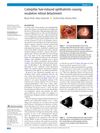 July 2022 in “BMJ Case Reports”
 Early treatment is crucial to prevent severe eye complications from caterpillar hair.
 October 2021 in “Turkderm”
 Hormonal imbalances, not insulin resistance or dyslipidemia, may be more important in causing acne in women over 25.

Researchers found a genetic link for hereditary hair loss but need more analysis to identify the exact gene.
 December 2020 in “TURKDERM”
 A 3-year-old boy was diagnosed with a rare, non-scarring hair loss condition called temporal triangular alopecia.
 December 2020 in “Journal of medical science and clinical research”
 Most child skin problems during the COVID-19 lockdown were not emergencies and could have been handled by teleconsultation.
 November 2017 in “Research Journal of Health Sciences”
 Skin infections and eczema were most common in all ages, acne in teens and young adults, and nutritional skin problems and infestations in children.
 November 2017 in “British journal of nursing”
 Charities help patients manage their own health by providing resources and support.
 September 2016 in “Springer eBooks”
 Fat-derived stem cells may help treat skin aging and hair loss.
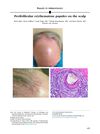 January 2016 in “Journal of The American Academy of Dermatology”
 The woman has a type of scarring hair loss with red bumps around hair follicles.
 January 2016 in “Kafkas Journal of Medical Sciences”
 Turkish pregnant women commonly experienced skin issues like itching and acne, and doctors mainly used topical treatments due to safety concerns during pregnancy.
 January 2015 in “Springer eBooks”
 Fat-derived stem cells and their secretions show promise for treating skin aging and hair loss.
The document concludes that current hair loss treatments have limitations and suggests researching new treatments targeting different factors of hair loss.
 December 2014 in “Endocrinología y nutrición”
 The woman's rare combination of diseases suggests an unknown factor may predispose individuals to multiple endocrine diseases.
 January 2014 in “Anales Médicos de la Asociación Médica del Centro Médico ABC”
 The treatment effectively promoted hair growth with minimal side effects.
 January 2013 in “프로그램북(구 초록집)”
 Hair restoration surgery is improving, with less painful techniques like FUE and robotic systems, but they can be costly and require training.

Thoracic medial branch block may be a simpler and effective alternative to thoracic vertebroplasty for pain management.
 April 2011 in “Global journal of health science”
 Aldactone effectively reduces hair thickness in women with excessive hair growth, both alone and with other treatments.
 April 2011 in “Global journal of health science”
 Spironolactone effectively makes hair shafts thinner in women with excessive hair growth.
 January 2011 in “Yearbook of Dermatology and Dermatologic Surgery”
 Moles on the scalp are more common in people with more body moles and atypical moles, but not linked to balding.
 January 2011 in “Yearbook of Dermatology and Dermatologic Surgery”
 Thicker melanomas and nodular types are more likely to spread to sentinel lymph nodes.
 September 2008 in “Fertility and Sterility”
 Greater intimacy leads to better self-reported health in couples having infertility treatment.