Hair can't be as strong as Rapunzel's because it's impractical to scale up due to defects.
12 citations
,
December 2011 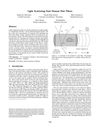
Researchers developed a new model for more realistic computer graphics of hair by considering how light scatters on hair fibers.
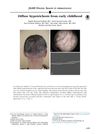 September 2016 in “Journal of The American Academy of Dermatology”
 The girl has a genetic hair condition causing thin hair since childhood.
Hairlessness in mammals is due to complex genetic changes in both genes and regulatory regions.
Hair movement can indicate hair quality and health.
170 citations
,
January 2010 in “animal” Hair follicle growth and fiber production in animals are influenced by chemical signals, proteins, pigmentation, genetics, and nutrients.
 52 citations
,
August 1978 in “Journal of Applied Polymer Science”
52 citations
,
August 1978 in “Journal of Applied Polymer Science” Human hair's ability to get wet is complex and can change with treatments, damage, and environment.
1 citations
,
March 2014 in “Journal of Innovative Optical Health Sciences” Hair structure worsens as tumors grow in mice.
7 citations
,
June 2018 in “Journal of the American Academy of Dermatology” The document suggests finding a simpler, cheaper way to diagnose Uncombable Hair Syndrome.
 January 2018 in “Indian Dermatology Online Journal”
 Trichoscopy can help tell the difference between artificial hair fibers and other scalp artifacts.

Afro-textured hair needs specialized care due to its unique genetic and structural properties.
58 citations
,
November 1969 in “British Journal of Dermatology” Netherton's disease causes multiple hair defects.
15 citations
,
January 1988 Hair follicles have unique proteins that vary by species and are influenced by nutrition.
9 citations
,
January 2003 The evolution of mammal body hair remains a mystery.
 1 citations
,
June 2023 in “Journal of applied crystallography”
1 citations
,
June 2023 in “Journal of applied crystallography” The technique showed that human hair has two main parts, with 68% being rigid and the rest flexible, and water swelling affects its structure.
 48 citations
,
July 1993 in “The journal of investigative dermatology/Journal of investigative dermatology”
48 citations
,
July 1993 in “The journal of investigative dermatology/Journal of investigative dermatology” Hair growth is controlled by specific gene clusters and proteins, and cysteine affects hair gene expression in sheep.
 5 citations
,
September 2017 in “Colloids and surfaces. B, Biointerfaces”
5 citations
,
September 2017 in “Colloids and surfaces. B, Biointerfaces” Tying a knot can measure hair friction, useful for medical applications.
44 citations
,
October 1990 in “Archives of Dermatological Research” The connective tissue around hair follicles changes structure throughout the hair cycle.
 December 2025 in “Frontiers in Medicine”
 ARWH is a rare hair disorder with no cure, but potential treatments include minoxidil and other therapies.
7 citations
,
July 2025 in “The Journal of Physiology” C-tactile nerves are sensitive to hair movement.
 23 citations
,
May 2020 in “Cell Death and Disease”
23 citations
,
May 2020 in “Cell Death and Disease” Blocking the FGF5 gene in sheep leads to more fine wool and active hair follicles due to changes in certain cell signaling pathways.
December 2021 in “INDIGO (University of Illinois at Chicago)” Sheep hair follicle development and wool curvature are influenced by specific cell types and gene expressions.
 12 citations
,
June 2006 in “Anais Brasileiros de Dermatologia”
12 citations
,
June 2006 in “Anais Brasileiros de Dermatologia” The study found average numbers for different types of hair follicles in the scalp and observed differences between men and women, suggesting reasons for more common hair shedding in women.
8 citations
,
January 2020 in “PeerJ” Alopecia Areata causes significant structural and compositional changes in hair.
49 citations
,
April 2007 in “Pediatric Dermatology” Biotin improved hair appearance in uncombable hair syndrome but didn't change hair structure.
July 2026 in “Indian Journal of Dermatology Venereology and Leprology”  January 2021 in “Nasza Dermatologia Online”
 Plica polonica is a rare condition where hair becomes irreversibly tangled, and the treatment is to cut the matted hair.