17 citations
,
September 2005 in “International Journal of Dermatology” African hair is more fragile due to its unique shape and internal structure.
 161 citations
,
July 2003 in “ACM Transactions on Graphics”
161 citations
,
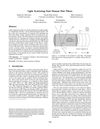
July 2003 in “ACM Transactions on Graphics” Researchers developed a new model for more realistic computer graphics rendering of hair by considering how light scatters on hair fibers.
February 2024 in “Medicina” AFM can diagnose hair disorders by revealing detailed hair surface changes.
 127 citations
,
December 2007 in “Journal of Investigative Dermatology”
127 citations
,
December 2007 in “Journal of Investigative Dermatology” Mice hair growth patterns get more complex with age and can change with events like pregnancy or injury.
 4 citations
,
January 2017 in “Annals of Dermatology”
4 citations
,
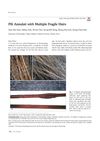
January 2017 in “Annals of Dermatology” Frequent hairdryer use may worsen hair fragility in people with Pili Annulati.
January 2004 in “Giornale di Metafisica: revista bimestrale di filosofia” Increased Wnt signaling causes hair graying by depleting melanocyte stem cells in aged mice.
 September 2025 in “International Journal of Ayurvedic Medicine”
 Hair medulla patterns vary by Prakruti type, affecting hair strength.
April 2017 in “Journal of Dermatological Science” Asymmetric hair follicle differentiation causes the unique shape of kinky hair.
 August 2010 in “Journal of The American Academy of Dermatology”
 The document explains the diagnosis and characteristics of woolly hair nevus and alopecia neoplastica.
 85 citations
,
February 1989 in “Journal of The American Academy of Dermatology”
85 citations
,
February 1989 in “Journal of The American Academy of Dermatology” Children with loose anagen hair have easily pluckable hair due to root sheath problems, and it might improve without treatment.
38 citations
,
July 1993 in “Journal of Investigative Dermatology” 12 citations
,
February 2011 in “Zenodo (CERN European Organization for Nuclear Research)” Hair properties vary with age and ethnic origin.
 12 citations
,
February 2006 in “Lipids”
12 citations
,
February 2006 in “Lipids” Hair texture changes with age due to varying levels of lipids.
 34 citations
,
October 1982 in “Journal of applied polymer science”
34 citations
,
October 1982 in “Journal of applied polymer science” Moisture content significantly affects how human hair breaks.
5 citations
,
July 2010 in “Journal of life sciences” Gray hair has more continuous medullation and a higher medullary diameter than black hair.
 115 citations
,
September 2005 in “International Journal of Dermatology”
115 citations
,
September 2005 in “International Journal of Dermatology” Different ethnic groups have unique hair growth patterns, with African hair growing slower and less dense, Asian hair growing fast but sparse, and Caucasian hair being densest; men are more likely to experience hair loss than women.
21 citations
,
June 2023 in “Proceedings of the National Academy of Sciences” Tightly curled scalp hair helps reduce heat from the sun, protecting against overheating.
 June 2023 in “British Journal of Dermatology”
 A person with Werner syndrome was initially thought to just have female pattern hair loss.
4 citations
,
August 2023 in “Journal of Investigative Dermatology” Certain genes influence the direction of hair whorls on the scalp.
 November 2021 in “International journal of research - granthaalayah”
 The document suggests that human hair has electrical charges because of a gap in nerve cell coverage that affects electromagnetic radiation.
4 citations
,
March 2016 in “Small ruminant research” Vicuña wool's quality is due to a high density of fine secondary hair follicles, and their skin glands may be used for communication.
7 citations
,
October 2022 in “Development” Overactive Wnt5a disrupts hair follicle orientation in mice.
 2 citations
,
January 2022 in “Clinical, Cosmetic and Investigational Dermatology”
2 citations
,
January 2022 in “Clinical, Cosmetic and Investigational Dermatology” The refined wash test is a reliable way to measure daily hair loss and can tell the difference between different types of hair loss.
23 citations
,
December 1977 in “Virchows Archiv B Cell Pathology” 41 citations
,
January 2018 in “Advances in experimental medicine and biology” 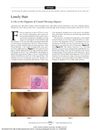 63 citations
,
October 2011 in “Archives of Dermatology”
63 citations
,
October 2011 in “Archives of Dermatology” Isolated long hairs at the original hairline can help diagnose Frontal Fibrosing Alopecia.
 39 citations
,
April 2020 in “Clinical, Cosmetic and Investigational Dermatology”
39 citations
,
April 2020 in “Clinical, Cosmetic and Investigational Dermatology” Asian hair is generally straight and thick, with unique disorders and properties, and more research is needed to understand it fully.
 90 citations
,
January 1979 in “International review of cytology”
90 citations
,
January 1979 in “International review of cytology” Wool follicles are complex, involving interactions between different cell types and structures.
50 citations
,
October 2007 in “Archives of Dermatological Research”  3 citations
,
July 2012 in “Sokoto Journal of Veterinary Sciences”
3 citations
,
July 2012 in “Sokoto Journal of Veterinary Sciences” As sheep age, their hair fibers and follicles grow larger and more organized, with no significant differences between males and females.