Search
for
Sort by
Research
810-840 / 1000+ resultsresearch Angora Mouse Mutation: Altered Hair Cycle, Follicular Dystrophy, Phenotypic Maintenance of Skin Grafts, and Changes in Keratin Expression
The angora mouse mutation causes long hair and hair defects due to a gene deletion.
research Ichthyosis hystrix
A rare skin condition with dark, thick, warty patches and some hair loss was found in a newborn boy.
research Anaplasmosis concurrent with copper deficiency in a Salem Black kid
The young goat had anaplasmosis and copper deficiency.
research Olmsted syndrome
Olmsted syndrome is a rare skin disorder causing thickened skin and other symptoms.
research A Case of Proliferating Trichilemmal Cyst with Trichoepitheliomatous Change
A young woman had a rare scalp tumor usually found in older women.

research Color dilution alopecia in a Yorkshire
The Yorkshire terrier has a genetic hair loss condition not improved by treatment.
research Scarring Alopecia
research Lanceolate hair-J (lahJ ): A mouse model for human hair disorders
The Lanceolate hair-J mutation in mice mimics human hair disorders like Netherton's syndrome.

research Design and characterization of AgVO3-HAP/GO@PCL ceramic-based scaffolds for enhanced wound healing and tissue regeneration
AgVO₃-HAp/GO@PCL scaffolds improve wound healing and tissue regeneration effectively.

research A Case of Cutaneous Focal Mucinosis With Follicular Induction
A man with a skin nodule was diagnosed with a rare skin condition called cutaneous focal mucinosis, which can be confused with other skin cancers.
research 10.1063/5.0132123.1
research Composite HydrogelDressing with Drug-Release Capabilityand Enhanced Mechanical Performance
The new hydrogel dressing improves wound healing with strong antibacterial effects and better mechanical strength.
research Follicular red dots in areas with an anatomic colocalization of alopecia areata and vitiligo
Follicular red dots can appear where alopecia areata and vitiligo overlap.
research Whiskers amiss, a new vibrissae and hair mutation near the Krt1 cluster on mouse Chromosome 11
A new mutation in mice causes crooked whiskers and messy hair.
research Enhancing Low-Light Sports Motion Images with Improved Bilateral Filtering and Auto MSRCR
The method greatly improves low-light sports images' quality and reduces artifacts.
research Developmental characteristics of cutaneous telocytes in late embryos of the silky fowl
Telocytes in silky fowl embryos develop distinct features and connections by the 20th day of incubation.
research A 40-Year-Old Woman of African Descent with the Central Scalp Hair Loss
A woman with CCCA has hair loss due to factors like straighteners and tight hairstyles, and treatments include steroids and avoiding certain hair products.

research Pohl-Pinkus constrictions of hair following chemotherapy for Hodgkin's disease
Chemotherapy caused the patient's hair to have alternating thick and thin segments.
research Chloracne: histopathologic findings in one case
Tiny infundibular cysts are the main lesions in chloracne, not comedones.

research Changes in structure and geometric properties of human hair by aging
Older people's hair becomes less shiny because it gets more uneven and curved.
research Spherical Skin Model: Stratified Co‐Culture of Fibroblasts and Keratinocytes on Spherical Beads Toward Compound Screening
The Spherical Skin Model improves drug and cosmetic testing by accurately mimicking human skin for efficient compound screening.

research Repigmentation of leukoderma in a piebald patient associated with a novel c-KIT gene mutation, G592E, of the tyrosine kinase domain
A new gene mutation may allow some piebaldism patients to regain skin color in white patches.

research Multi-scale spatial mapping of cell populations across anatomical sites in healthy human skin and basal cell carcinoma
The research created a detailed map of skin cells, showing that certain cells in basal cell carcinoma may come from hair follicles and could help the cancer grow.

research Diseases that turn African hair silky
Certain diseases like AIDS and lupus can make African hair become silky.
research Mutant Cx43 in Skin Differentiation and Disease
Mutant Cx43 causes slower wound healing and hair growth issues in ODDD.
research Spontaneous Quick Resolution of Uncombable Hair Syndrome-Like Disease
A boy's hair that was frizzy and hard to comb returned to normal after 9 months, possibly due to genetic factors.
research Tinea Incognito
The man's skin condition was finally identified as tinea incognito, a fungal infection.
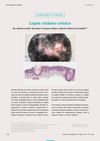
research Lupus cutáneo crónico
The patient has Chronic Cutaneous Lupus, a skin condition causing plaques and hair loss.
research Epidermal structure created by canine hair follicle keratinocytes enriched with bulge cells in a three‐dimensional skin equivalent model in vitro: implications for regenerative therapy of canine epidermis
Keratinocytes from dog hair follicles can create a functional skin layer in a lab model, useful for dog skin therapy.