 4 citations
,
November 2021 in “Frontiers in Cell and Developmental Biology”
4 citations
,
November 2021 in “Frontiers in Cell and Developmental Biology” Aging causes hair loss and graying due to stem cell decline and changes in cell behavior and communication.
January 2008 in “Catalunya música: Revista musical catalana” Tooth loss can cause premature gray hair due to less chewing.
 19 citations
,
May 2004 in “The American Journal of Dermatopathology”
19 citations
,
May 2004 in “The American Journal of Dermatopathology” The research found that a specific gene mutation causes fewer hair follicles and disrupted hair growth cycles, leading to thin and short hair in people with Hypotrichosis with Juvenile Macular Dystrophy.
25 citations
,
March 2008 in “The journal of investigative dermatology/Journal of investigative dermatology” Vitamin D Receptor is needed for hair growth in mice but not for skin stem cell maintenance.
 17 citations
,
June 2017 in “British Journal of Dermatology”
17 citations
,
June 2017 in “British Journal of Dermatology” The article concludes that hair loss is a common side effect of drugs treating skin cancer by blocking the hedgehog pathway, but treatment should continue, and more selective drugs might prevent this side effect.
 February 2023 in “Cosmoderma”
 An infant with complete hair loss was diagnosed with a genetic disorder affecting hair growth.
 April 2023 in “The journal of investigative dermatology/Journal of investigative dermatology”
 The study found that a key immune pathway protecting hair follicles is reduced in a mouse model of scarring hair loss.
February 2016 in “Science” Foxc1 and COL17A1 are crucial for maintaining healthy hair follicles and preventing hair loss.
Boosting certain cell signals can prevent hair loss from chemotherapy and radiation.
19 citations
,
September 2021 in “British journal of dermatology/British journal of dermatology, Supplement” Activating PPAR-γ signalling can protect hair follicle stem cells from damage caused by chemotherapy.
 3 citations
,
May 2022 in “Experimental Dermatology”
3 citations
,
May 2022 in “Experimental Dermatology” Misbehaving hair follicle stem cells can cause hair loss and offer new treatment options.
 127 citations
,
December 2007 in “Journal of Investigative Dermatology”
127 citations
,
December 2007 in “Journal of Investigative Dermatology” Mice hair growth patterns get more complex with age and can change with events like pregnancy or injury.
143 citations
,
May 2007 in “Proceedings of the National Academy of Sciences” Vitamin D receptor is crucial for normal hair growth and preventing hair loss.
February 2026 in “Biophysical Journal”  56 citations
,
May 2017 in “Nature Cell Biology”
56 citations
,
May 2017 in “Nature Cell Biology” Hair can regrow after certain stem cells are lost because other stem cells can take over their role.
 1 citations
,
January 2024 in “Annals of Dermatology”
1 citations
,
January 2024 in “Annals of Dermatology” Examining hair shape can help predict Alopecia Areata's progression.
 February 2024 in “Scientific reports”
 Four genes are potential markers for hair loss condition alopecia areata, linked to a specific type of cell death.
July 2025 in “Journal of Investigative Dermatology” 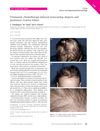 5 citations
,
March 2015 in “Clinical and Experimental Dermatology”
5 citations
,
March 2015 in “Clinical and Experimental Dermatology” Chemotherapy caused a woman's permanent hair loss and early menopause.
26 citations
,
October 2002 in “Journal of Investigative Dermatology” A specific gene mutation causes congenital hair loss.
December 2025 in “International Journal of Dermatology” Björnstad syndrome can cause hair loss similar to androgenetic alopecia, and treatment with baricitinib and minoxidil may help.
 1 citations
,
October 2022 in “JCI insight”
1 citations
,
October 2022 in “JCI insight” Deleting the BRD4 protein in certain skin cells causes hair loss and skin inflammation.
2 citations
,
April 2019 in “Journal of Investigative Dermatology” Gasdermin A3 causes hair follicle stem cells to activate too early, leading to hair loss.
April 2018 in “Journal of Investigative Dermatology” Immune cells might contribute to hair loss caused by a specific mutation.
 March 2021 in “bioRxiv (Cold Spring Harbor Laboratory)”
 Removing a specific gene in certain skin cells causes hair loss on the body by disrupting normal hair development.
January 2007 in “Durham e-Theses (Durham University)” Hair growth and shedding involve specific cell changes and gene roles.
1 citations
,
April 2018 in “Journal of Investigative Dermatology” Lower proximal cup cells, not bulge stem cells, regenerate hair follicles after chemotherapy.
109 citations
,
June 2000 in “Development” Notch pathway activation causes abnormal hair layer development.