 24 citations
,
June 2021 in “Agronomy”
24 citations
,
June 2021 in “Agronomy” Protein hydrolysates applied to roots or leaves differently improved lettuce yield and quality, with the best results seen in specific combined treatments for each type.
 1 citations
,
July 2013 in “Hair transplant forum international”
1 citations
,
July 2013 in “Hair transplant forum international” Advancements in hair follicle culture have led to better understanding and potential treatments for hair loss.
 January 2012 in “Methods in pharmacology and toxicology”
 Hair follicle culture helps study hair growth but has limitations in modeling the full hair cycle.
 349 citations
,
January 2005 in “The FASEB journal”
349 citations
,
January 2005 in “The FASEB journal” Human skin can make serotonin and melatonin, which help protect and maintain it.
 151 citations
,
November 2018 in “International Journal of Pharmaceutics”
151 citations
,
November 2018 in “International Journal of Pharmaceutics” Nanoparticles improve drug delivery through the skin but more research is needed on their long-term effects and skin penetration challenges.
 49 citations
,
February 2020 in “Scientific reports”
49 citations
,
February 2020 in “Scientific reports” The nanohybrid system significantly improved wound healing and showed strong antibacterial activity.
 30 citations
,
April 2018 in “Experimental Dermatology”
30 citations
,
April 2018 in “Experimental Dermatology” The article concludes that developing in vitro models for human hair structures is important for research and reducing animal testing, but there are challenges like obtaining suitable samples and the models' limitations.
 27 citations
,
November 2005 in “Archives of Dermatological Research”
27 citations
,
November 2005 in “Archives of Dermatological Research” Choosing hair follicles at the same growth stage leads to more consistent hair growth experiments.
 8 citations
,
January 2000
8 citations
,
January 2000 Terbinafine effectively stops fungal invasion of human keratin.
 6 citations
,
October 2020 in “Journal of Cellular and Molecular Medicine”
6 citations
,
October 2020 in “Journal of Cellular and Molecular Medicine” 3D culture helps maintain hair growth cells better than 2D culture and identifies key genes for potential hair loss treatments.
 3 citations
,
September 2018 in “Journal of Biomaterials Science, Polymer Edition”
3 citations
,
September 2018 in “Journal of Biomaterials Science, Polymer Edition” Different materials affect the growth of brain cells and fibroblasts, with matrigel being best for brain cell growth.
 September 2019 in “Journal of Investigative Dermatology”
 Dermal Papilla Cells grown in 3D and with stem cells better mimic natural hair growth conditions than cells grown in 2D.
 January 2026 in “Chonnam Medical Journal”
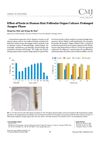
 Escin helps keep hair follicles in the growth phase longer.
 30 citations
,
May 2019 in “Scientific Reports”
30 citations
,
May 2019 in “Scientific Reports” Late pregnancy helps repair brain damage in rats due to the GABAergic system.
 15 citations
,
June 2015 in “Human Cell”
15 citations
,
June 2015 in “Human Cell” Spheroid culture in agarose dishes improves survival and nerve cell growth in thawed human fat-derived stem cells.
 28 citations
,
March 2010 in “Histochemistry and cell biology”
28 citations
,
March 2010 in “Histochemistry and cell biology” Skin cells can help create early hair-like structures in lab cultures.
 February 2026 in “Frontiers in Bioengineering and Biotechnology”
 Liposome-based systems improve skin wound healing effectively.
 6 citations
,
October 2019 in “Jo'jig gonghag gwa jaesaeng uihag/Tissue engineering and regenerative medicine”
6 citations
,
October 2019 in “Jo'jig gonghag gwa jaesaeng uihag/Tissue engineering and regenerative medicine” Rice bran extract boosts melanin production in hair follicles.
 1 citations
,
December 2010 in “Elsevier eBooks”
1 citations
,
December 2010 in “Elsevier eBooks” Cell transplantation faces challenges in genitourinary reconstruction, but alternative tissue sources and microencapsulation show promise.
 55 citations
,
April 2017 in “Experimental Dermatology”
55 citations
,
April 2017 in “Experimental Dermatology” The document describes a way to isolate and grow human hair follicle cells in 3D to help study hair growth.
 39 citations
,
March 2009 in “Archives of Dermatological Research”
39 citations
,
March 2009 in “Archives of Dermatological Research” Apigenin may help promote hair growth and could treat hair loss.
 28 citations
,
January 2017 in “Critical Reviews in Therapeutic Drug Carrier Systems”
28 citations
,
January 2017 in “Critical Reviews in Therapeutic Drug Carrier Systems” Nanomaterials in biomedicine can improve treatments but may have risks like toxicity, needing more safety research.
 11 citations
,
September 2012 in “Journal of Nanjing Medical University”
11 citations
,
September 2012 in “Journal of Nanjing Medical University” Cyclosporine A was found to increase hair growth in mouse whisker follicles.
 8 citations
,
February 2023 in “American Journal of Physiology-Cell Physiology”
8 citations
,
February 2023 in “American Journal of Physiology-Cell Physiology” Adiponectin and bradykinin play important roles in skin health and may help treat skin conditions.
 4 citations
,
January 2022 in “Current pharmaceutical design”
4 citations
,
January 2022 in “Current pharmaceutical design” Microsponges delivery system is a safe, versatile method for controlled drug release in various treatments.
 April 2026 in “International Journal of Nanomedicine”
 Quercetin delivery systems are improving its effectiveness for medical use.
 January 2025 in “ARC Journal of Dermatology”
 Vaping may harm skin health by causing inflammation.
 May 2022 in “Голова и шея.”
 Essential oils can boost athletic performance by improving brain function and muscle relaxation.
 121 citations
,
March 1989 in “Journal of Investigative Dermatology”
121 citations
,
March 1989 in “Journal of Investigative Dermatology” Minoxidil can help grow hair in mice by making cells grow and improving hair quality. More research needed.
 18 citations
,
November 2013 in “Molecules and Cells”
18 citations
,
November 2013 in “Molecules and Cells” New culture method keeps human skin stem cells more stem-like.