 August 2025 in “The American Journal of Medical Sciences and Pharmaceutical Research”
 Non-injection carboxytherapy is effective and safe for treating problematic skin.
 January 2025 in “Advances in Clinical Medicine”
 Fractional CO2 laser therapy effectively improves skin conditions and recovery when combined with other treatments.
 June 2025 in “Jundishapur Journal of Natural Pharmaceutical Products”
 Pomelo peel essential oil can be efficiently extracted and meets quality standards for use in pharmaceuticals and cosmetics.
 November 2024 in “Research for Rural Development/Research for Rural Development (Online)”
 Rosemary essential oil is rich in terpenes and can be effectively extracted and analyzed using environmentally friendly methods, benefiting local economies.
 1 citations
,
April 2025 in “JOJ Dermatology & Cosmetics”
1 citations
,
April 2025 in “JOJ Dermatology & Cosmetics” The collagen booster may improve healing after CO2 laser treatment for skin aging.
11 citations
,
January 2025 in “Marine Drugs” All extraction methods can produce similar quality fucoidan, but a holistic approach is needed for method selection.
Ablative CO2 laser resurfacing tightens skin by destroying and regenerating skin layers.
 28 citations
,
November 2020 in “Fluid Phase Equilibria”
28 citations
,
November 2020 in “Fluid Phase Equilibria” Minoxidil dissolves better in propylene glycol + water than in supercritical CO2.
 13 citations
,
January 1995 in “Journal of the American Institute for Conservation”
13 citations
,
January 1995 in “Journal of the American Institute for Conservation” Researchers developed a less damaging way to extract red dyes from wool using EDTA and DMF, preserving the fiber's strength for further analysis.
47 citations
,
March 1987 in “The Journal of dermatologic surgery and oncology” Carbon dioxide laser treatment effectively removed facial hair cysts without scarring or them coming back.
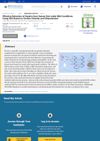 December 2023 in “ACS Sustainable Chemistry & Engineering”
 Keratin can be successfully taken from human hair using a mix of choline chloride and ethanolamine.
Low-temperature extracts of black beans, peony, and green tea improve scalp health and are better than traditional hot-water extracts.
 4 citations
,
March 2023 in “Journal of Cosmetic Dermatology”
4 citations
,
March 2023 in “Journal of Cosmetic Dermatology” Carboxytherapy is a safe and effective treatment for improving skin appearance and treating various skin conditions, with mild side effects.
 December 2020 in “Journal of Cosmetic Science”
 The caffeine content in anticellulite gels is 0.7-1.7% and in hair-care products is about 1.0%.
 3 citations
,
August 1995 in “Journal of Clinical Laser Medicine & Surgery”
3 citations
,
August 1995 in “Journal of Clinical Laser Medicine & Surgery” Using a CO₂ laser for hair transplants improves the surgery and may become important in future hair restoration.
 10 citations
,
July 2011 in “Springer eBooks”
10 citations
,
July 2011 in “Springer eBooks” Carboxytherapy can improve skin conditions with few side effects, but results may vary and are not guaranteed.
4 citations
,
September 1999 in “Journal of Clinical Forensic Medicine” Caffeine in hair might help identify people, but it's not always reliable.
 January 2020 in “Journal of Pharmacognosy and Phytochemistry”
 The VCO-based herbal hair tonic is effective, safe for hair loss treatment, and can be mass-produced.
 January 2014 in “대한미용학회지”
 Using supercritical carbon dioxide can change the size of Hinokitiol particles.
4 citations
,
March 2023 in “Molecules/Molecules online/Molecules annual” Gallic acid and ferulic acid can be sustainably extracted for hair supplements with high efficiency and stability.
 3 citations
,
March 2019 in “Chinese Medical Journal”
3 citations
,
March 2019 in “Chinese Medical Journal” CO2 fractional laser therapy may help regrow hair without scarring by affecting certain inflammatory and growth-related molecules.
January 2007 in “Leather Science and Engineering”  21 citations
,
January 1995 in “Journal of the American Institute for Conservation”
21 citations
,
January 1995 in “Journal of the American Institute for Conservation” A new method extracts red dyes from wool without damaging it, although it slightly weakens the wool.
 8 citations
,
January 1989 in “Journal of The American Academy of Dermatology”
8 citations
,
January 1989 in “Journal of The American Academy of Dermatology” CO2 laser treatment successfully removed traumatic tattoos with minimal scarring.
 9 citations
,
April 2019 in “Food Chemistry”
9 citations
,
April 2019 in “Food Chemistry” Created large amounts of grape seed compounds using a new method.

Deep eutectic solvents can replace toxic solvents in extracting useful compounds for medicines.
January 2025 in “Catalysts” High-temperature gelatinization of ginkgo seeds effectively increases β-cyclodextrin production.
 4 citations
,
February 2022 in “Journal of Pharmaceutical and Biomedical Analysis”
4 citations
,
February 2022 in “Journal of Pharmaceutical and Biomedical Analysis” The conclusion is that a new method can measure caffeine and drugs in hair, finding caffeine abusers have 70 times more caffeine than normal, with a proposed cut-off value for abuse.
 15 citations
,
October 2020 in “European journal of pharmaceutics and biopharmaceutics”
15 citations
,
October 2020 in “European journal of pharmaceutics and biopharmaceutics” Caffeine penetrates skin quickly through open hair follicles, but less through closed ones, with levels becoming equal after 22 hours.