 April 2024 in “JMR. Journal of molecular recognition/Journal of molecular recognition”
 Hydrophilic carbon dots cause one protein to clump more and prevent another from clumping.
 2 citations
,
February 2024 in “Nature cell biology”
2 citations
,
February 2024 in “Nature cell biology” Mechanical forces are crucial for shaping cells and forming tissues during development.
7 citations
,
July 2025 in “The Journal of Physiology” C-tactile nerves are sensitive to hair movement.
 January 2026 in “Lithuanian University of Health Sciences”
 Methyl cellulose makes the most stable Equisetum arvense gel.
September 2025 in “International Journal of Cosmetic Science” Friction causes hair breakage during combing, and fragment count predicts hair strength.
 7 citations
,
November 2004 in “International Journal of Cosmetic Science”
7 citations
,
November 2004 in “International Journal of Cosmetic Science” Hair breaks differently when wet or dry and is affected by its condition and treatments like perms and bleaching.
 January 2023 in “Theranostics”
 Mechanical force is important for the first contact between skin cells and hair growth in mini-organs.
49 citations
,
June 2004 in “Philosophical Transactions of the Royal Society A Mathematical Physical and Engineering Sciences” Human hair becomes weaker and stretches more easily at higher temperatures.
January 2019 in “Durham e-Theses (Durham University)” Less stiff collagen promotes higher cell growth in hair follicles.
 July 2025 in “The Journal of Physiology”
 C-tactile afferents are linked to emotional touch and social bonding through hair movement.
Hair movement can indicate hair quality and health.
June 2026 in “Virtual and Physical Prototyping” A new method creates precise, stable microscale structures with reduced friction and potential for complex designs.
67 citations
,
February 2022 in “International Journal of Molecular Sciences” The nanofiber membranes effectively promote wound healing and have strong antibacterial properties.
 December 2018 in “International Journal of Research -GRANTHAALAYAH”
 Biomagnetic forces can deform red blood cells.
 43 citations
,
September 2001 in “Scanning”
43 citations
,
September 2001 in “Scanning” Hair treatments like bleaching increase friction by exposing tiny pores on the hair surface.
 21 citations
,
April 1990 in “Journal of comparative neurology”
21 citations
,
April 1990 in “Journal of comparative neurology” The study found that nerve signals are stronger when there are more connection points, but not necessarily denser, along the nerve's path in the spine.
September 2025 in “Acta Biomaterialia” A new tissue adhesive helps wounds heal better by allowing more cells to enter.
 26 citations
,
August 2016 in “ACS Applied Materials & Interfaces”
26 citations
,
August 2016 in “ACS Applied Materials & Interfaces” A boronic acid copolymer quickly forms cell clusters, useful for tissue and tumor modeling.
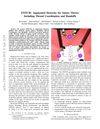 April 2024 in “arXiv (Cornell University)”
 STITCH improves suture accuracy and efficiency, especially with human help.
 April 2018 in “Journal of Investigative Dermatology”
 Desmoglein 3 organization in cell connections changes without calcium, affecting cell adhesion.
 14 citations
,
January 2012 in “Proteins”
14 citations
,
January 2012 in “Proteins” Electrostatic interactions mainly stabilize the binding of peptides to hair keratin.
 5 citations
,
March 2001 in “Journal of biomechanics”
5 citations
,
March 2001 in “Journal of biomechanics” Growing hairs are easier to pull out than resting hairs due to different anchorage strengths.
4 citations
,
December 2018 in “International Journal of Research -GRANTHAALAYAH” Biomagnetic forces can deform red blood cells, not just mechanical factors.
 15 citations
,
May 2010 in “International Journal of Cosmetic Science”
15 citations
,
May 2010 in “International Journal of Cosmetic Science” The cell membrane complex in mammalian hair has three distinct types with different structures and chemical properties.
Glycogen helps E. coli cells divide unevenly and organize their contents.
2 citations
,
January 2017 Hair movement can indicate hair quality and health.
 40 citations
,
May 2016 in “Proceedings of the National Academy of Sciences of the United States of America”
40 citations
,
May 2016 in “Proceedings of the National Academy of Sciences of the United States of America” Changes in keratin make hair follicles stiffer.
30 citations
,
November 2012 in “Proceedings of the Royal Society B Biological Sciences” Hard α-keratins stay stiff in water because the surrounding matrix keeps them dehydrated and strong.
January 2009 in “Chinese journal of Clinical Medicine”