April 2019 in “Journal of Investigative Dermatology” Targeting immune pathways like JAK/STAT may help treat frontal fibrosing alopecia.
 9 citations
,
March 2018 in “European journal of dermatology/EJD. European journal of dermatology”
9 citations
,
March 2018 in “European journal of dermatology/EJD. European journal of dermatology” A new mutation in the ST14 gene causes a rare skin and hair disorder in a specific family.
 November 2022 in “Journal of Investigative Dermatology”
 The medicine Cyclosporin A might cause excessive hair growth by reducing a protein that controls hair growth.
62 citations
,
December 2007 in “Journal of biological chemistry/The Journal of biological chemistry” A specific chemical change in the S100A3 protein leads to the formation of a four-part structure important for hair formation.
15 citations
,
August 2013 in “Gene” The MTHFR C677T mutation may increase the risk of alopecia areata in the Turkish population.
 5 citations
,
February 2017 in “Biomolecules & Therapeutics”
5 citations
,
February 2017 in “Biomolecules & Therapeutics” 4-O-Methylhonokiol helps protect skin cells from growth-stopping effects of a protein by regulating growth-related pathways.
283 citations
,
February 2011 in “Cell stem cell” COL17A1 is crucial for preventing hair graying and loss by supporting hair and pigment stem cells.
7 citations
,
August 2017 in “Genetic testing and molecular biomarkers” A new mutation in the FLCN gene linked to Birt-Hogg-Dube syndrome was found, suggesting people with certain lung collapse should be tested for this mutation and screened for kidney and colon cancer.
8 citations
,
January 2014 in “Indian Journal of Paediatric Dermatology” Congenital atrichia with papular lesions causes permanent hair loss and skin bumps from birth.
7 citations
,
September 1991 in “Journal of Andrology” 4‐MAPC reduces rat prostate weight and prostatein levels.
July 2024 in “Journal of Investigative Dermatology” JAK inhibitors improve hair growth in alopecia areata, especially in patchy types.
January 2026 in “PLoS Biology” ARHGEF3 is essential for proper hair follicle development in mice.
 April 2019 in “Journal of Investigative Dermatology”
 Non-coding RNA boosts retinoic acid production and signaling, aiding regeneration.
 3 citations
,
June 2013 in “Genes & development”
3 citations
,
June 2013 in “Genes & development” CaV1.2 helps activate hair follicle stem cells without calcium flux.
1 citations
,
February 2024 in “Journal of the European Academy of Dermatology and Venereology” Certain genetic factors may contribute to frontal fibrosing alopecia in Brazil.
 July 2004 in “Hair transplant forum international”
 The document's conclusion cannot be provided because the document is not available for parsing.
34 citations
,
November 1998 in “Journal of Investigative Dermatology” A common mutation in the hHb6 gene is linked to monilethrix, but other factors may also play a role.
2 citations
,
June 2019 in “The Journal of Dermatology” Two cases showed skin abnormalities without bone or neural defects.
 October 2011 in “Journal of dermatology”
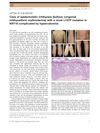
 A man with a rare skin condition and a new gene mutation developed high calcium levels due to his treatment.
28 citations
,
December 2001 in “European Journal of Pharmacology” M50054 may help treat hepatitis and hair loss from chemotherapy.
20 citations
,
January 2002 in “Laboratory Animals” Mutations in the hairless gene cause hair loss and skin cysts in rhesus macaques.
 21 citations
,
October 2019 in “The journal of investigative dermatology/Journal of investigative dermatology”
21 citations
,
October 2019 in “The journal of investigative dermatology/Journal of investigative dermatology” A specific gene change plus an additional mutation in the same gene cause hereditary trichilemmal cysts.
20 citations
,
December 2010 in “Journal of Morphology” Lizard claws have hair-like keratins similar to those in mammals.
 3 citations
,
February 2011 in “Journal of Biomedical Research/Journal of biomedical research”
3 citations
,
February 2011 in “Journal of Biomedical Research/Journal of biomedical research” A new mutation in the KRT86 gene was found to cause the hair disorder monilethrix in a Han family.
November 2022 in “Frontiers in pediatrics” A girl with skin rashes and low zinc levels improved with zinc supplements and had new gene mutations linked to her condition.
1 citations
,
July 2006 in “Journal of Investigative Dermatology” A 4kb fragment of the desmocollin 3 promoter targets gene expression to specific skin and hair follicle areas.
6 citations
,
April 2023 in “Current Issues in Molecular Biology” A specific gene variant may increase the risk of developing Alopecia Areata.
 April 2016 in “Journal of Investigative Dermatology”
 SOX4 is crucial for the development of melanoma.
3 citations
,
January 2011 in “生物医学研究杂志:英文版” A new mutation in the KRT86 gene causes monilethrix in a Han family.
24 citations
,
February 2002 in “The journal of investigative dermatology/Journal of investigative dermatology” Two new proteins, hKAP1.6 and hKAP1.7, are found in the hair follicle cortex.