36 citations
,
March 2014 in “Cell death and differentiation” Disrupting β-catenin signaling in certain cells causes anorectal malformations.
March 2010 in “European Journal of Cancer Supplements” Green tea compound EGCG could potentially treat colorectal cancer by removing iron and causing stress in cancer cells leading to their death.
December 2014 in “Tesis Doctorals en Xarxa (Consorci de Serveis Universitaris de Catalunya)” Reducing SOX2 in colorectal cancer cells decreases tumor growth and self-renewal.
 November 2025 in “Archiv für Pathologische Anatomie und Physiologie und für Klinische Medicin”
 Sporadic trichoblastic neoplasms generally don't recur or spread, with one case showing a specific genetic fusion.
October 2008 in “DOAJ (DOAJ: Directory of Open Access Journals)” A 20-month-old girl had a rare adrenal tumor removed successfully, with no recurrence for 10 years.
June 2025 in “Histopathology” Epithelial elements in superficial angiomyxomas are non-neoplastic growths mimicking embryogenesis.
 February 2008 in “Vlaams dierengeneeskundig tijdschrift”
 A cat's hair loss was linked to a severe pancreatic cancer.
February 2025 in “Clinical Chemistry” The woman's symptoms were due to an androgen-secreting tumor, not PCOS.
88 citations
,
August 1998 in “Carcinogenesis” High levels of ODC and a mutant Ha-ras gene cause tumors in mice.
 32 citations
,
January 2010 in “Journal of Korean Medical Science”
32 citations
,
January 2010 in “Journal of Korean Medical Science” A rare adrenal tumor in a 14-year-old girl caused male-like symptoms and was successfully removed.
6 citations
,
January 2017 in “JOURNAL OF CLINICAL AND DIAGNOSTIC RESEARCH” A rare hair follicle tumor was found on a woman's vulva.
 August 2022 in “JAAD case reports”
 A woman with a long-term skin condition developed a serious skin cancer that led to her death.
2 citations
,
January 2012 in “PubMed” A gluten-free diet and surgery fixed the girl's calcium levels and started puberty.

Pygo2 is important for early growth and progression of intestinal tumors, and could be a target for treating cancers with certain mutations.
October 2025 in “Journal of the Endocrine Society” Surgery improved symptoms and normalized hormone levels in a woman with an adrenal tumor.
 June 1989 in “Diseases of the Colon & Rectum”
 Some patients experience temporary hair loss after ulcerative colitis surgery, likely due to illness rather than the surgery itself, and it usually grows back within six months.
2 citations
,
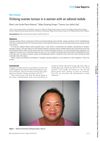
August 2022 in “World Journal of Clinical Cases” Albumin and prednisone improved symptoms in a woman with Cronkhite-Canada syndrome, revealing potential genetic causes.
 6 citations
,
January 2010 in “Case Reports”
6 citations
,
January 2010 in “Case Reports” A woman with high testosterone and an adrenal nodule had an ovarian tumor causing her symptoms, which improved after the tumor was removed.
November 2022 in “American Journal of Clinical Pathology” TURP specimens should be checked for various tumors, not just common prostate issues.
 4 citations
,
May 2022 in “Journal of Nepal Medical Association”
4 citations
,
May 2022 in “Journal of Nepal Medical Association” Steroids, infection management, and nutritional support can significantly improve symptoms of Cronkhite-Canada Syndrome.
 January 2024 in “Diagnostic cytopathology”
 Trichilemmal carcinoma can spread to the parotid gland and be diagnosed using fine-needle aspiration cytology.
29 citations
,
September 1986 in “Journal of the American Veterinary Medical Association” The cat had a pituitary tumor causing hormone imbalance and related health issues.
54 citations
,
May 1999 in “Journal of Cutaneous Pathology” Apocrine type cutaneous mixed tumors often resemble hair follicles, sebaceous glands, and apocrine glands.
January 2016 in “DOAJ (DOAJ: Directory of Open Access Journals)” Collagen XVII is important for cell functions and its absence can worsen cancer outcomes.
10 citations
,
January 2023 in “SAGE Open Medical Case Reports” Upadacitinib may effectively treat both alopecia universalis and Crohn's disease.
 October 2025 in “Medicine”
 A potential link exists between unexplained hormone deficiency, hair loss, and testicular tumors, suggesting thorough screening is needed.
91 citations
,
December 2019 in “The EMBO Journal” NEDD4 and NEDD4L help control intestinal stem cells and prevent tumors by breaking down the LGR5 receptor.
6 citations
,
March 2021 in “Frontiers in surgery” A woman's symptoms of increased body hair and testosterone were caused by a rare adrenal tumor, which was removed successfully.