 3 citations
,
January 2020 in “Annals of Dermatology”
3 citations
,
January 2020 in “Annals of Dermatology” More atypical club hairs may indicate Telogen Effluvium.

The document concludes that Loose Anagen Hair Syndrome is a benign condition where hair is thin and easily pulled out, often improving with age.
 April 2016 in “Journal of Investigative Dermatology”
 Phenylephrine may help prevent hair loss from pulling on the hair roots.
2 citations
,
April 2008 in “Advances in therapy” Proper diagnosis and treatment of childhood hair loss require distinguishing between alopecia and trichotillomania.
2 citations
,
March 2016 in “Serbian Journal of Dermatology and Venerology” A six-year-old boy with excessive hair growth and other symptoms may have a genetic link on chromosome 17q, requiring regular medical follow-ups.
Chronic hair diseases can severely impact mental health and self-confidence.
5 citations
,
October 2012 in “The Journal of Dermatology” Traumatic panniculitis can cause increased hair growth in affected areas.
 4 citations
,
January 2017 in “Annals of Dermatology”
4 citations
,
January 2017 in “Annals of Dermatology” Frequent hairdryer use may worsen hair fragility in people with Pili Annulati.
9 citations
,
September 2018 in “JAAD Case Reports” Lichen planopilaris can be triggered by prolonged scalp traction and can be treated with corticosteroids.
April 2017 in “The journal of investigative dermatology/Journal of investigative dermatology” A girl with excessive hair growth had a genetic change on chromosome 17 that reduced the activity of two genes linked to hair growth.
4 citations
,
April 1983 in “The Journal of Dermatology” A 15-year-old girl with hypothyroidism had excess hair and skin issues due to blocked hair follicles.
 5 citations
,
March 2001 in “Journal of biomechanics”
5 citations
,
March 2001 in “Journal of biomechanics” Growing hairs are easier to pull out than resting hairs due to different anchorage strengths.
14 citations
,
May 1979 in “International Journal of Dermatology” Trichostasis spinulosa mainly affects the nose, with many tiny hairs in one follicle, possibly influenced by hormones and sunlight.
January 2021 in “CRC Press eBooks” Hair loss can have various causes and treatments vary in effectiveness.
 January 2024 in “International Journal of Advanced Research”
 Topical 6% salicylic acid effectively reduced skin plaques in a patient with wooly hair and palmoplantar keratoderma.
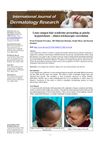 January 2026 in “International Journal of Dermatology Research”
 Early recognition of loose anagen hair syndrome is important to prevent misdiagnosis and unnecessary treatments.
4 citations
,
January 2017 in “International journal of trichology” Castor oil can cause severe hair matting.
73 citations
,
November 1979 in “British Journal of Dermatology” Minoxidil can cause excessive hair growth.
2 citations
,
January 2007 in “Actas Dermo-Sifiliográficas” Two cases of hairy elbows syndrome were described, with normal skin texture and symmetrical hair growth.
January 2021 in “Dermatology online journal” One twin girl has Loose anagen syndrome with poorly anchored hair, diagnosed with a simple hair pull test, while her identical twin does not have the condition.
 June 2008 in “The Open Dermatology Journal”
 Instructional sheets can help patients manage hair disorders.
 September 2023 in “Ain Shams medical journal”
 31% of female high school students in Minia have hair loss from tight hairstyles, which can become permanent if not treated early.
28 citations
,
May 1998 in “Journal of the American Academy of Dermatology” Scalp inflammation can cause multiple hairs to grow from one follicle.
January 2024 in “International Journal of Trichology” Matted hair should not be judged as a sign of mental instability; proper diagnosis and gentle care are key.
20 citations
,
January 1979 in “Journal of Experimental Zoology” Plucking hair speeds up the next hair growth, but hormones can change this timing.
8 citations
,
March 1990 in “Indian Journal of Dermatology Venereology and Leprology” Cutting matted hair stopped further hair loss caused by homemade shampoo.
40 citations
,
November 1966 in “Archives of Dermatology” Trichorrhexis nodosa is mainly caused by hair trauma and improves with gentler hair care.
July 2025 in “Case Reports in Dermatology” Early detection and treatment are crucial to prevent irreversible hair loss in Lichen Planopilaris.
August 2023 in “Portuguese journal of dermatology and venereology” Changing hairstyles can prevent hair loss caused by tension.
 7 citations
,
January 1998 in “PubMed”
7 citations
,
January 1998 in “PubMed” Hair loss can cause scalp discomfort.