 45 citations
,
July 2009 in “Journal of human genetics”
45 citations
,
July 2009 in “Journal of human genetics” A gene variation is linked to hair thickness in Asians.
5 citations
,
March 2013 in “Journal of Cutaneous Pathology” Granulomatous alopecia may be a distinct subtype of alopecia areata.
January 2026 in “Preprints.org” Four new FGF5 gene variants cause long hair in dogs.
7 citations
,
April 2000 in “Mammalian Genome” A new mutation in mice causes crooked whiskers and messy hair.
January 2022 in “Mammalian Genome” The wavy coat in NCT mice is caused by multiple genes, including a mutation in the Prss53 gene.
65 citations
,
September 2014 in “Orphanet Journal of Rare Diseases” Different STUB1 gene mutations cause varied symptoms in autosomal recessive ataxias.
 3 citations
,
January 2022 in “Medical Mycology Journal”
3 citations
,
January 2022 in “Medical Mycology Journal” Malassezia fungi in healthy noses can form a "spaghetti-and-meatballs" structure.
 2 citations
,
January 2012 in “Journal of Cutaneous Pathology”
2 citations
,
January 2012 in “Journal of Cutaneous Pathology” The author clarifies that alopecia areata incognito and diffuse alopecia areata are different types of hair loss with unique symptoms and challenges in diagnosis.
180 citations
,
January 2011 in “EMBO Reports” A combined approach is needed to fully understand adult stem cells, with genetic lineage-tracing being crucial.
132 citations
,
November 1998 in “Journal of the American Academy of Dermatology” Topical sensitizers have mixed success in treating alopecia areata.
126 citations
,
August 2018 in “Molecular Systems Biology” Fibroblast state switching is crucial for skin healing and development.
106 citations
,
February 2014 in “eLife” Lanceolate complexes in mouse hair follicles are essential for touch and depend on specific cells for maintenance and regeneration.
97 citations
,
December 2021 in “Cells” Designing effective fluorescence microscopy experiments requires careful consideration of hardware, biological models, and imaging agents.
48 citations
,
June 2003 in “Journal of Investigative Dermatology Symposium Proceedings” Contact sensitizers like DCP and SADBE are the most effective treatments for alopecia areata.
44 citations
,
July 2020 in “Stem Cell Research & Therapy” Epidermal stem cells show promise for skin repair and regeneration.
39 citations
,
August 2017 in “Annual Review of Genetics” Understanding tissue regeneration in animals can improve regenerative medicine.
26 citations
,
December 2022 in “Molecules” Nanotechnology can improve treatments for skin discoloration.
21 citations
,
March 2018 in “American Journal Of Pathology” Mutations in NIPAL4 cause skin issues by disrupting lipid layers, but some improvement is seen with topical treatment.
15 citations
,
November 2020 in “Development” Stem cells in the eye have different roles and behaviors, helping maintain and repair the eye's surface.
10 citations
,
June 2021 in “EMBO reports” When skin blisters, healing the wound is more important than growing hair, and certain stem cells mainly fix the blisters without helping hair growth.
7 citations
,
June 2020 in “npj regenerative medicine” GDNF helps grow hair and heal skin wounds by acting on hair stem cells.
6 citations
,
November 2023 in “Stem Cell Reports” Stem cells in the cornea show unexpected flexibility and have important implications for medicine.
5 citations
,
March 2017 in “Immunology and Cell Biology” Biomedical imaging has greatly improved understanding and treatment of solid tumors.
September 2025 in “Journal of Investigative Dermatology” SLC3A2 is crucial for hair follicle stem cell function and hair growth.
 December 2024 in “Media Dermato Venereologica Indonesiana”
 Acne vulgaris was the most common skin disorder overall.
 2 citations
,
January 1980 in “Archives of Dermatology”
2 citations
,
January 1980 in “Archives of Dermatology” The author suggests changing "telogen effluvium" to "telogen defluxion" for hair loss terminology.
 1 citations
,
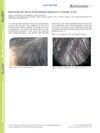
January 2018 in “Acta dermato-venereologica”
1 citations
,
January 2018 in “Acta dermato-venereologica” A teenager's hair with alternating white and dark bands, known as Pili annulati, is a genetic condition that is usually harmless and often considered attractive.
 April 2023 in “Journal of Investigative Dermatology”
 The specific skin disease variant p.(Arg2000Trp) in plectin can cause a wide range of symptoms, which should be considered when diagnosing patients.
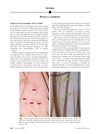 19 citations
,
December 2008 in “Journal of The American Academy of Dermatology”
19 citations
,
December 2008 in “Journal of The American Academy of Dermatology” The authors suggest that a new type of hair loss exists, which is different from alopecia areata.
14 citations
,
January 1977 in “PubMed” The hair keratin variant is mostly found in Caucasians.