 71 citations
,
November 2013 in “Clinics in Dermatology”
71 citations
,
November 2013 in “Clinics in Dermatology” Acne is a chronic disease linked to various systemic conditions and has significant psychological and social effects.
 38 citations
,
December 2012 in “Journal of Cutaneous Pathology”
38 citations
,
December 2012 in “Journal of Cutaneous Pathology” EVG staining is a valuable, simple, and cost-effective method for diagnosing various skin conditions in dermatopathology.
 32 citations
,
January 2017 in “Orphanet journal of rare diseases”
32 citations
,
January 2017 in “Orphanet journal of rare diseases” FOXN1 gene mutations cause a rare, severe immune disease treatable with cell or tissue transplants.
 7 citations
,
July 1999 in “In Practice”
7 citations
,
July 1999 in “In Practice” The conclusion is that a systematic approach is key for treating symmetrical alopecia in dogs, but treatment may not always be necessary.
 5 citations
,
November 2024 in “Journal of Clinical Immunology”
5 citations
,
November 2024 in “Journal of Clinical Immunology” Dupilumab effectively controls symptoms in infants with Netherton syndrome.
 1 citations
,
January 2006 in “Elsevier eBooks”
1 citations
,
January 2006 in “Elsevier eBooks” Cats lose fur due to various reasons, including allergies, infections, genetics, hormones, diet, cancer, stress, and some conditions are treatable while others are not.
 1 citations
,
August 1988 in “Journal of The American Academy of Dermatology”
1 citations
,
August 1988 in “Journal of The American Academy of Dermatology” Hair transplantation between identical twins can successfully treat severe, nonprogressive hair loss due to follicular aplasia.
 April 2020 in “International journal of research in dermatology”
 An 8-year-old girl has a rare, irreversible hair loss condition caused by a genetic mutation.
 June 1997 in “Australasian Journal of Dermatology”
 Researchers found new hair and nail genes, how hair reacts to UV, differences in white and pigmented hair growth, nerve changes in alopecia, treatments for baldness and alopecia, a toenail condition linked to a genetic disorder, and that nail fungus is more common in people with psoriasis.
 1 citations
,
November 1996 in “Journal of Cutaneous Medicine and Surgery”
1 citations
,
November 1996 in “Journal of Cutaneous Medicine and Surgery” Hormones, especially androgens, play a key role in causing acne, and treatments like hormone control pills and hormone-blocking medications can help.
 30 citations
,
May 2005 in “Pediatric dermatology”
30 citations
,
May 2005 in “Pediatric dermatology” Some families have a genetic condition where they are born with irregular scalp defects.
 February 2024 in “Frontiers in physiology”
 Hair follicle stem cells help skin heal and grow during stretching.

Researchers found a genetic link for hereditary hair loss but need more analysis to identify the exact gene.
 October 2020 in “Veterinary Dermatology”
 New treatments and diagnostic methods for various animal skin conditions showed promising results.
 349 citations
,
January 2005 in “The FASEB journal”
349 citations
,
January 2005 in “The FASEB journal” Human skin can make serotonin and melatonin, which help protect and maintain it.
 126 citations
,
January 1987 in “Journal of The American Academy of Dermatology”
126 citations
,
January 1987 in “Journal of The American Academy of Dermatology” The document concludes that understanding hair structure is key to diagnosing hair abnormalities and recommends gentle hair care for management.
 85 citations
,
August 2015 in “Journal of Applied Genetics”
85 citations
,
August 2015 in “Journal of Applied Genetics” Mutations in specific genes disrupt development of sweat glands, teeth, hair, skin, and nails in HED.
 19 citations
,
May 2006 in “Clinical and Experimental Dermatology”
19 citations
,
May 2006 in “Clinical and Experimental Dermatology” Researchers found a new mutation causing total hair loss from birth.
 3 citations
,
January 2013
3 citations
,
January 2013 Hypothyroidism in dogs is usually caused by immune system issues or gland atrophy, affects middle-aged purebreds most, and is treatable with medication.
 1 citations
,
June 2017 in “Veterinary dermatology”
1 citations
,
June 2017 in “Veterinary dermatology” A cross-bred lamb with severe skin and movement issues had ichthyosis fetalis but normal vitamin A levels.
 January 2019 in “Global Dermatology”
 Genetic hair shaft abnormalities can be seen with microscopes and often affect scalp hair.
 January 2007 in “Elsevier eBooks”
 Alopecia areata is a reversible, autoimmune-related hair loss that can have significant emotional impact and uncertain treatment effectiveness.
 January 2007 in “Revista del Centro Dermatológico Pascua”
 A 2-year-old boy was diagnosed with a rare genetic condition causing fragile hair, intellectual issues, and short stature.
 July 2024 in “International Journal of Dermatology Venereology and Leprosy Sciences”
 Trichoscopy is a useful, painless tool for diagnosing and monitoring children's hair and scalp issues.
 30 citations
,
January 2021 in “Journal of Clinical Immunology”
30 citations
,
January 2021 in “Journal of Clinical Immunology” FOXN1 mutations can cause varying immune and physical issues, with severity influenced by gene activity and possibly other factors.
 27 citations
,
January 2013 in “Indian Journal of Dermatology, Venereology and Leprology”
27 citations
,
January 2013 in “Indian Journal of Dermatology, Venereology and Leprology” PCOS is a complex disorder managed by treating symptoms and requires a team of specialists.
 14 citations
,
May 1987 in “Archives of Dermatology”
14 citations
,
May 1987 in “Archives of Dermatology” Tissue expansion is an effective treatment for certain types of hair loss, providing immediate coverage with hair-bearing skin.
 10 citations
,
March 2015 in “Journal of dermatology”
10 citations
,
March 2015 in “Journal of dermatology” The boy's severe skin disorder is caused by two new mutations in his TGM1 gene.
 November 2009 in “Companion Animal”
 The document suggests that Alopecia X in dogs is mainly a cosmetic issue and might be better left untreated.
 7 citations
,
December 2013 in “The Journal of Dermatology”
7 citations
,
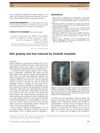
December 2013 in “The Journal of Dermatology” A woman's hair turned gray and fell out after starting a cancer drug called imatinib mesylate.