 May 2023 in “Current Medicinal Chemistry”
 Microneedle patches improve drug delivery for skin treatments and cosmetic enhancements.
 January 2023 in “bioRxiv (Cold Spring Harbor Laboratory)”
 Newly born mesenchymal cells quickly spread out in response to tissue tension during early development.
 January 2023 in “Vìsnik problem bìologìï ì medicini”
 Androgenic alopecia causes hair follicle degradation and skin restructuring, but some hair elements remain.
 November 2022 in “CARDIOMETRY”
 A group has developed therapies that show promise for treating cancer and various other conditions.

Wavy sinus hairs in cats are linked to feline leukemia virus infection.

No single biomarker is reliable enough for diagnosing and assessing SLE.

Human hair keratins can be turned into useful 3D biomedical scaffolds through a freeze-thaw process.
A mange outbreak nearly wiped out vicuña and guanaco populations in San Guillermo National Park.
 June 2021 in “bioRxiv (Cold Spring Harbor Laboratory)”
 KIF18B is important for correctly positioning cell division machinery in skin cells, affecting hair follicle development.
 January 2021 in “arXiv (Cornell University)”
 Self-supervised learning improves medical image classification accuracy.

Vaccination is crucial for public health, but anti-vaccine movements are a concern.
 January 2020 in “Durham e-Theses (Durham University)”
 UK law does not effectively ensure workplace equality for people with visible differences.
 December 2019 in “University of Malaya Students Repository”
 Mimosine from Leucaena leucocephala can enhance biodiesel stability.

L-PGDS has specific binding sites for its functions and could help in drug delivery system design.
People with androgenic alopecia are more likely to have metabolic syndrome than healthy individuals.
 April 2019 in “Advances in Cosmetic Surgery”
 The document concludes that ongoing medical therapy is crucial for preventing hair loss, and surgical options can restore hair, with future treatments for hair loss being promising.
 January 2019 in “LASER THERAPY”
 Laser technologies improve medical treatments and outcomes.
 January 2019 in “Durham e-Theses (Durham University)”
 Advanced microscopy shows hair damage and keratin proteins' roles, aiding future cosmetic treatments.

Optical Coherence Tomography has potential in diagnosing hair loss and monitoring blood clotting, and could be improved for deeper tissue observation and better hair loss understanding.
 November 2018 in “Springer eBooks”
 The document concludes that hair transplant methods are often selected for provider convenience over patient benefit, highlighting the need for less invasive techniques and careful physician involvement for better results.
 September 2018 in “Epsilon Archive for Student Projects (University of Southampton)”
 Bacillus amyloliquefaciens can boost root hair growth in some Arabidopsis plants, potentially improving agriculture.
 January 2018 in “Journal of cosmetology & trichology”
 The Automatic Biofibre® Hair Implant is a fast and effective hair restoration method that provides immediate cosmetic benefits and good results in over 90% of cases, but requires proper care to avoid complications.
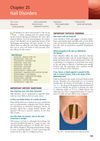 January 2018 in “Elsevier eBooks”
 Different nail disorders are treated by targeting their specific causes and using appropriate medications or protective measures.
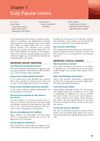 January 2018 in “Elsevier eBooks”
 Topical imiquimod is as effective as 5-fluorouracil for treating actinic keratosis, with about a 5% risk of it turning into squamous cell carcinoma.
Tailored nonsurgical cosmetic procedures are crucial for safely treating diverse skin types, especially skin of color.
 May 2017 in “InTech eBooks”
 Trichoscopy and trichogram are useful for diagnosing hair and scalp conditions.
 January 2017 in “Clinical approaches and procedures in cosmetic dermatology”
 Cosmetic procedures can harm hair, but damage can be minimized with knowledge and care; however, once hair is damaged, it cannot be reliably repaired.

Modern hair restoration techniques can effectively treat hair loss and provide natural-looking results.
 January 2016 in “Springer eBooks”
 Alopecia Areata is an unpredictable autoimmune hair loss condition with limited and variable treatment effectiveness.

Forensic hair analysis for drugs is now more reliable and accurate.