 October 2025 in “Pakistan journal of urology.”
 Personalized, minimally invasive treatments improve urology outcomes.
 October 2025 in “bioRxiv (Cold Spring Harbor Laboratory)”
 Root hair growth slows under force, confirming a model of cell wall mechanics.
A new imaging method helps see and study touch nerve endings in mouse skin.
 August 2025 in “bioRxiv (Cold Spring Harbor Laboratory)”
 Root hair stiffness is mainly influenced by tip compression and turgor pressure.
 July 2025 in “Scientific Reports”
 Pioglitazone, Trimipramine, and Dimetindene may be repurposed to treat psoriasis.
Human placental extract effectively and safely improves melasma, ulcers, and alopecia areata.
 June 2025 in “Medical academic journal”
 Modified liposomes with exosomes effectively deliver RNA to stem cells.
The model explains how mammal ear hair cells respond to sound and adapt.
 March 2025 in “Pain Physician”
 Cooling the skin before injections reduces pain for patients with hair loss.
 March 2025 in “HAL (Le Centre pour la Communication Scientifique Directe)”
 De nouvelles thérapies promettent de mieux traiter la perte de cheveux due à l'alopécie androgénétique.
 March 2025 in “Asian Journal of Beauty and Cosmetology”
 Microspicule cosmetics improve skin whitening, pores, and barrier strength.
 February 2025 in “Archives animal breeding/Archiv für Tierzucht”
 Certain gene combinations improve cashmere quality and production in Liaoning goats.

Intradermotherapy with minoxidil is as effective as topical application for treating hair loss.

New hydrogel sensors can be quickly made and customized for wearable devices.

Polarized microscopy helps identify hair irregularities in genetic disorders.
 January 2025 in “RSC Pharmaceutics”
 Smart microneedles using advanced tech could improve psoriasis treatment.
 January 2025 in “Epsilon Archive for Student Projects (University of Southampton)”
 Mange and orf are present in some goat herds in Zambia, but more research is needed.
 November 2024 in “International Society of Hair Restoration Surgery”
 FUT is a hair restoration method that should be chosen based on individual patient needs and preferences.
Correcting EDA fibronectin organization and YAP translocation can improve wound healing in fibrotic conditions.
ARHGEF3 is essential for proper hair follicle development.
 July 2024 in “International Journal of Dermatology Venereology and Leprosy Sciences”
 Trichoscopy is a useful, painless tool for diagnosing and monitoring children's hair and scalp issues.

Stiffness gradients in alginate gels can guide cancer cell invasion and study cellular behaviors.
A Moroccan athlete got a rare scalp infection, stressing the need for better hygiene in sports.
Mesotherapy is a promising alternative to minoxidil for hair loss with mild side effects.
 April 2024 in “Medical & clinical research”
 More research is needed to find the best long-term treatments for Alopecia Areata.
 February 2024 in “Scientific reports”
 Four genes are potential markers for hair loss condition alopecia areata, linked to a specific type of cell death.
 January 2024 in “International Journal of Dermatology Research”
 PRP is more effective than triamcinolone for treating alopecia areata.
 July 2023 in “Research Square (Research Square)”
 Skin's uneven surface and hair follicles affect its stress and strain but don't change its overall strength, and help prevent the skin from peeling apart.
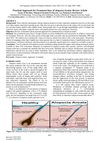 July 2023 in “The Egyptian Journal of Hospital Medicine ”
 The conclusion is that emotional support and a variety of treatments are important for alopecia areata, but more research is needed.
 June 2023 in “Historical records of Australian science/Historical Records of Australian Science”
 George Ernest Rogers was a notable scientist who made important discoveries about hair and wool proteins.