 6 citations
,
August 2023 in “Fertility and Sterility”
6 citations
,
August 2023 in “Fertility and Sterility” The 2023 guideline for PCOS suggests using updated diagnostic criteria, assessing related health risks, and recommends lifestyle changes and specific treatments for symptoms and fertility issues.
 6 citations
,
January 2017 in “Dermato-endocrinology”
6 citations
,
January 2017 in “Dermato-endocrinology” ADT-G may be a useful indicator of increased androgen levels in women with acne and can be lowered with certain birth control pills.
 5 citations
,
January 2024 in “Journal of the American Academy of Dermatology”
5 citations
,
January 2024 in “Journal of the American Academy of Dermatology” Use benzoyl peroxide, retinoids, antibiotics, and isotretinoin for acne, and combine treatments for better results.
5 citations
,
October 2017 in “JOGC/Journal of obstetrics and gynaecology Canada” The conclusion is that proper diagnosis and long-term treatment, including medication, hair removal, and lifestyle changes, are important for improving hirsutism, especially in PCOS patients.
 5 citations
,
May 2017 in “Current Opinion in Pediatrics”
5 citations
,
May 2017 in “Current Opinion in Pediatrics” Hormonal therapies are safe and effective for treating acne in female adolescents, with specific treatments for those with endocrine disorders.
 4 citations
,
November 2023 in “Acta obstetricia et gynecologica Scandinavica”
4 citations
,
November 2023 in “Acta obstetricia et gynecologica Scandinavica” The guideline refines PCOS diagnosis, promotes a healthy lifestyle, reviews treatments, and stresses long-term follow-up.
3 citations
,
December 2024 in “EClinicalMedicine” Anti-androgens are not better than birth control pills for PCOS, but can help with excess hair if pills don't work.
 2 citations
,
April 2019 in “Медицинский совет”
2 citations
,
April 2019 in “Медицинский совет” Combined oral contraceptives improve skin, hormone levels, and quality of life in women with PCOS.
 2 citations
,
July 2012 in “Journal of Pediatric and Adolescent Gynecology”
2 citations
,
July 2012 in “Journal of Pediatric and Adolescent Gynecology” A 12-year-old girl with very high testosterone and insulin resistance improved with birth control pills, suggesting PCOS can cause high testosterone without tumors.
2 citations
,
July 2012 in “Obstetrics, gynaecology and reproductive medicine” Hirsutism in women often indicates health issues like polycystic ovarian syndrome and is treated with lifestyle changes, medication, and cosmetic measures.
 1 citations
,
August 2013 in “Springer eBooks”
1 citations
,
August 2013 in “Springer eBooks” Birth control pills and anti-androgen medications help manage hair growth, acne, and hair loss in women with PCOS.
 1 citations
,
October 2010 in “Cambridge University Press eBooks”
1 citations
,
October 2010 in “Cambridge University Press eBooks” Hormonal therapies are effective for managing hair and skin symptoms in women with PCOS.
1 citations
,
July 2006 in “Reviews in gynaecological and perinatal practice” The document concludes that hirsutism in women, often caused by PCOS, requires systematic evaluation and can be treated with medications, mechanical removal, or cosmetic methods, with weight loss also being beneficial.
 November 2025 in “Cureus”
 PCOS-related acne can be managed by targeting hormones and insulin resistance.
PCOS management involves medication, lifestyle changes, and personalized treatment to address symptoms and improve health.
COCs often cause nausea, vomiting, and hair loss, while Depo-Provera is linked to weight gain.
 November 2023 in “L'Endocrinologo”
 Women with PCOS are more likely to experience sexual dysfunction, but lifestyle changes and weight loss can improve sexual function.
 April 2023 in “Expert opinion on pharmacotherapy”
 Birth control pills and antiandrogens are the most effective medicines for excessive body hair in women, but combining them with other treatments and psychological support is best.
 December 2022 in “OBG Management”
 The conclusion is to diagnose PCOS with just hyperandrogenism and irregular periods, and treat with lifestyle changes and basic medications.
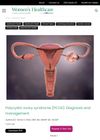 September 2022 in “Women's healthcare”
 PCOS is managed by lifestyle changes and personalized medication to improve symptoms and fertility.
May 2021 in “Journal of the Endocrine Society” Adolescents with PCOS have higher levels of certain androgens, which are linked to hair growth but don't help diagnose PCOS better than testosterone levels.
 May 2019 in “Paediatrics and child health”
 The document concludes that personalized treatment, including lifestyle changes and medication, is essential for managing PCOS in teenagers, while also addressing their psychological well-being.
PCOS is a common hormonal disorder with symptoms like irregular periods and excess hair growth, managed with lifestyle changes and medications.
 October 2016 in “Journal of the Dermatology Nurses’ Association”
 Polycystic Ovary Syndrome (PCOS) affects 6%-15% of women of reproductive age, causing symptoms like acne and hair loss, and increasing the risk of type 2 diabetes and heart disease; it's managed through diet, exercise, and medications like Metformin and hormonal contraceptives.
June 2015 in “Obstetrics, gynaecology and reproductive medicine” Hirsutism, excessive hair growth in women, is often caused by polycystic ovarian syndrome and is treated by targeting the cause, lifestyle changes, and medication.
 September 2011 in “American Journal of Clinical Dermatology”
 The birth control pill containing ethinylestradiol and chlormadinone may help treat acne and other skin and hair conditions related to hormones.
11-oxyandrogens are linked to excess hair growth in PCOS, but don't help diagnose it.
39 citations
,
January 1980 in “Dermatology” Cyproterone acetate was effective in treating acne, hirsutism, and alopecia with few side effects.
26 citations
,
July 2012 in “Journal of family planning and reproductive health care” The document says that hirsutism in women usually needs hair removal and hormone treatment to manage symptoms and improve well-being.
 18 citations
,
January 2020 in “Journal of Clinical Research in Pediatric Endocrinology”
18 citations
,
January 2020 in “Journal of Clinical Research in Pediatric Endocrinology” The document concludes that Functional Hypothalamic Amenorrhea should be carefully diagnosed and managed to prevent health complications, using lifestyle changes and specific medications.