 97 citations
,
March 2002 in “Molecular and cellular biology”
97 citations
,
March 2002 in “Molecular and cellular biology” Mutant CDP/Cux protein causes hair defects and reduced male fertility in mice.
109 citations
,
April 1997 in “Archives of Dermatological Research” Mast cell and nerve fiber interactions in mouse skin change with the hair cycle.
June 2020 in “Comparative medicine” NSG mice had the most mites, and genetic factors affect immune response and susceptibility.
26 citations
,
July 2007 in “Wound Repair and Regeneration” MRL/MpJ mice heal burns slower with more scarring and less tissue regeneration than BALB/c mice.
April 2019 in “Journal of Investigative Dermatology” The humanized AA mouse model is better for testing new alopecia areata treatments.
24 citations
,
July 1994 in “Journal of Investigative Dermatology”  11 citations
,
November 2009 in “Brazilian Journal of Medical and Biological Research”
11 citations
,
November 2009 in “Brazilian Journal of Medical and Biological Research” Young C57BL/6 mice heal better than BALB/c mice, and older mice heal faster but regenerate worse.

Dual TCR Treg cells are common in mouse tissues and vary by location.
 124 citations
,
August 1994 in “Journal of Investigative Dermatology”
124 citations
,
August 1994 in “Journal of Investigative Dermatology” Dexamethasone speeds up hair loss in mice, while cyclosporin A slows it down.
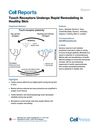 31 citations
,
November 2016 in “Cell Reports”
31 citations
,
November 2016 in “Cell Reports” Touch sensitivity in mouse skin decreases during hair growth due to changes in touch receptors.
Retinoids can help reduce keratin buildup in skin conditions.
 8 citations
,
September 2016 in “Journal of Investigative Dermatology”
8 citations
,
September 2016 in “Journal of Investigative Dermatology” Mice with more Flightless I protein grew back their claws better after amputation.

Researchers improved mouse skin cell culture methods and created a similar immortal cell line, but need to clarify their methods and benefits.
 4 citations
,
October 2009 in “Skin research and technology”
4 citations
,
October 2009 in “Skin research and technology” Colorimetry can accurately measure hair growth rates in mice.
40 citations
,
July 1981 in “Journal of Neuropathology & Experimental Neurology” Copper injections improved symptoms and prevented brain damage in brindled mice.
10 citations
,
November 2009 in “Pigment cell & melanoma research” The document concludes that MGRN1 affects mouse fur color by interfering with a receptor's signaling, but its full role in the body is still unknown.
4 citations
,
January 2021 in “Current Research in Physiology” μ-Crystallin in mouse muscle increases fat metabolism.
January 2013 in “Zhongguo bingli shengli zazhi” Coriaria sinica Maxim extract speeds up burn healing and hair growth in rats.
25 citations
,
December 1991 in “The Journal of Dermatology” Cyclosporin A promotes hair growth in young nude mice.
8 citations
,
April 2016 in “Experimental dermatology” B6.Cg-Tyr c−2J Hr hr /J mice have a stronger delayed sunburn reaction and are good for UV research.

Dual TCR Treg cells are common in various mouse tissues and show diverse characteristics.
18 citations
,
March 2023 in “Molecular Therapy — Nucleic Acids” Mechanical stimuli and CCL2 can help regenerate hair follicles in adult mice.
 2 citations
,
December 2022 in “Scientific Data”
2 citations
,
December 2022 in “Scientific Data” The study maps how genes are regulated during mouse hair growth.
28 citations
,
June 1994 in “Journal of Dermatological Science” Proteolytic activity in mouse skin changes with hair cycle stages, peaking in early anagen.
January 2005 in “Medical Entomology and Zoology” The reinforced collagen sponge helps grow normal hair in mice.
36 citations
,
July 1996 in “The journal of investigative dermatology/Journal of investigative dermatology” Mice with the 'lanceolate hair' mutation have abnormal hair and skin similar to human Netherton's syndrome.
4 citations
,
April 2012 in “The journal of investigative dermatology/Journal of investigative dermatology” Krt16-deficient mice help understand skin disorders like PC and FNEPPK.
May 2026 in “International Journal of Molecular Medicine” The error was corrected without affecting the study's results.
 276 citations
,
December 2017 in “Journal of Dermatological Science”
276 citations
,
December 2017 in “Journal of Dermatological Science” The document concludes that mouse models are helpful but have limitations for skin wound healing research, and suggests using larger animals and genetically modified mice for better human application.