30 citations
,
January 2013 in “Human Mutation” A mutation in the HOXC13 gene causes hair and nail problems in a Syrian family.
372 citations
,
December 2004 in “Nature Genetics”  May 2015 in “Journal of Investigative Dermatology”
 Melanoma risk tools need improvement, a gene mutation causes a hair disorder that might be treated by managing cell stress, a potential therapy for a skin-ear disorder involves blocking cell channels, skin wrinkling may indicate lung aging regardless of smoking, and oxidative stress might contribute to common baldness.
33 citations
,
October 2014 in “Veterinary Dermatology” Epidermolysis bullosa is a genetic disease causing fragile skin and blisters in both animals and humans.
October 2025 in “Indian Journal of Paediatric Dermatology” Trichoscopy is a helpful tool for diagnosing Netherton syndrome.
May 2020 in “International Journal of Dermatology and Venereology” Calcified epidermal cysts are rare, hard skin nodules that are best treated with surgical removal.
November 1997 in “Open Archive (Karolinska Institutet)” PTCH gene mutations contribute to basal cell carcinoma development.
 19 citations
,
April 1995 in “Clinical Genetics”
19 citations
,
April 1995 in “Clinical Genetics” Two siblings were the first reported cases of inheriting both eye coloboma and loose anagen syndrome together.
 April 2023 in “Journal of Investigative Dermatology”
 Cyclosporin A, a drug, reduces TGF-β2 expression in skin cells, potentially causing excessive hair growth through a process involving the calcineurin/NFAT pathway.
 52 citations
,
January 2001 in “Eye”
52 citations
,
January 2001 in “Eye” Treating cystoid macular oedema in uveitis is difficult and risky.
Mutant Cx43 causes slower wound healing and hair growth issues in ODDD.
 January 2025 in “Clinical Dermatology Review”
 Trichoscopy helps accurately diagnose Netherton syndrome, often mistaken for atopic dermatitis.
5 citations
,
February 2005 in “Journal of the American Academy of Dermatology” Focal palmoplantar callosities may help diagnose non-Herlitz junctional epidermolysis bullosa.
1 citations
,
March 2022 in “Frontiers in Medicine” Regular endoscopic checks are crucial for Cronkhite-Canada syndrome patients to catch potential cancers early.
9 citations
,
August 2002 in “British journal of ophthalmology” The document reports a rare case of ECCL with a new association with optic disc colobomas.
 4 citations
,
January 1970 in “Journal of Bangladesh College of Physicians and Surgeons”
4 citations
,
January 1970 in “Journal of Bangladesh College of Physicians and Surgeons” Early diagnosis and genetic counseling are crucial for managing adrenoleukodystrophy.
5 citations
,
June 2008 in “British Journal of Dermatology”  September 2025 in “Annals of Plastic Surgery”
 Inverted follicular keratosis on the eyelid can be cured with surgery and has a great prognosis.
 18 citations
,
January 2020 in “Acta dermato-venereologica”
18 citations
,
January 2020 in “Acta dermato-venereologica” Over 67 genes linked to ichthyosis help improve diagnosis and treatment.
 44 citations
,
November 2009 in “Archives of Dermatology”
44 citations
,
November 2009 in “Archives of Dermatology” CYLD mutations cause a variety of skin tumors with symptoms starting around age 16, and treatments are currently limited.
3 citations
,
April 2018 in “Journal of Investigative Dermatology” CCCA may be a fibroproliferative disorder, and anti-fibrotic therapies could help.
6 citations
,
October 1998 in “PubMed” Antifungal treatment can improve severe skin infections with cutaneous horns.
 9 citations
,
April 2024 in “Cureus”
9 citations
,
April 2024 in “Cureus” Vogt-Koyanagi-Harada disease affects vision and skin, mainly in people with darker skin, and is treated with steroids and immunosuppressants.
June 2021 in “The Journal of Family Practice” A 69-year-old woman has a fast-growing hand lesion that didn't improve with salicylic acid.
 4 citations
,
January 2025 in “Clinical Cosmetic and Investigational Dermatology”
4 citations
,
January 2025 in “Clinical Cosmetic and Investigational Dermatology” Papular acantholytic dyskeratosis of the vulva is a rare, benign skin condition that can be managed conservatively.
8 citations
,
August 2018 in “Journal of Investigative Dermatology” 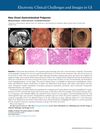 August 2013 in “Gastroenterology”
 A 60-year-old man with Cronkhite-Canada syndrome improved with treatment, but the condition has a high mortality rate and a risk of colorectal cancer.
 9 citations
,
June 2003 in “Veterinary dermatology”
9 citations
,
June 2003 in “Veterinary dermatology” Boxer dogs may have a genetic skin condition that worsens seasonally and can be treated with certain medications.
58 citations
,
November 1969 in “British Journal of Dermatology” Netherton's disease causes multiple hair defects.