April 2023 in “Інфекційні хвороби” COVID-19 can cause skin issues during and after infection.
 7 citations
,
December 2020 in “Endocrine-related Cancer”
7 citations
,
December 2020 in “Endocrine-related Cancer” The over-the-counter supplement DHEA could make COVID-19 worse, especially in diabetics and people with G6PD deficiency.
 17 citations
,
January 2022 in “Emerging infectious diseases”
17 citations
,
January 2022 in “Emerging infectious diseases” COVID-19 generally causes fewer complications than influenza, except for certain conditions like hair loss and heart issues.
28 citations
,
February 2021 in “Open Forum Infectious Diseases” African Americans faced worse COVID-19 outcomes due to a mix of social, environmental, and biological factors.
 88 citations
,
October 2020 in “Open Forum Infectious Diseases”
88 citations
,
October 2020 in “Open Forum Infectious Diseases” Some people who recover from COVID-19 continue to have symptoms like fatigue and cough for over 120 days, and some experience hair loss about 59 days after getting sick.
 32 citations
,
March 2021 in “Journal of cosmetic dermatology (Print)”
32 citations
,
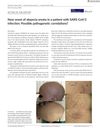
March 2021 in “Journal of cosmetic dermatology (Print)” COVID-19 infection may trigger alopecia areata in some patients.
 38 citations
,
September 2021 in “Signal Transduction and Targeted Therapy”
38 citations
,
September 2021 in “Signal Transduction and Targeted Therapy” Genetic differences affect COVID-19 severity and treatment development.
 3 citations
,
May 2021 in “Dermatologic Clinics”
3 citations
,
May 2021 in “Dermatologic Clinics” COVID-19 changed dermatology by increasing telemedicine and highlighting healthcare disparities.
 59 citations
,
October 2020 in “Stem Cell Reviews and Reports”
59 citations
,
October 2020 in “Stem Cell Reviews and Reports” Men have higher COVID-19 mortality rates than women due to biological and lifestyle factors.
 24 citations
,
February 2022 in “Reviews in Endocrine and Metabolic Disorders”
24 citations
,
February 2022 in “Reviews in Endocrine and Metabolic Disorders” Women with PCOS have a higher risk of severe COVID-19 due to related health issues.
 1 citations
,
January 2024 in “American journal of clinical and experimental immunology.”
1 citations
,
January 2024 in “American journal of clinical and experimental immunology.” Skin symptoms like rashes and sores can indicate COVID-19 severity, especially in older people.
 12 citations
,
November 2022 in “Archives of Dermatological Research”
12 citations
,
November 2022 in “Archives of Dermatological Research” COVID-19 can directly trigger certain skin conditions like pustular dermatoses due to an inflammatory response.
 2 citations
,
July 2023 in “bioRxiv (Cold Spring Harbor Laboratory)”
2 citations
,
July 2023 in “bioRxiv (Cold Spring Harbor Laboratory)” COVID-19 causes more taste, smell, hair, memory, and concentration issues than other respiratory infections.
 13 citations
,
May 2020 in “Journal of Cosmetic Dermatology”
13 citations
,
May 2020 in “Journal of Cosmetic Dermatology” The article suggests using safety measures and telemedicine for aesthetic dermatology during COVID-19, while some procedures can still be done safely.
Most people with post-COVID syndrome experience symptoms like fatigue, but Omicron variants cause fewer persistent symptoms.
 September 2024 in “Cureus”
 Removing breast implants resolved the patient's symptoms.
 December 2021 in “The Sri Lanka Journal of Dermatology”
 COVID-19 can cause various skin issues, including rashes and lesions.
 January 2021 in “Erciyes medical journal”
 The COVID-19 pandemic changed the types of skin conditions seen at a clinic, with fewer patients and varying numbers of specific conditions.
 82 citations
,
June 2020 in “Inflammation Research”
82 citations
,
June 2020 in “Inflammation Research” Skin problems in COVID-19 patients are rare and may be due to the body's complex immune response or blood clotting issues.
 26 citations
,
August 2020 in “Dermatology Research and Practice”
26 citations
,
August 2020 in “Dermatology Research and Practice” COVID-19 can cause various skin problems, including reactions to protective gear and medication, with different rates reported worldwide, and more research is needed to fully understand these skin issues.
 4 citations
,
June 2025 in “Medeniyet Medical Journal”
4 citations
,
June 2025 in “Medeniyet Medical Journal” TMPRSS2 is crucial for COVID-19 infection and is a potential target for treatment.
 4 citations
,
April 2021 in “Experimental and Molecular Medicine”
4 citations
,
April 2021 in “Experimental and Molecular Medicine” The conclusion is that certain genetic factors and blood types may affect COVID-19 severity, but changes in ACE2 and TMPRSS2 genes are not clearly linked to it.
 8 citations
,
February 2022 in “Journal of Clinical Medicine Research”
8 citations
,
February 2022 in “Journal of Clinical Medicine Research” The MATH+ protocol aims to improve COVID-19 outcomes using a combination of specific treatments.
 8 citations
,
April 2015 in “Transboundary and Emerging Diseases”
8 citations
,
April 2015 in “Transboundary and Emerging Diseases” A hospital outbreak of catheter infections in calves was caused by a bacteria from a beef herd, leading to longer hospital stays, more drug use, and calf deaths.
 1 citations
,
January 2024 in “Annals of Dermatology”
1 citations
,
January 2024 in “Annals of Dermatology” COVID-19 may trigger alopecia areata, but more research is needed.
 1 citations
,
March 2021 in “The Journal of Sexual Medicine”
1 citations
,
March 2021 in “The Journal of Sexual Medicine” The letter suggests testosterone replacement therapy might worsen COVID-19 outcomes.
 April 2026 in “Research Square”
 COVID-19 can harm male fertility by reducing sperm stem cells and damaging testicular function.
 February 2025 in “International Journal of Research in Medical Sciences”
 Reinfection patients had more physical complications, while initial infection patients had more mental health issues.
 1 citations
,
November 2025 in “Journal of Korean Medical Association”
1 citations
,
November 2025 in “Journal of Korean Medical Association” Recognizing nail changes helps diagnose and treat non-infectious skin diseases.
 125 citations
,
August 2020 in “Frontiers in Immunology”
125 citations
,
August 2020 in “Frontiers in Immunology” Men generally have more severe COVID-19 cases and higher death rates than women due to biological differences.