August 2025 in “Journal of Affective Disorders” Gender-diverse people face more depression and anxiety, partly due to stress and lower cortisol levels.
June 2025 in “Archives of Dermatological Research” May 2025 in “OSF Preprints (OSF Preprints)” Machine learning can help identify stress indicators in mothers and infants.
May 2025 in “Psychoneuroendocrinology” Discrimination during pregnancy affects newborn stress hormone levels.
 July 2024 in “Nursing Research”
 Hair and nail cortisol levels can show long-term stress in young males.
 February 2024 in “Psychoneuroendocrinology”
 Mothers with lower stress during pregnancy but higher stress after birth had infants with lower development scores.
 February 2024 in “Psychoneuroendocrinology”
 Higher anxiety during pregnancy is linked to lower cortisol levels in newborns' hair.
 February 2024 in “Psychoneuroendocrinology”
 Higher prenatal anxiety is linked to lower cortisol levels in newborns' hair.
 November 2023 in “Deleted Journal”
 Combining laser and corticosteroid is not better than corticosteroid alone for treating frontal fibrosing alopecia.
September 2023 in “Journal of the American Academy of Dermatology” Methylprednisolone treatment helps most alopecia areata patients, but young age, extensive hair loss, and low vitamin D can affect results.
Topical corticosteroids are effective for skin conditions but can have side effects.
 January 2023 in “Research Square (Research Square)”
 Hair cortisol may be a good indicator of recent mood in people with bipolar disorder.
 November 2022 in “Innovation in aging”
 Older adults in Puerto Rico often couldn't be tested for hair cortisol due to refusal or lack of hair, with race and hair products affecting results.
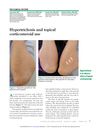 February 2022 in “Cleveland Clinic Journal of Medicine”
 Prolonged use of topical corticosteroids can cause excessive hair growth.
September 2021 in “Psychoneuroendocrinology” Nurses had higher stress levels during intense phases of the COVID-19 pandemic.
 May 2021 in “Journal of the Endocrine Society”
 The case shows the importance of quick and thorough evaluation of adrenal tumors to prevent rapid disease progression and poor outcomes.
June 2020 in “Journal of skin and stem cell” The patient's hair loss from alopecia totalis returned despite initial successful treatment.
April 2020 in “Journal of the Endocrine Society” Hair cortisol measurement can help diagnose and monitor Cushing’s disease.
February 2020 in “VSNU Open Access deal” Hair cortisol levels change with age, starting high at birth, decreasing until age 6, then rising to adult levels by age 18.
December 2019 in “Case Medical Research”  October 2019 in “International journal of research in dermatology”
 Misusing topical corticosteroids can cause skin darkening and other side effects.
January 2018 in “Belarusian State Pedagogical University repository (Belarusian State Pedagogical University)” Stress might trigger hair loss in alopecia areata, but more research is needed.
September 2017 in “OhioLink ETD Center (Ohio Library and Information Network)” Caregivers had lower stress hormone levels than non-caregivers, suggesting caregiving stress affects the body differently.
 April 2016 in “Journal of The American Academy of Dermatology”
 Certain scalp tissue features can predict how well alopecia areata responds to steroid injections.
 January 2013 in “Journal of dermatology”
 A new medical syndrome may include skin changes, hair loss, sweating issues, bone malformations, leg swelling, and low cortisol.
 December 2011 in “InTech eBooks”
 Systemic corticosteroids can help treat rapidly spreading vitiligo but require more research for safer use.
July 2011 in “Neurotoxicology and Teratology”  January 2007 in “Yearbook of Dermatology and Dermatologic Surgery”
 Intramuscular triamcinolone and pulse therapy with oral predonine are effective for alopecia areata with manageable side effects, but better relapse prevention is needed.
February 2023 in “Reactions Weekly”  41 citations
,
August 2015 in “The FASEB Journal”
41 citations
,
August 2015 in “The FASEB Journal” Blocking the Wnt/β‐catenin pathway can speed up wound healing, reduce scarring, and improve cartilage repair.