Search
for
Sort by
Research
150-180 / 1000+ results
research Eph/ephrin signaling in epidermal differentiation and disease
Eph/ephrin signaling is important for skin cell behavior and could be targeted to treat skin diseases.
research Keratins as an Inflammation Trigger Point in Epidermolysis Bullosa Simplex
Mutant keratins cause inflammation in Epidermolysis Bullosa Simplex, suggesting targeting them could help treat the disorder.

research An Ovol2‐Zeb1 transcriptional circuit regulates epithelial directional migration and proliferation
The Ovol2-Zeb1 circuit is crucial for skin healing and hair growth by guiding cell movement and growth.
research Hair keratin pattern in human hair follicles grown in vitro
Human hair follicles grown in vitro maintain normal keratin patterns and structure.
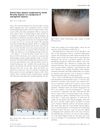
research Discoid lupus alopecia complicated by frontal fibrosing alopecia on a background of androgenetic alopecia
Woman has discoid lupus, frontal fibrosing, and androgenetic alopecia.
research Local structure of human hair spatially resolved by sub-micron X-ray beam
Human hair has a new region with ordered filaments and the cuticle contains β-keratin sheets.
research Morphogenesis and maintenance of the 3D thymic medulla and prevention of nude skin phenotype require FoxN1 in pre- and post-natal K14 epithelium
FoxN1 gene is essential for proper thymus structure and preventing hair loss.
research Two Different Mutations in the Same Codon of a Type II Hair Keratin (hHb6) in Patients with Monilethrix
Mutations in the hHb6 gene cause the hair disorder monilethrix.
research Chapter 4 Cytomechanics of Hair
Hair's strength and flexibility come from its protein structure and molecular interactions.
research Sequence and expression of human hair keratin genes
Human hair keratin genes are similar to mouse genes and are specifically expressed in hair follicles.
research Structural Hierarchy of Trichocyte Keratin Intermediate Filaments
Keratin proteins are crucial for hair growth and structure.

research CD133-positive dermal papilla-derived Wnt ligands regulate postnatal hair growth
Wnt proteins from certain skin cells are crucial for normal hair growth and renewal.

research Microscopical characterization of known postmortem root bands using light and scanning electron microscopy
The research found that postmortem root bands in hair are likely caused by the breakdown of a specific part of the hair's inner structure after death.
research The hair shaft: normality, abnormality, and genetics
Hair microscopy is useful for diagnosing hair disorders, but clear definitions are needed for accurate genetic analysis.
research Strategies for improved hair binding: Keratin fractions and the impact of cationic substructures
Certain treatments can increase protein binding to natural hair but are less effective on permed hair.
research Synthesis and cross-linking in the structure and growth of hair keratins
The molecular details of hair growth are not well understood.

research P63 targeted deletion under the FOXN1 promoter disrupts pre-and post-natal thymus development, function and maintenance as well as induces severe hair loss
Deleting the p63 gene in certain cells causes problems in thymus development and severe hair loss in mice.

research SCD1 Sustains Homeostasis of Bulge Niche via Maintaining Hemidesmosomes in Basal Keratinocytes
SCD1 is important for hair growth by keeping the connection in skin cells where hair stem cells live stable.
research Identification of the Keratin-Associated Protein 22-2 Gene in the Capra hircus and Association of Its Variation with Cashmere Traits
A new goat gene affects cashmere fiber thickness; certain variations can make the fibers coarser.
research Methods of keratin extraction from wool and hair and prospects of their application in biomedicine and bioengineering
Extracted keratin from wool and hair can be used in medicine and bioengineering.
research Keratin expression in the human hair follicle

research Development and optimization of biotinoyl tripeptide-1 loaded solid lipid nanoparticles for protection against heat induced hair damage
Biotinoyl tripeptide-1 nanoparticles protect hair from heat damage.
research Keratin 15 promotes a progenitor cell state in basal keratinocytes of skin epidermis
Keratin 15 helps maintain skin cell growth and repair.

research Human hair keratin responds to oxidative stress via reactive sulfur and supersulfides
Human hair strength and health are linked to sulfur compounds that can be reduced by stress but improved with sulfur supplements.

research Adsorption of Diclofenac and PFBS on a Hair Keratin Dimer
Human hair keratin might be good for filtering out harmful substances from water.

research Insights on the Hair Keratin Structure Under Different Drying Conditions
Drying hair with a microfiber towel better maintains hair strength and structure than using a cotton towel or blow-drier.

research Integration of Biochemical and Mechanical Signals at the Nuclear Periphery: Impacts on Skin Development and Disease
The conclusion is that the nuclear lamina and LINC complex in skin cells respond to mechanical signals, affecting gene expression and cell differentiation, which is important for skin health and can impact skin diseases.
research 2P546 Structural Analysis of Curly and Straight Human Hair Fibers by Scanning Microbeam SAXS(52. Bio-imaging,Poster Session,Abstract,Meeting Program of EABS & BSJ 2006)
Curly and straight hair differ in how their internal fibers are arranged.

research Abstracts from the Symposium on the Pathophysiology of Hair Growth Organized by the Institute of Dermatology at the Royal Society of Medicine, 29 October 1987
The symposium concluded that hair growth involves complex processes, including the hair follicle life cycle, the role of the dermal papilla, hair strength, pigmentation, and the impact of diseases and treatments like minoxidil on hair and skin.