January 1989 in “Handbook of experimental pharmacology” Drugs can change hair growth and this is important because it can upset people.
 47 citations
,
February 2015 in “European Journal of Clinical Investigation”
47 citations
,
February 2015 in “European Journal of Clinical Investigation” The review suggests thorough evaluation and genetic testing for proper diagnosis and treatment of Chrousos syndrome.
 42 citations
,
November 2019 in “Frontiers in Endocrinology”
42 citations
,
November 2019 in “Frontiers in Endocrinology” The document suggests creating a validated score to diagnose Cushing's Syndrome and considers plasma steroid profiling as a simpler diagnostic method.
 2 citations
,
March 2018 in “INDONESIAN JOURNAL OF CLINICAL PATHOLOGY AND MEDICAL LABORATORY”
2 citations
,
March 2018 in “INDONESIAN JOURNAL OF CLINICAL PATHOLOGY AND MEDICAL LABORATORY” A pregnant woman with Cushing Syndrome got worse and sadly passed away.
 2 citations
,
April 2013 in “Expert Review of Endocrinology & Metabolism”
2 citations
,
April 2013 in “Expert Review of Endocrinology & Metabolism” Identifying nonclassic congenital adrenal hyperplasia and carriers of CYP21 mutations is challenging, and genetic counseling is recommended due to their prevalence.
March 2015 in “DergiPark (Istanbul University)” Basal serum cortisol levels don't help diagnose adrenal issues in vitiligo patients.
January 2026 in “Digital Repository (National Repository of Grey Literature)” Horse management affects stress levels, with police horses having the highest cortisol.
16 citations
,
September 2009 in “Schweizer Archiv für Tierheilkunde” Adrenal tumors can cause high progesterone levels, mimicking symptoms of high cortisol.
 1 citations
,
February 2025 in “Journal of Endocrinological Investigation”
1 citations
,
February 2025 in “Journal of Endocrinological Investigation” Screen young women with menstrual issues, acne, or excess hair for high cortisol to avoid misdiagnosis.
September 2021 in “Journal of pharmaceutical research international” The conclusion is that hirsutism is strongly linked to PCOS and higher levels of certain hormones, but not to DHEAS, prolactin, cortisol, or TSH.
 November 2022 in “Journal of the Endocrine Society”
 The patient likely has Chrousos syndrome, a rare condition causing insensitivity to glucocorticoids, requiring high-dose dexamethasone treatment.
59 citations
,
January 1976 in “Vitamins and hormones” Prostate cells have proteins that bind to specific hormones, which can increase protein production when activated by these hormones.
27 citations
,
May 1976 in “PubMed” Ovarian wedge resection helped regulate menstrual cycles but didn't significantly change hormone levels or hair growth in polycystic ovary syndrome.
April 2026 in “European Journal of Cardiovascular Nursing” Physical activity may increase stress in some heart failure patients.
October 2025 in “Journal of the Endocrine Society” Careful dosing and monitoring are crucial to prevent adrenal insufficiency when using ketoconazole for Cushing's disease.
Liver abscesses don't affect stress in beef feedlot steers.
May 2018 in “The Knowledge Bank (The Ohio State University)” Occasional religious service attendees had the lowest stress levels.
102 citations
,
July 2020 in “International journal of molecular sciences” Hormones like testosterone and estrogen significantly affect hair growth and structure.
83 citations
,
July 1993 in “Journal of the American Veterinary Medical Association” Diagnosis of adrenal issues in ferrets should use symptoms, ultrasound, and surgery, not ACTH tests.
 23 citations
,
January 2010 in “Journal of Medical Primatology”
23 citations
,
January 2010 in “Journal of Medical Primatology” Hair loss in Rhesus macaques may be caused by a skin allergy-related condition.
22 citations
,
January 1992 in “PubMed” Higher CSF 5-HIAA levels may predict better response to serotonin re-uptake inhibitors in trichotillomania.
13 citations
,
January 2025 in “Lab on a Chip” Capillary microfluidic wearables are promising for non-invasive health monitoring through sweat and saliva.
11 citations
,
April 2023 in “Skin Health and Disease” Psychological stress can worsen skin conditions like psoriasis and acne.
6 citations
,
October 2011 in “ISRN Ophthalmology” Higher testosterone and dehydroepiandrosterone sulphate levels may help diagnose meibomian gland dysfunction.
 5 citations
,
January 1984 in “Journal of psychosomatic obstetrics and gynecology/Journal of psychosomatic obstetrics and gynaecology”
5 citations
,
January 1984 in “Journal of psychosomatic obstetrics and gynecology/Journal of psychosomatic obstetrics and gynaecology” The treatment reduced hair growth and testosterone in women with excess hair and had some effects on stress responses.
4 citations
,
April 2019 in “JAAD Case Reports” DPR can cause skin, hair, and nail issues, sometimes appearing later in life.
 4 citations
,
November 2016 in “Dermatologic Therapy”
4 citations
,
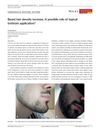
November 2016 in “Dermatologic Therapy” Topical tretinoin may increase beard hair density.
2 citations
,
January 2001 in “Humana Press eBooks” Pseudo-Cushing's symptoms disappear once the underlying issue is resolved.
2 citations
,
September 1989 in “PubMed” Canrenone effectively reduced hair growth and testosterone levels in women with excessive hairiness.
April 2026 in “Veterinary Medicine and Science” Adrenal tumors in hamsters are rare and hard to diagnose, highlighting the need for better diagnostic tools.