1 citations
,
April 2024 in “Pathogens” A pet ferret had a serious infection from Mycobacterium xenopi, which can spread to humans.
 January 2023 in “Pesquisa Veterinária Brasileira”
 A KRT71 mutation in Hereford cattle in Uruguay causes thin, curly hair and scaly skin.
 2 citations
,
January 2022 in “Boletín médico del Hospital infantil de México/Boletín médico del Hospital Infantil de México”
2 citations
,
January 2022 in “Boletín médico del Hospital infantil de México/Boletín médico del Hospital Infantil de México” Some immunosuppressed patients can get unusual skin infections from Malassezia, which can be treated with antifungal medication.
 January 2024 in “ACTA SCIENTIAE VETERINARIAE”
 An epidermoid cyst in a dog's mammary gland is rare and benign.
7 citations
,
August 1984 in “Mycoses” Most patients had less hair growth in affected areas after treatment.
 1 citations
,
December 2019 in “Acta Medica Medianae”
1 citations
,
December 2019 in “Acta Medica Medianae” Connubial contact dermatitis is often missed, making treatment harder.
 1 citations
,
October 2012 in “QJM”
1 citations
,
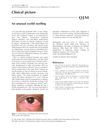
October 2012 in “QJM” A 47-year-old man's eyelid swelling didn't improve with basic treatments, so a biopsy was needed.
7 citations
,
May 1978 in “Acta Dermato Venereologica” A 36-year-old man had unusual skin lesions on his face without hair loss.
April 2021 in “Cermin Dunia Kedokteran” Two siblings with tinea capitis improved after treatment with ketoconazole.
 September 2024 in “PubMed”
 Timely and correct treatment is crucial to prevent complications and scarring in children with scalp ringworm.
 February 2024 in “Infection and drug resistance”
 Tinea capitis in a child was caused by a fungus from cats, highlighting the need for accurate diagnosis and treatment.
1 citations
,
January 2024 in “Journal of clinical medicine” Early recognition and treatment of tinea capitis are crucial to prevent severe scalp issues and prolonged therapy.
 June 2023 in “British Journal of Dermatology”
 Coinheritance of BRCA2 and CYLD genes may lead to new treatment options for certain cancers.
6 citations
,
August 2011 in “Anais Brasileiros de Dermatologia” Vellus hair cysts can cause acne-like bumps that don't respond to treatment.
 March 2024 in “Jurnal Ilmu Kesehatan Hewan”
 The treatment was effective for the puppy's skin and intestinal infections.
 4 citations
,
March 2006 in “Journal of dermatology”
4 citations
,
March 2006 in “Journal of dermatology” A Chinese-Japanese boy had a rare fungal infection on his scalp and skin, likely caught in China.
20 citations
,
January 1997 in “Dermatology” The patient with EEC syndrome had scarring alopecia due to deep folliculitis, possibly linked to abnormal hair structure.
The patient improved with treatment for depilating folliculitis.
14 citations
,
November 2015 in “Dermatology” The research provided insights into the presentation and management of alopecic and aseptic nodules of the scalp.
 August 2013 in “Gastroenterology”
 A 60-year-old man with Cronkhite-Canada syndrome improved with treatment, but the condition has a high mortality rate and a risk of colorectal cancer.
 September 2025 in “Scientific periodicals of Ukraine”
 Early diagnosis and treatment stopped hair loss and improved the condition.
 13 citations
,
June 2010 in “Journal of The American Academy of Dermatology”
13 citations
,
June 2010 in “Journal of The American Academy of Dermatology” A man with Cronkhite-Canada syndrome had all 20 nails detach but improved with treatment.
226 citations
,
February 1999 in “British Journal of Dermatology” Folliculitis decalvans and tufted folliculitis are related, and a new treatment with rifampicin and clindamycin is effective.
21 citations
,
August 2002 in “British Journal of Ophthalmology” Intralesional cidofovir may be a viable alternative treatment for SCC.
17 citations
,
January 2015 in “JOURNAL OF CLINICAL AND DIAGNOSTIC RESEARCH” Cronkhite-Canada syndrome is a rare, non-inherited condition causing various symptoms like polyps, hair loss, and weight loss.
December 2004 in “Microbial Ecology in Health and Disease” Pityriasis amiantacea is linked to Staphylococcus aureus infection and can be effectively treated with antibiotics, corticosteroids, and coal tar.
 June 2023 in “Journal of cosmetic dermatology”
 A woman developed skin lesions after PRP injections, possibly linked to COVID-19 infection and vaccination.
 28 citations
,
January 2000 in “Medical Mycology”
28 citations
,
January 2000 in “Medical Mycology” Fungal infections in lab animals can interfere with research.
4 citations
,
January 1992 in “American Journal of Ophthalmology”  11 citations
,
December 1921 in “Archives of dermatology and syphilology”
11 citations
,
December 1921 in “Archives of dermatology and syphilology” A rare scalp disease causes hair loss, pus-filled nodules, and scarring.