 December 2023 in “Data in Brief”
 Curly hair's strength and flexibility vary with moisture and temperature.
1 citations
,
September 2016 in “Brain Behavior and Immunity” Hair cortisol levels can indicate stress and are affected by washing frequency, not cosmetic treatments.
8 citations
,
July 2019 in “The journal of investigative dermatology/Journal of investigative dermatology” Curly hair is mechanically different from straight hair and may need new testing methods.
62 citations
,
December 2008 in “Journal of structural biology” Hair curvature in Japanese people is linked to specific cell types and filament arrangements in the hair cortex.
22 citations
,
January 1985 Water makes hair more flexible, especially the outer layer.
New methods to classify curly hair types were developed based on shape and strength.
 6 citations
,
January 2000 in “Dermatology”
6 citations
,
January 2000 in “Dermatology” A girl's severely tangled hair couldn't be fixed and had to be cut due to a rare condition called plica neuropathica.
July 2026 in “arXiv (Cornell University)” Hair has varying structures and properties along its length.
 34 citations
,
October 1982 in “Journal of applied polymer science”
34 citations
,
October 1982 in “Journal of applied polymer science” Moisture content significantly affects how human hair breaks.
November 2024 in “International Journal of Cosmetic Science” Hair absorbs moisture differently based on its structure and treatment, with changes occurring at 30% humidity.

Caucasian and Mediterranean hair is denser and varies in color and texture compared to African and Asian hair.
12 citations
,
August 2016 in “Biomedical Chromatography” A new method accurately measures clobetasol propionate in hair and skin.
1 citations
,
December 2022 in “Skin Research and Technology” The technique helps measure how hair styling ingredients affect hair's stiffness and flexibility.
1 citations
,
August 2015 in “PubMed” Human hair's strength comes from a honeycomb-like structure and macrofibrils.
 42 citations
,
January 2009 in “Colloids and Surfaces B: Biointerfaces”
42 citations
,
January 2009 in “Colloids and Surfaces B: Biointerfaces” A certain surfactant sticks to human hair, making it change from water-repelling to water-attracting, which could help in hair conditioning.
28 citations
,
March 2014 in “Biological reviews/Biological reviews of the Cambridge Philosophical Society” The document concludes that hair curvature can be explained by the growth patterns caused by the shape and separation of cells in the hair follicle and is affected by specific molecular pathways.
 July 2025 in “The Journal of Physiology”
 C-tactile afferents are linked to emotional touch and social bonding through hair movement.
65 citations
,
March 2017 in “Experimental Dermatology” Curly hair is influenced by specific genetic variations.
4 citations
,
October 2007 in “PubMed” Polyquaternium-70 shampoo is best for reducing frizz.
 108 citations
,
March 2011 in “Archives of Dermatology”
108 citations
,
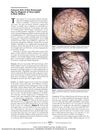
March 2011 in “Archives of Dermatology” Corkscrew hair may be a new sign for quickly diagnosing scalp fungus in black children.
 2 citations
,
March 2005 in “International Journal of Cosmetic Science”
2 citations
,
March 2005 in “International Journal of Cosmetic Science” Human hair structure varies by ethnicity, and certain treatments can improve hair condition and appearance.
18 citations
,
January 2015 in “Journal of medical genetics” New genes linked to woolly hair have been found, which could help treat it and change hair texture.
1 citations
,
November 2023 in “Cosmetics” Surfactants damage hair, but sealing the cuticle can prevent this.
 17 citations
,
June 2011 in “The journal of investigative dermatology/Journal of investigative dermatology”
17 citations
,
June 2011 in “The journal of investigative dermatology/Journal of investigative dermatology” The G60S Connexin43 mutation causes hair growth issues and poor hair quality in mice, similar to human ODDD patients.
October 2015 in “Cosmetic Dermatology” Hair is complex, varies in type, and plays a big role in attractiveness and culture.
2 citations
,
June 2023 in “International Journal of Women’s Dermatology” Coily/curly hair products cost more than straight hair products, highlighting a need for fair pricing.
33 citations
,
September 1987 in “American Journal of Medical Genetics” Uncombable hair is inherited dominantly with complete penetrance.
February 1999 in “The anatomical record” Two mouse mutants have defective hair cuticle cross-linking.
May 2025 in “International Journal of Trichology” Hair Heat Disease is caused by wet, oily hair and friction in hot, humid conditions.

The new method can tell how hair fibers react to moisture after treatments.