1 citations
,
March 2024 in “Pathogens” Beau's lines on nails may indicate severe COVID-19 or vaccination response.
 15 citations
,
April 2022 in “Immunology”
15 citations
,
April 2022 in “Immunology” Men and women get COVID-19 at similar rates, but men tend to get sicker and have a higher risk of dying, while women usually have stronger immune responses and vaccine reactions.
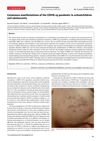 January 2023 in “Acta dermatovenerologica Alpina, Pannonica et Adriatica (Tiskana izd.)”
 The article concludes that schoolchildren and adolescents experienced various skin issues during the COVID-19 pandemic, including acne from masks and other skin reactions from the virus and vaccines.
 1 citations
,
September 2023 in “Journal of the American Academy of Dermatology”
1 citations
,
September 2023 in “Journal of the American Academy of Dermatology” COVID-19 vaccines have been linked to an increase in hair loss conditions.
 January 2025 in “Annals of Dermatology”
 COVID-19 vaccination may slightly increase the risk of hair loss, but benefits outweigh this risk.
 January 2025 in “SKIN The Journal of Cutaneous Medicine”
 Some patients on Baricitinib for alopecia areata lost response, often linked to longer and more severe initial conditions.
7 citations
,
July 2024 in “Frontiers in Immunology” COVID-19 can increase the risk of hair loss, especially in people over 40.
 April 2024 in “Public health”
 Vaccination and timely treatment reduce the risk of long COVID.
 September 2022 in “JAAD Case Reports”
 COVID-19 may worsen hair loss in people with a certain type of scarring alopecia, but early treatment can help improve symptoms and hair regrowth.
 4 citations
,
April 2023 in “Cutis”
4 citations
,
April 2023 in “Cutis” COVID-19 can cause or worsen skin issues.
 1 citations
,
December 2020 in “Journal of Experimental Biology and Agricultural Sciences”
1 citations
,
December 2020 in “Journal of Experimental Biology and Agricultural Sciences” COVID-19 is caused by a virus from bats, and efforts focus on prevention and treatment research.
 185 citations
,
August 2020 in “Mayo Clinic Proceedings”
185 citations
,
August 2020 in “Mayo Clinic Proceedings” Men are more likely to have severe COVID-19 cases and fatalities than women due to factors like lifestyle, aging, and biological differences.
 19 citations
,
November 2021 in “Reviews in endocrine and metabolic disorders”
19 citations
,
November 2021 in “Reviews in endocrine and metabolic disorders” Sex hormones like estrogen and testosterone may affect COVID-19 severity differently in men and women, potentially influencing prevention and treatment strategies.
June 2023 in “Institutional Repositories DataBase (IRDB)” COVID-19 can cause various skin symptoms, with different patterns seen in younger and older patients.
 2 citations
,
September 2021 in “Orphanet Journal of Rare Diseases”
2 citations
,
September 2021 in “Orphanet Journal of Rare Diseases” People with hypohidrotic ectodermal dysplasia are more likely to experience long-term fatigue and hair loss after COVID-19.
 March 2022 in “Journal of Clinical Case Studies Reviews & Reports”
 COVID-19 can cause or worsen skin conditions and might show early signs of infection.
 March 2022 in “Journal of clinical case studies reviews & reports”
 COVID-19 can cause different skin issues, including rashes and hair loss.
 68 citations
,
May 2021 in “Endocrine”
68 citations
,
May 2021 in “Endocrine” People with diabetes or obesity should manage their conditions carefully as they have a higher risk of severe COVID-19.
 58 citations
,
December 2020 in “Mayo Clinic Proceedings”
58 citations
,
December 2020 in “Mayo Clinic Proceedings” The conclusion is that individual differences in COVID-19 severity are influenced by factors like age, sex, race, and genetics, which are important for personalized medicine.
 52 citations
,
January 2022 in “Current Research in Pharmacology and Drug Discovery”
52 citations
,
January 2022 in “Current Research in Pharmacology and Drug Discovery” New treatments for COVID-19 show promise, but more effective antiviral drugs are needed.
 39 citations
,
March 2022 in “Infection”
39 citations
,
March 2022 in “Infection” Many recovered COVID-19 patients in Saudi Arabia still experience symptoms like fatigue and anxiety, especially older adults and those with other health issues.
 November 2025 in “Journal of Disease and Public Health”
 Post-COVID-19 syndrome is complex, affects 5%-10% of people, and requires better research and global collaboration for treatment.
 January 2024 in “Authorea (Authorea)”
 Convalescent Plasma Therapy may help treat COVID-19 Long-Hauler symptoms.

The document suggests using convalescent plasma to treat COVID-19 Long Hauler Syndromes because it may contain beneficial elements that target the virus.
 April 2023 in “Research Square (Research Square)”
 Many healthcare workers who had Covid-19 suffer from long-term symptoms like hair loss and fatigue, especially women.
 125 citations
,
August 2020 in “Frontiers in Immunology”
125 citations
,
August 2020 in “Frontiers in Immunology” Men generally have more severe COVID-19 cases and higher death rates than women due to biological differences.
 11 citations
,
May 2021 in “Journal of Medical Virology”
11 citations
,
May 2021 in “Journal of Medical Virology” Men are more likely to have severe respiratory viral infections like COVID-19 due to hormonal and genetic differences, while women generally have stronger immune responses.
 November 2021 in “Journal of the European Academy of Dermatology and Venereology”
 2021 saw a slow return to normalcy and increased scientific engagement despite COVID-19 challenges.
 14 citations
,
January 2021 in “Cureus”
14 citations
,
January 2021 in “Cureus” The AndroCoV Clinical Scoring is a quick, accurate, and free tool for diagnosing COVID-19.
September 2025 in “International Journal of Emergency Medicine” More skin issues appeared in the emergency department during COVID-19, highlighting the need for better dermatology training and resources.