 June 2022 in “Plastic and Reconstructive Surgery – Global Open”
 Stem cell serum effectively treated hair loss caused by COVID-19.
 September 2023 in “Journal of the American Academy of Dermatology”
 The document concludes that more research is needed to confirm if COVID-19 vaccines cause a type of hair loss called alopecia areata.
 January 2026 in “Journal of Contemporary Medicine”
 Vitamin D may help prevent or reduce hair loss after COVID-19.
 22 citations
,
October 2021 in “Dermatologic Therapy”
22 citations
,
October 2021 in “Dermatologic Therapy” COVID-19 may cause temporary hair loss in some people.
10 citations
,
January 2023 in “SAGE Open Medical Case Reports” COVID-19 infection and vaccination may trigger hair loss and rapid hair whitening.
 September 2022 in “Journal of The American Academy of Dermatology”
 Different types of hair loss are linked to COVID-19, with some types possibly increasing risk of getting the virus, while others may be triggered or worsened by the virus.
 70 citations
,
July 2020 in “Pharmacological Reports”
70 citations
,
July 2020 in “Pharmacological Reports” Cepharanthine, a Japanese hair loss drug, shows promise as a COVID-19 treatment but needs more testing.
 October 2025 in “Dermatology Practical & Conceptual”
 Severe COVID-19 often leads to hair loss in India.

COVID-19 may trigger or worsen rapid hair loss in alopecia areata.
 January 2021 in “Journal of Pakistan Association of Dermatology”
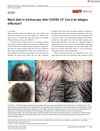
 COVID-19 recovery can lead to temporary hair loss called telogen effluvium.
 2 citations
,
July 2021 in “Dermatologic Therapy”
2 citations
,
July 2021 in “Dermatologic Therapy” A woman's hair loss after COVID-19 was likely due to a mix of pressure-induced alopecia and acute telogen effluvium.
 1 citations
,
September 2023 in “Journal of the American Academy of Dermatology”
1 citations
,
September 2023 in “Journal of the American Academy of Dermatology” COVID-19 vaccines have been linked to an increase in hair loss conditions.
 March 2026 in “Frontiers in Pediatrics”
 COVID-19 may trigger hair loss conditions like alopecia areata.
 June 2024 in “IP Indian journal of clinical and experimental dermatology”
 Hair loss has many causes and treatments, but future research aims for better solutions.
 August 2024 in “Journal of Dermatology for Physician Assistants”
 Early treatment of COVID-19-related hair loss is crucial for better outcomes.

COVID-19 may be linked to hair loss called Telogen Effluvium, affecting quality of life and self-esteem.
 3 citations
,
May 2022 in “JAAD case reports”
3 citations
,
May 2022 in “JAAD case reports” A woman developed alopecia after her second Pfizer vaccine but regrew her hair with treatment and had no issues after a booster shot.
 April 2021 in “European journal of medical and health sciences”
 The pandemic stress may have increased alopecia cases in Bangladesh.
 January 2022 in “Medical research archives”
 Taking vitamin D might improve life for MS patients and reduce skin side effects from alemtuzumab treatment.
 3 citations
,
January 2022 in “Cutis”
3 citations
,
January 2022 in “Cutis” Telemedicine is effective for diagnosing hair loss, especially in people with darker skin, during the pandemic.
 1 citations
,
January 2024 in “Annals of Dermatology”
1 citations
,
January 2024 in “Annals of Dermatology” COVID-19 may trigger alopecia areata, but more research is needed.
 December 2023 in “Curēus”
 COVID-19 vaccination does not significantly increase the risk of developing alopecia areata.
 11 citations
,
May 2021 in “Journal of The American Academy of Dermatology”
11 citations
,
May 2021 in “Journal of The American Academy of Dermatology” COVID-19 doesn't make alopecia areata worse.
 9 citations
,
November 2020 in “Medical Hypotheses”
9 citations
,
November 2020 in “Medical Hypotheses” Hair loss may link to weaker COVID-19 immunity, suggesting possible need for extra vaccine boost.
 1 citations
,
May 2023 in “Revista Eletrônica Acervo Saúde”
1 citations
,
May 2023 in “Revista Eletrônica Acervo Saúde” Alopecia after COVID-19 negatively impacts quality of life, especially vitality.
 November 2025 in “Health Promotion Evidence”
 Post-COVID-19 hair loss can be treated effectively with therapies like light therapy, microneedling, and scalp massage.
 February 2024 in “Recima21”
 Covid-19 can cause hair loss due to immune and psychological factors.
 6 citations
,
December 2020 in “Dermatological reviews”
6 citations
,
December 2020 in “Dermatological reviews” COVID-19 may worsen with androgens; anti-androgen drugs could help.
 7 citations
,
December 2020 in “Clinics in Dermatology”
7 citations
,
December 2020 in “Clinics in Dermatology” Some alopecia treatments might help treat COVID-19, but more research is needed.
 36 citations
,
July 2020 in “Frontiers in Medicine”
36 citations
,
July 2020 in “Frontiers in Medicine” Spironolactone might help protect against severe lung problems in COVID-19 patients.