 March 2024 in “Sudan Journal of Medical Sciences”
 Many doctors lack knowledge about COVID-19 skin symptoms and need better education and guidelines.
 867 citations
,
November 2020 in “Nature Communications”
867 citations
,
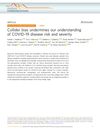
November 2020 in “Nature Communications” Collider bias can distort our understanding of COVID-19 risk and severity.
 114 citations
,
March 2021 in “Scientific Reports”
114 citations
,
March 2021 in “Scientific Reports” Older age and existing health conditions increase COVID-19 death risk.
 32 citations
,
June 2021 in “bioRxiv (Cold Spring Harbor Laboratory)”
32 citations
,
June 2021 in “bioRxiv (Cold Spring Harbor Laboratory)” Fatigue is the most common symptom in both ongoing symptomatic COVID-19 and post-COVID-19 syndrome.
 April 2025 in “International Journal of General Medicine”
 The G allele of IFITM3 rs12252 is linked to more severe COVID-19.
 August 2020 in “Research Square (Research Square)”
 Older age and existing health issues increase COVID-19 death risk.
 36 citations
,
July 2020 in “Frontiers in Medicine”
36 citations
,
July 2020 in “Frontiers in Medicine” Spironolactone might help protect against severe lung problems in COVID-19 patients.
 2 citations
,
January 2024 in “European Journal of Case Reports in Internal Medicine”
2 citations
,
January 2024 in “European Journal of Case Reports in Internal Medicine” Beau's lines on fingernails might indicate past severe COVID-19 and risk of reinfection.
 21 citations
,
January 2021 in “Journal of infection and chemotherapy”
21 citations
,
January 2021 in “Journal of infection and chemotherapy” Men, diabetes, and high inflammation levels lead to higher COVID-19 antibodies.
September 2025 in “International Journal of Molecular Sciences” International guidelines for treating alopecia areata vary, focusing on different treatment options and related health issues.
 77 citations
,
July 2020 in “European Journal of Clinical Pharmacology”
77 citations
,
July 2020 in “European Journal of Clinical Pharmacology” Blocking the virus's entry into cells by targeting certain pathways could lead to early COVID-19 treatments.
 25 citations
,
January 2022 in “Endocrine journal”
25 citations
,
January 2022 in “Endocrine journal” Long COVID patients may have hormonal imbalances linked to their symptoms.
 101 citations
,
July 2020 in “Dermatologic therapy”
101 citations
,
July 2020 in “Dermatologic therapy” COVID-19 can cause skin issues like rashes and "COVID toes," and people with skin conditions should adjust their treatments if they get the virus.
 42 citations
,
February 2017 in “Scientific Reports”
42 citations
,
February 2017 in “Scientific Reports” Researchers found a way to create cells from stem cells that act like human cells important for hair growth and could be used for hair regeneration treatments.
 2 citations
,
December 2023 in “Journal of clinical immunology”
2 citations
,
December 2023 in “Journal of clinical immunology” Ruxolitinib significantly improves multiple autoimmune conditions in APS-1 patients.
 April 2021 in “Journal of Investigative Dermatology”
 IL-15 helps protect hair follicles from immune attacks and encourages hair growth.
 August 2023 in “International Ayurvedic medical journal”
 Improper diet, lifestyle, and stress are major causes of hair fall.
 June 2024 in “Nature Cell and Science”
 The Scalp Coverage Scoring method reliably measures hair density from images.
 4 citations
,
December 2022 in “Frontiers in cell and developmental biology”
4 citations
,
December 2022 in “Frontiers in cell and developmental biology” Zebrafish larvae are used to study and find treatments for ear cell damage because they are easier to observe and test than mammals.
8 citations
,
December 2024 in “Frontiers in Medicine” Damaged skin has a weakened barrier, making it more vulnerable to substances and inflammation.
2 citations
,
September 2025 in “Journal of Clinical Medicine” Small extracellular vesicles can help diagnose and manage sepsis.
 October 2023 in “Naunyn-Schmiedeberg's Archives of Pharmacology”
 Custom software found that common allergy drugs might have new uses for various conditions and could improve survival in some cancers.

The transcription factor Meis2 is essential for touch sensation and proper nerve development in touch receptors.
 3 citations
,
August 2022 in “Curēus”
3 citations
,
August 2022 in “Curēus” The SARS-CoV-2 vaccine may be linked to triggering autoimmune conditions like Alopecia Areata.
 February 2026 in “Psycho-Oncologie”
 Alopecia areata causes significant psychological distress in cancer patients, needing integrated care.
 September 2023 in “Bulletin of the Medical Institute of Continuing Education”
 Early and accurate treatment of Lichen Planopilaris is crucial to prevent permanent hair loss in men.
 April 2024 in “International Journal of Research Publication and Reviews”
 Alopecia areata causes hair loss with varied treatment responses and frequent relapses.
 January 2024 in “American journal of clinical dermatology”
 Ritlecitinib is safe and well-tolerated for treating alopecia areata in patients aged 12 and older.
 176 citations
,
May 2020 in “Dermatologic Therapy”
176 citations
,
May 2020 in “Dermatologic Therapy” COVID-19 can cause different skin symptoms that may help with early diagnosis and show how severe the disease is.
 113 citations
,
July 2020 in “Communications biology”
113 citations
,
July 2020 in “Communications biology” Men, especially older ones with health issues like prostate cancer, may have worse COVID-19 outcomes and could benefit from therapies targeting male hormones.