2 citations
,
December 2024 in “BMC Genomics” Key genes and pathways control sheep hair growth phases.
12 citations
,
January 2014 in “Dermatology online journal” White hair regrowth in alopecia areata may be more common than thought.
 March 2005 in “International Journal of Cosmetic Science”
 A new method helps understand hair shine and various products improve hair care.
 December 2023 in “University of Southern Denmark Research Portal (University of Southern Denmark)”
 Digital access to medical info can help identify rare conditions.
2 citations
,
October 2018 in “Skin appendage disorders” A boy's hair that was frizzy and hard to comb returned to normal after 9 months, possibly due to genetic factors.
21 citations
,
November 1980 in “PubMed” A new mite species was found in California sea lions, causing skin issues.
3 citations
,
February 1992 in “Journal of veterinary medicine. Series A” The farm-raised blue fox had a delayed winter coat cycle and abnormal hormone levels, but its hair growth and hormone changes were still linked.
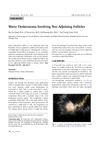 10 citations
,
January 2011 in “Annals of Dermatology”
10 citations
,
January 2011 in “Annals of Dermatology” A rare scalp tumor involving two hair follicles was successfully removed with surgery, with no recurrence after 7 months.
 November 2009 in “Companion Animal”
 The document suggests that Alopecia X in dogs is mainly a cosmetic issue and might be better left untreated.
4 citations
,
May 2009 in “Clinical and experimental dermatology” Flexural follicular lichen planus is a rare skin condition affecting body folds.
 53 citations
,
September 2011
53 citations
,
September 2011 Other common signs, not just the well-known immune cells around hair bulbs, are important for diagnosing hair loss from alopecia areata.
 10 citations
,
April 2013 in “Veterinary dermatology”
10 citations
,
April 2013 in “Veterinary dermatology” A new skin disease in four Labrador retrievers responded well to immunosuppressive treatment.
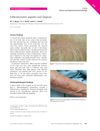 May 2014 in “Clinical and Experimental Dermatology”
 A 70-year-old woman with a rare skin condition improved after treatment with topical steroids and acitretin.
 2 citations
,
January 2019 in “Case Reports in Dermatology”
2 citations
,
January 2019 in “Case Reports in Dermatology” A 66-year-old woman's thick scalp and hair loss were confirmed as lipedematous alopecia, a rare condition possibly influenced by genetics, with no effective treatment known.
11 citations
,
January 2015 in “JOURNAL OF HEALTH SCIENCE” A 12-year-old boy's rare skin condition improved with topical treatments and may resolve by puberty.
December 2020 in “Journal of Face Aesthetics” Trichoscopy effectively helps diagnose different types of hair loss in women.
 24 citations
,
April 2020 in “Cells”
24 citations
,
April 2020 in “Cells” DNA methylation and long non-coding RNAs are key in controlling hair growth in Cashmere goats.
 9 citations
,
June 2014 in “British Journal of Dermatology”
9 citations
,
June 2014 in “British Journal of Dermatology” The study found that balding scalps have more thin hairs and larger oil glands, which might contribute to skin conditions related to hair loss.
26 citations
,
December 1999 in “Journal of Investigative Dermatology” Certain genes are linked to wool follicle structure and function, but not hair cycle regulation.
 9 citations
,
February 2018 in “The Journal of Dermatology”
9 citations
,
February 2018 in “The Journal of Dermatology” A new mutation in the LIPH gene was found to cause a rare hair disorder in a Japanese boy.
4 citations
,
January 2017 in “PubMed” A girl with lupus had unusually long and thick eyelashes, a rare symptom of her condition.
 July 2023 in “GLOBAL JOURNAL FOR RESEARCH ANALYSIS”
 The new treatment showed promise in managing eyebrow hair loss.
 October 2025 in “Indian Dermatology Online Journal”
 Cultural practices can influence trichotillomania, requiring culturally sensitive treatment.
January 2013 in “Wool textile journal”  July 2022 in “Research, Society and Development”
 The conclusion is that different treatments improved hair growth in dogs with Alopecia X, but results varied and not all dogs had complete hair regrowth.
4 citations
,
December 2017 in “Journal of zoo and wildlife medicine” Hormonal changes during the reproductive cycle may cause seasonal skin problems in captive female fossas.
"Coco de mono" seeds cause temporary hair loss due to selenocystathionine.