12 citations
,
January 2013 in “Indian dermatology online journal” The document reports a unique case of woolly hair with a combination of conditions not previously seen together.
2 citations
,
March 2010 in “European journal of dermatology/EJD. European journal of dermatology” A young Caucasian girl had both woolly hair and alopecia areata, which is rare.
 10 citations
,
December 2021 in “Frontiers in cell and developmental biology”
10 citations
,
December 2021 in “Frontiers in cell and developmental biology” The research identified genes that explain why some sheep have curly wool and others have straight wool.
March 2018 in “Journal of Experimental Biology” Hair curliness is caused by the arrangement and length of two different cell types.

Curly wool has more orthocortex than straight wool.
1 citations
,
July 1935 in “Nature” Animal hair can curl tightly on its own, especially in foxes, due to changes in keratin.
 19 citations
,
October 1985 in “British Journal of Dermatology”
19 citations
,
October 1985 in “British Journal of Dermatology” The document concludes that unruly hair can be congenital or acquired, often lacks specific treatments, and can be managed with oils and short hairstyles.
35 citations
,
September 2003 in “Archives of dermatology” Tiger tail bands in hair are caused by wavy hair fibers with melanin, unlike straight fibers in normal hair.
November 2025 in “Skin Health and Disease” Autosomal recessive woolly hair is rare and involves tightly coiled hair without other health issues.
 May 2024 in “Frontiers in medicine”
 A genetic mutation in the LIPH gene causes tightly curled hair that stops growing in some Japanese individuals.
 September 2021 in “Mağallaẗ al-Muẖtar li-l-ʿulūm”
 Two sisters have rare hair disorders causing short, fragile, kinky hair.
 January 2026 in “Indian Journal of Dermatopathology and Diagnostic Dermatology”
 Corkscrew hairs can help diagnose trichotillomania.
2 citations
,
July 2019 in “Indian dermatology online journal” A 17-year-old girl and her brothers have a rare hair condition with long eyelashes, thick eyebrows, and easily pluckable hair.
 6 citations
,
February 2016 in “American Journal of Dermatopathology”
6 citations
,
February 2016 in “American Journal of Dermatopathology” The boy with woolly hair nevus had thinner hair and abnormal hair follicles, which improved with treatment but worsened when treatment stopped.
37 citations
,
June 2000 in “Experimental dermatology” The Lanceolate hair-J mutation in mice mimics human hair disorders like Netherton's syndrome.
September 2016 in “Journal of dermatological science” The conclusion is that the variation in hair thinness in patients is mostly due to the amount of underdeveloped hairs, and treatments that thicken fine hairs might work for those with mild to severe conditions.
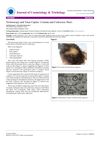 1 citations
,
January 2016 in “Journal of cosmetology & trichology”
1 citations
,
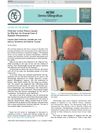
January 2016 in “Journal of cosmetology & trichology” Trichoscopy helped diagnose and treat a child's fungal scalp infection by spotting specific hair shapes.
 1 citations
,
April 2016 in “Actas Dermo-Sifiliográficas”
1 citations
,
April 2016 in “Actas Dermo-Sifiliográficas” Wearing a wig caused a woman's skin condition to worsen due to pressure from the wig's fasteners.
 6 citations
,
June 1981 in “PubMed”
6 citations
,
June 1981 in “PubMed” Whisker hair in young people might predict severe future hair loss.
January 2022 in “The Pan African medical journal” Hypertrichosis causes excessive hair growth and needs psychological support due to its impact on self-esteem.
7 citations
,
April 2000 in “Mammalian Genome” A new mutation in mice causes crooked whiskers and messy hair.
 108 citations
,
March 2011 in “Archives of Dermatology”
108 citations
,
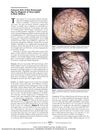
March 2011 in “Archives of Dermatology” Corkscrew hair may be a new sign for quickly diagnosing scalp fungus in black children.
 July 2023 in “Veterinary pathology”
 White-tailed deer can get a hair loss condition that might make them more vulnerable to environmental threats.
1 citations
,
June 1998 in “Journal of Forestry Research” Mammalian hair scales change from smooth to wavy due to friction.
 7 citations
,
November 2014 in “Histochemistry and Cell Biology”
7 citations
,
November 2014 in “Histochemistry and Cell Biology” The we/we wal/wal mice have defects in hair growth and skin layer formation, causing hair loss, useful for understanding alopecia.
 2 citations
,
March 2005 in “Journal of the American Academy of Dermatology”
2 citations
,
March 2005 in “Journal of the American Academy of Dermatology” Wigs are still a popular solution for hair loss to maintain a youthful look.
9 citations
,
May 2021 in “JEADV. Journal of the European Academy of Dermatology and Venereology/Journal of the European Academy of Dermatology and Venereology” Topical minoxidil may help treat a rare genetic hair condition with no fully effective treatments yet.
 1 citations
,
October 2023 in “Skin research and technology”
1 citations
,
October 2023 in “Skin research and technology” LC-OCT is an effective new method for diagnosing classic lichen planopilaris.
 15 citations
,
March 2014 in “Body Image”
15 citations
,
March 2014 in “Body Image” Wig users with alopecia do a lot of emotional and practical work to make their wigs look natural and manage how others see them.