December 2025 in “Phytomedicine Plus” Combining herbal medicines with modern delivery systems may improve alopecia treatment.
December 2025 in “Current Issues in Molecular Biology” Cytarabine can cause multiple organ toxicities, especially neurotoxicity, but better research methods are needed to fully understand and predict these effects.
November 2025 in “Journal of Natural Fibers” Human hair waste can be valuable in engineering and materials due to its unique properties.
 October 2025 in “Quantum Journal of Medical and Health Sciences”
 Tridax procumbens is a plant with many health benefits, including healing, protecting the liver, fighting infections, and promoting hair growth.
October 2025 in “International Journal of Cosmetic Science” Hair properties vary by ethnicity and environment, affecting surface charge and particle deposition.
October 2025 in “Preprints.org” Male and female mice handle stress differently.
September 2025 in “Pharmaceutics” Quercetin nanocrystal gel shows promise for hair regrowth in androgenetic alopecia.
 September 2025 in “PubMed”
 Mechanical stimulation and new therapies show promise for hair regrowth.
 July 2025 in “American Journal of Clinical Dermatology”
 Alopecia treatments like 5α-reductase inhibitors and spironolactone are safe for breast cancer patients and high-risk women.
 April 2025 in “BMC Chemistry”
 Thiadiazole chitosan conjugates improve hair manageability, moisture, and protection in conditioners.
 February 2025 in “Advanced Composites and Hybrid Materials”
 Glutamic acid microneedle patches promote better hair growth than traditional treatments.
February 2025 in “International Journal of Molecular Sciences” Alkaloids help fight influenza in animals but need more research for human use.
January 2025 in “Microorganisms” Using Armillaria strain A541 boosts Polyporus umbellatus yield and polysaccharide content.
 January 2025 in “AAPS PharmSciTech”
 Transethosomes improve drug delivery through the skin and show promise for treating various conditions.
 January 2025 in “Applied Sciences”
 Sulforaphane from broccoli may help treat certain cancers, hormone issues, and hair loss.
 January 2025 in “International Journal of Nanomedicine”
 Rosemary-based gel with metformin may effectively treat hair loss like minoxidil.
 December 2024 in “Revista Eletrônica Perspectivas da Ciência e Tecnologia - ISSN 1984-5693”
 Polymeric nanoparticles could improve hair loss treatments by delivering drugs more effectively to hair follicles.
 August 2024 in “Cell Death and Disease”
 Activating TLR9 helps heal wounds and regrow hair by using specific immune cells.
 July 2024 in “Journal of Investigative Dermatology”
 Losing both ERBB2 and ERBB3 receptors in mice causes significant skin problems and inflammation.
 February 2024 in “Bioengineering”
 The hydrogel made of chitosan, HPMC, and insulin speeds up wound healing and could be a new dressing, especially for diabetics.
 January 2024 in “Journal of Ayurveda and integrative medicine”
 Millets may help reduce chemotherapy side effects like nausea, fatigue, and hair loss.

Cold-pressed rapeseed oil is most resistant to oxidation and certain oils may reduce chronic disease risk; consumers like the taste of pumpkin oil best.

Plant-based compounds can improve wound dressings and skin medication delivery.
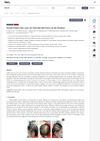
Different genes cause Female Pattern Hair Loss compared to male hair loss, and treatments vary, but more research is needed to understand it fully.
 January 2023 in “Applied sciences”
 Gefitinib and Sasam-Kyeongokgo together significantly reduce cancer growth and improve immune response in mice.
August 2021 in “BMJ Case Reports” A woman with lupus had blood cell destruction, treated successfully with medication.
March 2023 in “Anais Brasileiros De Dermatologia” Topical minoxidil is the best-supported treatment for female hair loss, but personalized plans are needed.
July 2021 in “International Journal of Applied Pharmaceutics” The finasteride nanogel could be an effective topical treatment for hair loss.
112 citations
,
August 2012 in “The American Journal of Human Genetics” Mutations in the RBPJ gene cause Adams-Oliver Syndrome.
107 citations
,
April 2014 in “The Plant cell” The CAP1 gene helps control ammonium levels and is necessary for the proper growth of root hairs in Arabidopsis.