 December 2017 in “Journal of Cosmetic Dermatology”
 Researchers found certain genes are overactive and others are underactive in men with early balding, which could help create new treatments.
 39 citations
,
October 1967 in “British Journal of Dermatology”
39 citations
,
October 1967 in “British Journal of Dermatology” Hair loss in women often doesn't follow a pattern, isn't linked to age, may be genetic, and can be related to thyroid issues or other health factors.
11 citations
,
June 2005 in “Postgraduate Medical Journal” Some infants temporarily grow scrotal hair, which usually disappears on its own without any health issues.
 4 citations
,
March 2020 in “BMC Research Notes”
4 citations
,
March 2020 in “BMC Research Notes” Skin tags in obese individuals may indicate higher cardiovascular risk.
 1 citations
,
December 1997 in “The British Journal of Psychiatry” August 2025 in “Pediatric Dermatology”
1 citations
,
December 1997 in “The British Journal of Psychiatry” August 2025 in “Pediatric Dermatology” The program improved students' understanding and acceptance of alopecia areata.
 November 2022 in “Innovation in aging”
 Older adults in Puerto Rico often couldn't be tested for hair cortisol due to refusal or lack of hair, with race and hair products affecting results.
 February 2020 in “Research Square (Research Square)”
 Skin tags in obese individuals may indicate a higher risk of heart disease and diabetes.
 January 2020 in “Research Square (Research Square)”
 Skin tags in severely obese people may indicate higher blood pressure and diabetes risk.
 January 2022 in “Consultant”
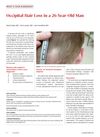
 The man's occipital hair loss was due to temporal triangular alopecia, not alopecia areata.
 October 1987 in “Clinics in Dermatology”
 Scalp reduction can improve hair distribution in certain baldness cases but requires careful patient selection and understanding of facial structure.
 5 citations
,
April 1999 in “PubMed”
5 citations
,
April 1999 in “PubMed” Two drugs, Minoxidil and Finasteride, can modestly maintain or regrow hair on the scalp's vertex with minimal side effects.
 October 2021 in “Cosmoderma”
 Hair loss can be managed with treatments like minoxidil, finasteride, and others, but there are still gaps in effectiveness and off-label usage is increasing.
 May 2015 in “Scientific journal of Kurdistan University of Medical Sciences”
 Men with early-onset baldness may have a higher risk of heart disease.
January 2026 in “Updates in clinical dermatology” Hair restoration surgery is becoming more common as male pattern baldness increases with age.
5 citations
,
October 1990 in “Archives of Dermatology” 143 citations
,
October 1988 in “Clinics in Dermatology” The understanding of male-pattern baldness remains unclear.
The man has patchy hair loss likely due to alopecia areata.
 January 1998 in “KAGAKU TO SEIBUTSU”
 The document suggests that male hormones likely affect hair growth and baldness, and future treatments might involve stem cells and androgen-independent cells.
 September 2024 in “PubMed”
 Hair loss can be treated based on its type and cause, improving quality of life.
January 2025 in “Surgical & Cosmetic Dermatology” Temporal triangular alopecia causes permanent hair loss and can be managed with treatments like minoxidil or hair transplantation.
 November 2022 in “Journal of Investigative Dermatology”
 The research found specific genes that are more active in balding cells, which could be causing hair loss.
 12 citations
,
November 2019 in “PLoS ONE”
12 citations
,
November 2019 in “PLoS ONE” Male-pattern baldness is weakly linked to some heart disease risk factors but not a strong indicator for heart disease.
Frontal hair in male pattern baldness shows reduced growth and thickness.
203 citations
,
November 1984 in “Journal of the American Academy of Dermatology” Common baldness is likely inherited through multiple genes, not just one.
January 2020 in “International journal of scientific research” Dermoscopy shows that varying hair shaft thickness and single hair follicles are main signs of male pattern baldness, especially in the fronto-temporal region.
2 citations
,
November 1987 in “PubMed” Male pattern baldness can be managed with treatments like minoxidil and hair surgery.
 41 citations
,
July 2017 in “Journal of The American Academy of Dermatology”
41 citations
,
July 2017 in “Journal of The American Academy of Dermatology” Men with Frontal fibrosing alopecia typically lose hair on the front scalp and sometimes on sideburns and upper lip, with treatments showing varied success.
2 citations
,
September 1997 in “Archives of Dermatology”