8 citations
,
August 1993 in “Colloid & Polymer Science” The observed "toughening" in keratin was actually due to water evaporation, not a real change in keratin.
5 citations
,
January 2024 in “Crystals” The salts have diverse molecular packing with significant hydrogen interactions.
20 citations
,
February 2017 in “European journal of pharmaceutical sciences” The MPA-ISO cocrystal improved solubility and dissolution rate, while the others did not.
1 citations
,
April 2024 in “Journal of Cutaneous Pathology” Recurrent NICF is a rare skin condition with unclear causes, involving follicle inflammation and crystal deposits.
 January 2019 in “Arabian Journal of Chemistry”
 Method found to accurately identify finasteride impurities using liquid chromatography.
 October 2022 in “ACS Applied Materials & Interfaces”
 The hydrogel is versatile and easy to make.
 August 2025 in “ChemPhotoChem”
 A new method using solid-state circular dichroism anisotropy can distinguish similar chiral compounds better than traditional techniques.
 66 citations
,
February 2010 in “CrystEngComm”
66 citations
,
February 2010 in “CrystEngComm” Made 8 minoxidil samples; 1 cocrystal, 7 salts formed.
March 2016 in “RepositóriUM (Universidade do Minho)” Molecular dynamics simulations help understand keratin's properties and predict hair's response to treatments.
September 2022 in “Pharmacy Today” 7 citations
,
January 2011 in “Biochemistry Research International” Hard α-keratin has a universal molecular structure with a specific superlattice arrangement.
 191 citations
,
November 1959 in “Annals of the New York Academy of Sciences”
191 citations
,
November 1959 in “Annals of the New York Academy of Sciences” Hair and wool have complex microscopic structures with microfibrils and varying cystine content.
9 citations
,
January 2023 in “Langmuir” Solubility in skin changes with hydration, affecting chemical absorption.
 21 citations
,
October 2009 in “European Journal of Pharmaceutical Sciences”
21 citations
,
October 2009 in “European Journal of Pharmaceutical Sciences” Three new finasteride solvates found, change forms under different drying conditions.
 18 citations
,
February 2015 in “Acta Crystallographica Section D: Structural Biology”
18 citations
,
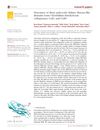
February 2015 in “Acta Crystallographica Section D: Structural Biology” The study concludes that certain domains in Clostridium histolyticum enzymes are structurally unique, bind calcium to become more stable, and play distinct roles in breaking down collagen, with potential applications in medicine and drug delivery.
66 citations
,
June 2004 in “Biophysical Journal” Hard α-keratin in hair has a unique, nonordered structure, different from other fibers.
 21 citations
,
September 2011 in “Journal of Pharmaceutical Sciences”
21 citations
,
September 2011 in “Journal of Pharmaceutical Sciences” Desolvation of finasteride depends on environment and technique.
 August 2025 in “Journal of Applied Pharmaceutical Research”
 F4 and F6 hair gels showed promise for improving hair care but need more testing.
17 citations
,
July 2021 in “Polymers” Using ultrasonication at 45 kHz for 30 minutes is an efficient, low-cost way to produce high-quality chitin nanofibers from crab shells.
 April 2017 in “Journal of Investigative Dermatology”
 Removing the Crif1 gene in mouse skin disrupts skin balance and hair growth.
 July 2026 in “Preprints.org”
 A cysteamine-derived compound helps hair stay straight in high humidity.
 March 2005 in “International Journal of Cosmetic Science”
 A new method helps understand hair shine and various products improve hair care.
6 citations
,
August 1937 in “Journal of the Society of Chemical Industry” 3 citations
,
September 2023 in “Journal of Photochemistry and Photobiology A Chemistry” 2 citations
,
December 1994 in “International Journal of Cosmetic Science” Polymer complexation makes hyaluronic acid stick to hair better, enhancing its moisturizing effects.
1 citations
,
January 2015 in “Bulletin of the Russian Academy of Sciences Physics” Hair tissue can help monitor environmental and public health risks.
 June 2010 in “Journal of Chemical Crystallography”
 The compound was successfully made and shows potential for treating prostate cancer.
48 citations
,
January 2002 in “Journal of Structural Biology” Trichocyte filaments have a low-density core and may include proteins for hair structure.
7 citations
,
January 1988 3 citations
,
January 1994