 January 2025 in “JCEM Case Reports”
 Metyrapone can effectively treat Cushing's Disease even if the mass causing it is not found.
 January 2025 in “BMJ Case Reports”
 Precocious puberty can signal familial adenomatous polyposis.
 September 2024 in “International Journal of Contemporary Pediatrics”
 A multidisciplinary approach is crucial for treating complex cases of Rapunzel syndrome in children.
 September 2024 in “Cermin Dunia Kedokteran”
 Fahr syndrome causes brain calcification and is managed by treating symptoms and underlying issues.
 April 2024 in “Research Square (Research Square)”
 A 27-year-old with APS-1 showed improvement in symptoms after treatment.
February 2024 in “Zagazig University Medical Journal” TCF7L2 gene polymorphism is linked to alopecia areata, but it doesn't affect the success of PRP or conventional treatments.
 January 2024 in “Wiadomości Lekarskie”
 AI is transforming healthcare by improving diagnostics and therapy, despite challenges with data and trust.
December 2023 in “Indian Journal of Endocrinology and Metabolism” Early diagnosis, genetic testing, and innovative treatments are crucial for managing complex medical conditions.
 October 2023 in “Pediatric blood & cancer”
 Thymic LCH may be underdiagnosed, so thymic ultrasound should be considered in infants with cutaneous LCH.
 October 2023 in “Journal of the Endocrine Society”
 The desmopressin stimulation test helped identify an adrenal cause for a patient's Cushing's syndrome.
 September 2023 in “JP Journal of Biostatistics”
 The random forest model effectively helps diagnose COVID-19 using key factors like age and symptoms.
The case shows the difficulty in diagnosing certain conditions when standard tests are negative.
 June 2023 in “BMC Pharmacology and Toxicology”
 The trial will test if proxalutamide is safe and effective in reducing death in severe COVID-19 patients.
 June 2023 in “Medeniyet medical journal”
 People with alopecia areata have similar retinal structures but thicker choroidal regions compared to those without the condition.
 November 2022 in “Journal of the Endocrine Society”
 A woman's small ovarian tumor causing high androgen levels was missed by several scans but found during surgery.
 June 2022 in “Biomedical reports”
 STK11 gene variations do not predict how well metformin will work for PCOS, but may affect hair loss and excess hair growth.
 April 2022 in “Archives of Medical Case Reports and Case Study”
 COVID-19 pneumonia requires more intensive care, including monitoring liver functions and DVT, due to higher D-dimer and procalcitonin levels.
 May 2021 in “Journal of the Endocrine Society”
 A patient produced cortisol after adrenalectomy, possibly due to residual tissue or other body parts making steroids.
 April 2021 in “Rheumatology”
 An 80-year-old man with COVID-19 also had constrictive pericarditis, possibly due to an autoimmune or immunoglobulin related disease, and improved after surgery.
 April 2020 in “Journal of the Endocrine Society”
 A woman's high testosterone and related symptoms were caused by overactive cells in her ovaries.
 April 2020 in “Journal of the Endocrine Society”
 An ovarian tumor caused a woman's male-like symptoms, which improved after surgery.
 September 2019 in “University of Huddersfield Repository (University of Huddersfield)”
 Nanoemulsions can effectively deliver antiseptic agents deep into the skin.
April 2019 in “Journal of the Endocrine Society” A woman with Cushing's syndrome improved after surgery to remove an adrenal tumor.
 October 2018 in “Emergency medicine news”
 A 65-year-old man with sudden abdominal pain and seizures was diagnosed with a rare, non-traumatic splenic rupture and treated without surgery.
 August 2018 in “Journal of The American Academy of Dermatology”
 Patients with multiple superficial venous thrombosis are at greater risk for serious complications like cancer and recurrent blood clots.
 September 2016 in “Archives of Pediatric Infectious Diseases”
 A young girl developed serious bone inflammation in her skull after a skin graft, which is a rare but severe condition.
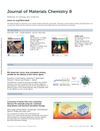 January 2016 in “Journal of Materials Chemistry B”
 Advancements in biomaterials and nanotechnology are improving medical applications like hair growth, bone regeneration, and cancer treatment.
October 2013 in “The American Journal of Gastroenterology” Colonic lipomas can cause complications like intussusception, requiring surgery if symptoms occur.
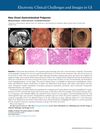 August 2013 in “Gastroenterology”
 A 60-year-old man with Cronkhite-Canada syndrome improved with treatment, but the condition has a high mortality rate and a risk of colorectal cancer.
October 2008 in “DOAJ (DOAJ: Directory of Open Access Journals)” A 20-month-old girl had a rare adrenal tumor removed successfully, with no recurrence for 10 years.