3 citations
,
April 2021 in “Oncology Times” Trodelvy™ helped some patients with advanced breast cancer, but had side effects.
175 citations
,
December 1980 in “Archives of Dermatology” Trichothiodystrophy is a condition with brittle hair and various physical and mental issues due to low sulfur in proteins.
9 citations
,
January 2015 in “Medical hypotheses” TCDD disrupts skin stem cells, causing skin issues like chloracne.
 January 1999 in “American Journal of Medical Genetics Part A”
 The report expanded knowledge of MBTPS1-related disorders by identifying new symptoms.
19 citations
,
June 2020 in “BMC Cancer” Trichilemmal carcinoma shares genetic changes with other skin cancers, suggesting similar causes and potential treatments.
CCC1 is crucial for pH balance in plant cells, affecting growth and stress tolerance.
 1 citations
,
June 2022 in “Chinese medical journal/Chinese Medical Journal”
1 citations
,
June 2022 in “Chinese medical journal/Chinese Medical Journal” Two new mutations in the CDH3 gene cause hair loss and vision problems in a young girl.
Introducing the OTC gene improved symptoms in mice with OTC deficiency.
2 citations
,
March 1986 in “BMJ” 4 citations
,
March 2024 in “Journal of the American Academy of Dermatology” Scalp cooling therapy is costly and often not covered by insurance, limiting access for low-income patients.
 April 2018 in “Journal of Investigative Dermatology”
 CREB, a protein that can promote cancer traits, is controlled by β-catenin in skin cancer cells.
2 citations
,
August 2002 in “British Journal of Ophthalmology” Tangent screens help detect visual field defects from vigabatrin.
 February 2025 in “Revista Eletrônica Acervo Saúde”
 Thyroid tuberculosis can cause hypothyroidism and should be considered when diagnosing cervical masses.
2 citations
,
May 2011 in “Journal of Clinical Oncology” Further testing of paclitaxel poliglumex for this cancer treatment is not justified.
October 1993 in “The Journal of Clinical Pharmacology” 99 citations
,
May 2013 in “Familial cancer” People with Birt-Hogg-Dubé syndrome often have lung problems and delayed diagnosis, and better recognition of CT scan signs could improve diagnosis and management.
2 citations
,
January 2018 in “International Journal of Trichology” Two sisters had a rare hair condition without other usual symptoms.
 2 citations
,
July 2008 in “Dermatologic Surgery”
2 citations
,
July 2008 in “Dermatologic Surgery” The Cross-section Trichometer is a promising tool for measuring hair characteristics without cutting the hair and may have various clinical uses.
21 citations
,
January 2000 in “Fetal Diagnosis and Therapy” Prenatal diagnosis of trichothiodystrophy is possible in the second trimester using fetal eyebrow biopsy, with sulfur content analysis being more reliable.
 July 2023 in “Nasza Dermatologia Online”
 More research is needed on CCCA in children, especially Black and Asian adolescents.
 1 citations
,
October 2023 in “BMC oral health”
1 citations
,
October 2023 in “BMC oral health” Two patients treated with TAC for mouth fibrosis improved but developed Cushing's Syndrome symptoms.
 86 citations
,
August 2011 in “Toxicological sciences”
86 citations
,
August 2011 in “Toxicological sciences” TCDD speeds up skin barrier formation by increasing certain gene expressions.
 108 citations
,
March 2011 in “Archives of Dermatology”
108 citations
,
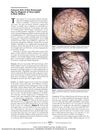
March 2011 in “Archives of Dermatology” Corkscrew hair may be a new sign for quickly diagnosing scalp fungus in black children.
 29 citations
,
March 2008 in “Dermatologic Surgery”
29 citations
,
March 2008 in “Dermatologic Surgery” The Cross-section Trichometer is a new tool that can measure hair quantity and detect hair loss and growth.
January 2014 in “Ghent University Academic Bibliography (Ghent University)” 17 citations
,
January 2015 in “JOURNAL OF CLINICAL AND DIAGNOSTIC RESEARCH” Cronkhite-Canada syndrome is a rare, non-inherited condition causing various symptoms like polyps, hair loss, and weight loss.
 July 2022 in “Berkala Ilmu Kesehatan Kulit dan Kelamin/Berkala ilmu kesehatan kulit dan kelamin (Periodical of dermatology and venerology)”
 Most tinea capitis patients were young boys with cat contact, had scaly patches caused by Microsporum canis, and improved with griseofulvin treatment.
13 citations
,
February 2012 in “International Journal of Dermatology” A new genetic mutation in the CDH3 gene causes hair loss and eye problems in young people.
55 citations
,
November 2010 in “Journal of Allergy and Clinical Immunology” The L412F variant of TLR3 is linked to skin infections, more viral infections, and autoimmune issues.
January 2011 in “Linchuang pifuke zazhi”