October 2021 in “Authorea (Authorea)” New hair perming method using tyrosine is gentler and can be done with a blow-dryer.
October 2021 in “Gender & history” Baldness challenged men's self-image and masculinity in Britain from the late 19th to early 20th centuries, leading to a market for hair loss treatments.
 May 2015 in “Journal of The American Academy of Dermatology”
 A woman with Parry-Romberg syndrome developed new curly hair on one side of her scalp, a condition not previously linked to the syndrome.
May 2010 in “Faculty Opinions – Post-Publication Peer Review of the Biomedical Literature” A mutation in the KRT74 gene causes woolly hair by affecting hair texture.
 September 1997 in “Dermatologic Surgery”
 The article concludes that uniform density hair restoration is generally preferred for its natural look, but the best approach depends on the individual's characteristics and preferences.

Curly wool has more orthocortex than straight wool.
21 citations
,
June 2023 in “Proceedings of the National Academy of Sciences” Tightly curled scalp hair helps reduce heat from the sun, protecting against overheating.
32 citations
,
March 2016 in “American Journal of Physical Anthropology” African hair is curled, Asian hair is thick, European hair is lighter, and chemical methods help identify hair color differences.
3 citations
,
December 2021 in “Proteins” Wool fiber curliness is linked to the presence of certain proteins and K38.
 2 citations
,
August 2013 in “International Journal of Herbal Medicine”
2 citations
,
August 2013 in “International Journal of Herbal Medicine” No single treatment effectively cures hirsutism, and evidence for herbal remedies is weak.
1 citations
,
July 1935 in “Nature” Animal hair can curl tightly on its own, especially in foxes, due to changes in keratin.
 January 2025 in “International Journal of Advanced Biochemistry Research”
 Fluralaner effectively cures canine demodicosis in 28 days.
8 citations
,
December 2017 in “Small Ruminant Research” Variation in the TCHH gene affects wool curliness in sheep.
 2 citations
,
February 2019 in “Journal of dermatological treatment”
2 citations
,
February 2019 in “Journal of dermatological treatment” A new surgical technique effectively cures acne in most patients.
1 citations
,
November 2009 in “Nurse prescribing” Oral griseofulvin for 6-12 weeks cures most scalp fungal infections in children.
 February 2026 in “Journal of the Korean Society of Cosmetology”
 Silicone oil viscosity affects hair curling and damage during treatments.
January 2022 in “Surgical & Cosmetic Dermatology” Isotretinoin can rarely cause hair to grow curly.

Variant G of the KRTAP20-1 gene improves wool curliness in Chinese Tan sheep.
29 citations
,
July 2015 in “Journal of Medical Genetics” A genetic variant in the KRT25 gene causes tightly curled hair.
 10 citations
,
December 2021 in “Frontiers in cell and developmental biology”
10 citations
,
December 2021 in “Frontiers in cell and developmental biology” The research identified genes that explain why some sheep have curly wool and others have straight wool.
 7 citations
,
January 2012 in “International Journal of Trichology”
7 citations
,
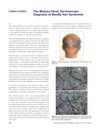
January 2012 in “International Journal of Trichology” A man with Woolly Hair Syndrome had very curly, fragile hair, and doctors used a special scalp examination to diagnose him without invasive tests.
6 citations
,
February 2023 in “Genes” CUX1 boosts sheep hair cell growth and affects curl patterns.
 August 2024 in “International Journal of Dermatology”
 New therapies and treatments for hair disorders, especially in curly hair, show promise.
 May 2024 in “Frontiers in medicine”
 A genetic mutation in the LIPH gene causes tightly curled hair that stops growing in some Japanese individuals.
 9 citations
,
September 2016 in “Plastic and reconstructive surgery. Global open”
9 citations
,
September 2016 in “Plastic and reconstructive surgery. Global open” The curved nonrotary punch is better for hair extraction in people with tightly curled hair.
7 citations
,
July 2011 in “Archives of Dermatology” Alopecia areata caused a boy's hair to regrow straight instead of curly, but the exact reason is unknown.
 2 citations
,
August 2022 in “The journal of investigative dermatology/Journal of investigative dermatology”
2 citations
,
August 2022 in “The journal of investigative dermatology/Journal of investigative dermatology” A specific mutation in the K25 gene causes a rare genetic disorder with curly hair at birth and later hair loss, along with dental issues.
 18 citations
,
January 2008 in “Sen'i Gakkaishi”
18 citations
,
January 2008 in “Sen'i Gakkaishi” Thioglycolic acid and L-cysteine change hair structure differently during perms, affecting hair strength and curling efficiency.
 7 citations
,
January 2013 in “Indian Journal of Plastic Surgery”
7 citations
,
January 2013 in “Indian Journal of Plastic Surgery” Body and beard hair can be used for hair transplants in baldness treatment but keep their original color and curl.
 5 citations
,
January 2015 in “Global Dermatology”
5 citations
,
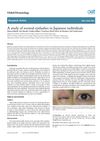
January 2015 in “Global Dermatology” Japanese females generally have longer, denser, and curlier eyelashes than males.